
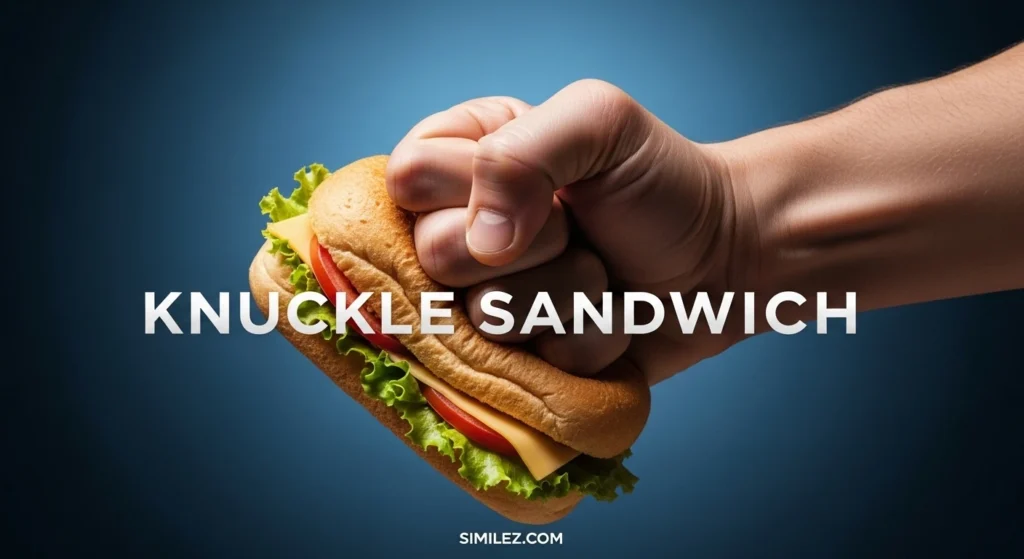
Language often carries expressions that sound humorous on the surface but reveal deeper cultural attitudes toward conflict, emotion, and communication. One such phrase is the slang expression “knuckle sandwich”, a vivid idiom used in English to describe a punch to the face.
Despite its playful wording, it carries a strong undertone of aggression and is often used in jokes, movies, and casual threats rather than literal instruction.
In everyday speech, this expression is not about food or humor in a literal sense it symbolizes confrontation, anger, or warning someone about physical retaliation.
Understanding such slang is important because it reflects how language evolves to express emotion indirectly, often blending humor with aggression.
In this article, we will break down its meaning, linguistic background, cultural usage, psychological implications, and real world consequences.
We will also explore how such expressions appear in media, sports, and social interaction, along with safer alternatives for communication.
1. Meaning and Core Interpretation
At its simplest level, this slang refers to a punch delivered with the fist, usually directed at someone’s face. However, its meaning extends beyond physical violence. It is often used figuratively to express anger or to threaten retaliation without actual intent.
Key interpretations include:
- A humorous threat of physical violence
- A metaphor for confrontation or conflict
- A dramatized expression used in storytelling or movies
- A slang warning indicating “stop or face consequences”
Urdu meaning: یہ ایک محاورہ ہے جو کسی کو مُکا مارنے یا زبردست غصے کا اظہار کرنے کے لیے استعمال ہوتا ہے۔
2. Origin and Linguistic Background
The phrase originates from American slang in the early 20th century. It combines everyday vocabulary with exaggerated imagery to create a humorous yet aggressive effect.
Linguistic breakdown:
- “Knuckle” → joints of the hand used for punching
- “Sandwich” → metaphor implying something being “delivered” or “served”
The combination creates a satirical contrast between food imagery and violence, making it memorable and slightly comedic.
Over time, it became popular in cartoons, comedy shows, and action films where exaggerated dialogue is common.
3. Literal vs Figurative Meaning
Understanding the difference between literal and figurative use is essential.
ContextMeaningExample UsageLiteralPhysical punch to the faceUsed in fight scenariosFigurativeJoke or threat“Keep talking and you’ll get one”HumorousComic exaggerationUsed in cartoons or memesEmotionalExpression of angerSaid during heated arguments
Most modern usage is figurative rather than literal.
4. Usage in Pop Culture and Media
This expression has been widely used in movies, cartoons, and comedy shows. It is often delivered in a humorous tone rather than serious intent.
Common appearances:
- Animated series like slapstick cartoons
- Action-comedy films
- Stand-up comedy routines
- Internet memes and social media jokes
In pop culture, it is rarely meant as actual violence but as exaggerated humor.
5. Psychological Perspective of Aggressive Language
Aggressive slang plays a psychological role in human communication. People often use indirect threats to release frustration without physical action.
Key psychological insights:
- Reduces emotional tension in conversation
- Acts as a verbal substitute for physical aggression
- Helps express dominance or anger safely
- Often used in group bonding through humor
From a psychological standpoint, such language reflects emotional intensity rather than actual violent intent in most cases.
6. Real-Life Implications and Legal Consequences
Although often used jokingly, threatening physical harm verbally can have real-world consequences depending on context and jurisdiction.
Possible implications:
- Can be considered verbal threat in legal disputes
- May escalate conflicts unnecessarily
- Can damage professional or personal relationships
- May be used as evidence in harassment cases
Important note: In professional or legal environments, even joking threats can be misinterpreted.
7. Connection with Boxing and Combat Sports
In sports like boxing or mixed martial arts, physical strikes are regulated and part of structured competition. However, slang expressions inspired by fighting are common among fans.
In this context:
- Punching techniques are trained and controlled
- Safety rules prevent unnecessary injury
- Aggressive slang is used rhetorically, not literally
Boxing terminology often influences everyday language, giving rise to expressions like this one.
8. Communication Alternatives (Non-Violent Expressions)
Instead of using aggressive slang, there are many neutral or constructive alternatives to express frustration.
Examples:
- “Stop pushing me too far”
- “This needs to end now”
- “I’m not happy with this situation”
- “Let’s calm down and talk”
Benefits of using non-violent language:
- Reduces conflict escalation
- Improves communication clarity
- Maintains professional tone
- Prevents misunderstandings
9. Cultural Interpretation and Global Understanding
Different cultures interpret aggressive slang differently. In some cultures, such expressions are considered humorous; in others, they are seen as offensive.
Cultural observations:
- Western media often normalizes exaggerated slang
- South Asian cultures may interpret it more seriously
- Younger generations use it more casually in memes
- Older generations may find it inappropriate
Urdu insight: ثقافتی فرق کی وجہ سے ایک ہی جملہ کہیں مزاح اور کہیں توہین سمجھا جا سکتا ہے۔
10. Self-Defense vs Aggression
It is important to distinguish between defensive reactions and aggressive intent. Self-defense is legally and morally different from initiating violence.
Key differences:
- Self-defense = reaction to threat
- Aggression = initiating harm
- Legal systems often protect self-defense actions
- Excessive force may still be punishable
Understanding this distinction helps avoid misuse of violent language in serious situations.
11. Modern Digital Usage and Memes
In the internet age, slang expressions have evolved into memes and jokes. Social media platforms amplify humorous exaggerations.
Common digital uses:
- Meme captions
- Gaming chat banter
- Short video punchlines
- Reaction comments
However, context matters. What is funny online may not be acceptable in professional settings.
Table: Contextual Usage Overview
ContextToneAcceptabilityRisk LevelFriends jokingHumorousHighLowSocial media memesSatiricalHighLowWorkplace communicationInappropriateLowMediumLegal disputeSerious threatVery LowHighSports commentaryCasual slangMediumLow
12. Why People Use Aggressive Slang
Human communication often includes exaggerated expressions to emphasize emotion.
Reasons include:
- Expressing anger indirectly
- Creating humor in conversations
- Social bonding through shared slang
- Media influence and repetition
- Emotional release without action
Such language is more about expression than intention in most casual settings.
FAQs
1. What does this slang actually mean?
It refers to a punch to the face, usually used humorously or as a threat.
2. Is it considered offensive?
Yes, in formal or sensitive environments it can be considered inappropriate.
3. Is it used in movies?
Yes, especially in comedy and action genres.
4. Does it always mean violence?
No, most modern usage is figurative or joking.
5. Can it have legal consequences?
Yes, if interpreted as a serious threat in certain contexts.
6. Why is it called that way?
It combines “knuckle” (fist) and “sandwich” (delivery metaphor) for humorous effect.
7. Is it common in everyday speech?
It is more common in informal or humorous conversations.
8. What are better alternatives?
Calm, non-violent expressions like “let’s talk” or “calm down” are better.
Conclusion
Aggressive slang expressions like this reflect how language evolves to mix humor, emotion, and cultural influence. While often used jokingly in media and casual speech, they still carry an underlying meaning of physical confrontation.
Understanding such phrases helps in interpreting tone, avoiding miscommunication, and choosing better ways to express frustration.
In modern communication, clarity and respect matter more than exaggerated threats. Using direct, calm language leads to healthier interactions, while slang rooted in violence should be used carefully and contextually understood.