
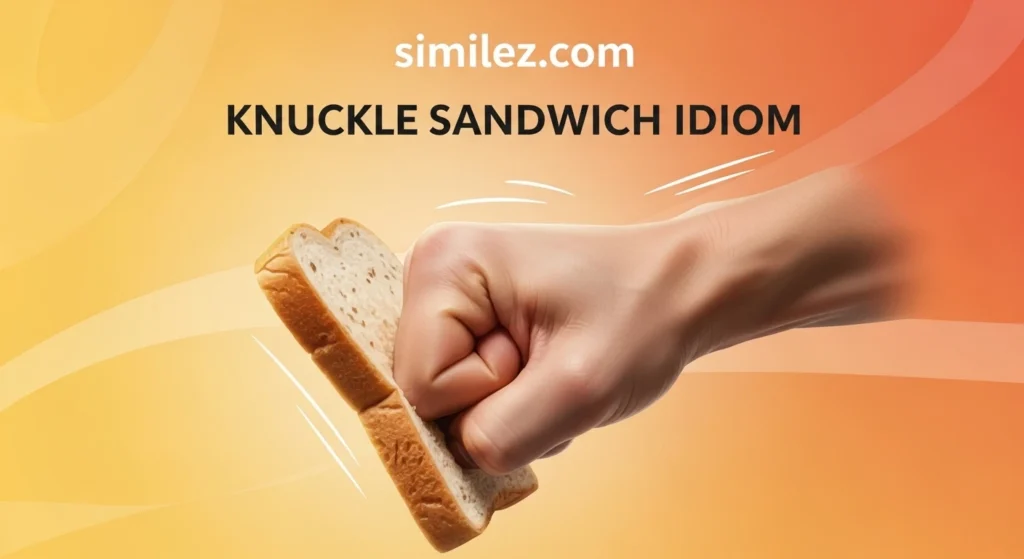
One such slang expression often heard in informal speech and pop culture is the “knuckle sandwich idiom.” At first glance, it sounds like food, but in reality it has nothing to do with eating. Instead, it is a humorous yet aggressive way of talking about physical confrontation.
This phrase reflects how English idioms often blend creativity, exaggeration, and cultural tone to express emotions like anger, warning, or sarcasm.
Understanding it helps learners, writers, and even professionals interpret informal conversations, movies, and online slang more accurately.
In this article, we will break down its meaning, origin, usage, cultural relevance, and real life applications in a structured and easy to understand way.
Meaning and Definition
This expression is a slang idiom used to describe a threat of punching someone in the face. Despite its humorous wording, it carries an aggressive undertone.
Core meaning:
- A “knuckle sandwich” refers to a punch delivered with the fist.
- It is usually used as a warning or insult in informal speech.
In simple words:
It means “If you don’t stop, I might hit you.”
Key characteristics:
- Informal and slang-based
- Often humorous or exaggerated
- Used in anger or playful teasing among peers
- Not suitable for formal communication
Origin and Historical Background
The origin of this expression is rooted in American slang culture, particularly from the early to mid-20th century.
Historical development:
- “Knuckle” refers to the joints of the fingers used in punching.
- “Sandwich” is used metaphorically to exaggerate the impact, as if the punch is something being “served.”
Cultural influence:
- Popularized through boxing culture and street slang.
- Frequently used in cartoons, comedy shows, and action films.
- Became part of humorous threats in English-speaking communities.
Linguistic creativity:
English slang often uses food metaphors (like “jam,” “cookie,” or “sandwich”) to soften aggressive meanings, making them sound less violent and more comedic.
Literal vs Figurative Meaning
Understanding the difference between literal and figurative usage is important.
TypeExplanationExampleLiteralNot an actual food itemNo real sandwich is involvedFigurativeA punch or physical hit“Stop talking or you’ll get one”
Key insight:
The phrase is purely figurative. Taking it literally leads to misunderstanding.
Usage in Sentences
This idiom is typically used in informal dialogue, jokes, or heated arguments.
Examples:
- “Keep making fun of me and I’ll serve you one.”
- “He was so angry, he threatened to give him a punch.”
- “Don’t push me, or you’ll regret it.”
Common scenarios:
- Friendly teasing among friends
- Movie dialogues
- Cartoon humor
- Online memes and jokes
Important note:
It should never be used in professional, academic, or legal communication.
Tone and Context in Communication
The tone of this expression depends heavily on context.
1. Humorous tone
- Used jokingly among friends
- No real intention of violence
2. Aggressive tone
- Used during arguments
- Indicates anger or threat
3. Exaggerated storytelling
- Used in jokes or narratives
- Adds dramatic effect
Urdu explanation:
یہ جملہ عام طور پر غیر رسمی گفتگو میں طنزیہ یا غصے کے اظہار کے لیے استعمال ہوتا ہے، لیکن حقیقت میں یہ صرف ایک محاورہ ہے۔
Variations and Related Slang Expressions
English slang has many similar expressions that carry humorous or aggressive meanings.
Related expressions:
- “Punch in the face”
- “Knock your lights out”
- “Break your face” (very informal slang)
- “Teach a lesson”
- “Send you flying”
How they differ:
- Some are more direct and harsh
- Others are humorous exaggerations
- Some are outdated or regional slang
Linguistic pattern:
Many of these phrases use physical metaphors to express emotional intensity.
Real-Life Examples and Dialogues
Understanding usage becomes easier with examples.
Example 1 (Friends joking):
A: “You cheated in the game!” B: “One more word and you’re getting it.”
Example 2 (Angry argument):
A: “You disrespected me.” B: “Say that again and you’ll regret it.”
Example 3 (Comedy scene):
Character: “Back off before I serve you something special!”
Interpretation:
In real life, tone of voice and facial expressions determine whether it is a joke or a real threat.
Cultural Relevance in Media and Pop Culture
This expression has appeared in various entertainment formats.
In movies:
- Used in action-comedy scenes
- Often delivered by tough or humorous characters
In cartoons:
- Exaggerated punches shown as comedic effects
- Characters jokingly threaten each other
In internet culture:
- Memes often use it for humorous exaggeration
- Gaming communities use it in playful trash talk
Why it is popular:
- Sounds funny despite aggressive meaning
- Easy to understand contextually
- Adds dramatic effect to dialogue
Common Mistakes and Misunderstandings
Many learners misunderstand this idiom due to literal interpretation.
Common mistakes:
- Thinking it refers to actual food
- Assuming it is polite or neutral
- Using it in formal writing
- Taking it as a literal threat in casual jokes
How to avoid confusion:
- Always check tone and situation
- Understand slang context
- Observe speaker’s intent
Linguistic tip:
Idioms rarely mean what their words literally suggest.
Comparison Table with Related Idioms
ExpressionMeaningToneUsage ContextThis slang phraseThreat of punchingHumorous/AggressiveInformal, jokes, argumentsKnock your lights outHit someone hardAggressiveFighting or threatsTeach a lessonPunish someoneNeutral/AggressiveWarning or authorityBreak your facePhysical harm threatVery aggressiveHeated argumentsCalm warning phrasesStop behaviorNeutralFormal/informal
Importance of Understanding Slang Idioms
Even though this expression is informal, understanding it is useful.
Benefits:
- Improves comprehension of movies and media
- Helps understand native conversations
- Enhances slang vocabulary
- Avoids miscommunication
- Useful for linguistic and cultural studies
Practical relevance:
English learners often struggle with idioms because literal translation does not work. Knowing slang helps bridge that gap.
FAQs
1. What does this slang expression mean?
It means a humorous or aggressive threat of punching someone.
2. Is it a polite phrase?
No, it is informal and can sound rude or aggressive.
3. Can it be used in professional settings?
Absolutely not. It is strictly casual slang.
4. Is it always serious?
No, sometimes it is used jokingly among friends.
5. Where did it originate?
It comes from American slang and boxing-related expressions.
6. Is it common in movies?
Yes, especially in comedy and action genres.
7. Does it literally involve food?
No, it is completely figurative.
8. Can learners use it safely?
Only in informal and friendly contexts where slang is appropriate.
Conclusion
This colorful slang phrase is a classic example of how English transforms physical actions into humorous metaphors. Although it sounds playful, its meaning revolves around a warning or threat of physical impact, depending on tone and context.
Understanding such expressions is important for grasping real-world English, especially in movies, conversations, and online communication. However, it should be used carefully, as tone and situation determine whether it is funny or offensive.
Ultimately, mastering idiomatic language like this helps learners move beyond textbook English and understand the living, evolving nature of everyday communication.