
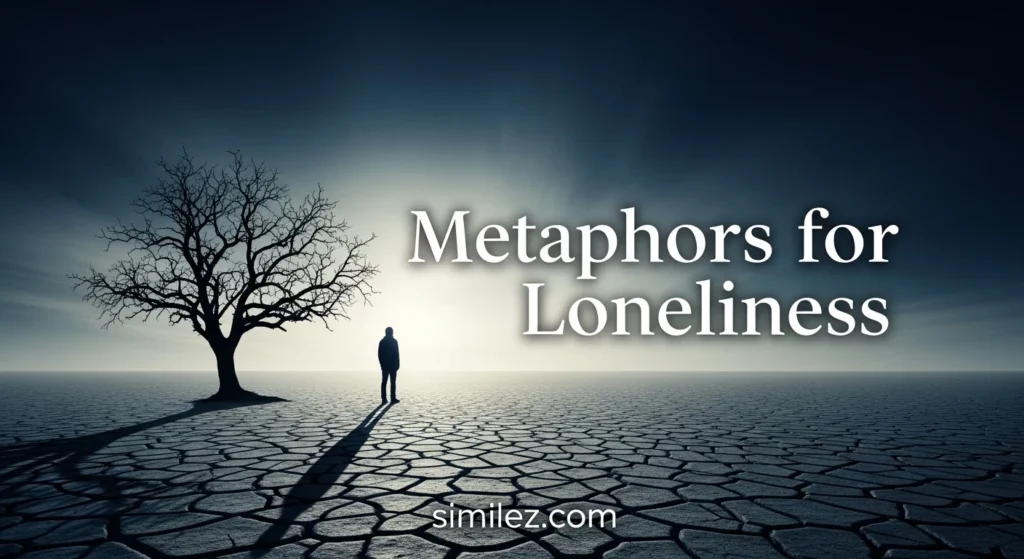
The room is full—furniture in place, a faint hum from the ceiling fan, distant traffic outside—but somehow, it feels hollow. You sit there, scrolling through messages that never arrive, listening to silence that feels louder than noise. Loneliness isn’t always about being alone. Sometimes, it’s the strange emptiness that lingers even in a crowd.
They give shape to something invisible. They translate an internal ache into images we can see, feel, and understand. When words fail, metaphors step in—not just to describe loneliness, but to help us process it.
What Are Metaphors for Loneliness?
Metaphors for loneliness are imaginative comparisons that express emotional isolation using vivid imagery. Instead of saying “I feel lonely,” you might say, “I am a lighthouse in a storm, shining but unseen.”
These expressions:
- Make abstract emotions tangible
- Add depth to writing and speech
- Help readers connect emotionally
Why Metaphors for Loneliness Matter
Loneliness is complex. It’s not just sadness—it can be quiet, heavy, sharp, or numb. Metaphors:
- Help articulate feelings that are hard to explain
- Create empathy in storytelling
- Improve creative writing, poetry, and communication
They turn emotion into experience.
A Desert Without Footprints
Meaning
Loneliness as vast emptiness—no connection, no presence, no sign of life.
Example
“I feel like I’m walking through a desert with no footprints—like no one has ever been here before me.”
Alternative Expressions
- An endless barren land
- A silent wasteland
- A road that never meets another
Sensory Detail
Dry air. Burning sun. The sound of nothing but your own steps.
Mini Story
A traveler walks for miles under the scorching sun, hoping to find a village. Every horizon looks the same. No voices. No shadows. Just endless sand. That’s what deep loneliness can feel like—directionless and isolating.
A Fading Echo in an Empty Hall
Meaning
Feeling unheard, unnoticed, or emotionally distant—even when speaking out.
Example
“My words feel like echoes in an empty hall—heard for a second, then gone.”
Alternative Expressions
- A whisper lost in the wind
- A voice swallowed by silence
- Sound fading into nothing
Emotional Detail
A brief moment of hope… followed by quiet disappointment.
Cultural Touch
This metaphor often appears in poetry and literature to describe emotional neglect or invisibility.
A Single Star in a Clouded Sky
Meaning
Loneliness mixed with resilience—being alone but still shining.
Example
“I feel like a single star in a cloudy sky—there, but hidden.”
Alternative Expressions
- A candle in a dark room
- A lone bird in a grey sky
- A flicker in the shadows
Emotional Detail
Soft hope. Quiet strength. A sense of endurance.
Mini Reflection
Even when clouds cover the sky, the star is still there. Loneliness doesn’t erase your presence—it just hides it temporarily.
Creative Ways to Use Loneliness Metaphors
Metaphors are powerful tools in:
- Poetry and storytelling
- Social media captions
- Personal journaling
- Songwriting
Instead of stating emotions directly, show them through imagery.
How to Create Your Own Metaphors for Loneliness
- Think of a physical place or object
- Match it with an emotional experience
- Add sensory detail (sound, sight, feeling)
Example:
- Emotion: Isolation
- Image: Locked room
- Metaphor: “I am a locked room with no windows.”
SEO Tip: Using “Metaphors for Loneliness” in Writing
To optimize your content:
- Include keywords naturally in headings
- Use variations like “loneliness imagery” or “figurative language for isolation”
- Add emotional context to improve engagement
Metaphors vs Similes for Loneliness
- Metaphor: “I am an island.”
- Simile: “I feel like an island.”
Metaphors are more direct and powerful. Similes are softer and comparative.
Common Themes in Loneliness Metaphors
Most metaphors fall into categories:
- Nature (deserts, oceans, skies)
- Space (stars, voids)
- Sound (echoes, silence)
- Objects (empty rooms, broken clocks)
Interactive Exercise: Create Your Own Metaphor
Try this:
Fill in the blank: “My loneliness feels like ______.”
Then expand:
- What does it look like?
- What does it sound like?
- What emotion does it carry?
Writing Prompt for Practice
Write a short paragraph using at least one metaphor for loneliness:
- Set a scene
- Describe a feeling
- Use imagery instead of direct explanation
Bonus Tips for Writers and Creators
- Keep metaphors simple but vivid
- Avoid overused clichés unless you add a twist
- Use contrast (light vs dark, sound vs silence)
- Combine emotional and physical imagery
Using Metaphors in Social Media
Example captions:
- “A quiet storm inside a crowded room.”
- “A lighthouse no one looks at.”
- “An unread message in a full inbox.”
Short, relatable, and emotional.
Real-Life Relevance of Loneliness Metaphors
People use metaphors in therapy, journaling, and conversation because:
- They help express feelings safely
- They make others understand without overexplaining
- They create emotional connection
Emotional Intelligence Through Metaphors
Understanding metaphors improves:
- Self-awareness
- Empathy
- Communication skills
When you can describe your feelings, you can manage them better.
Frequently Asked Questions
What is the best metaphor for loneliness?
There is no single “best” metaphor. It depends on the feeling. A desert, empty room, or fading echo are commonly used because they are relatable.
How do metaphors help express loneliness?
They turn abstract emotions into visual and sensory experiences, making them easier to understand and communicate.
Can metaphors reduce feelings of loneliness?
Indirectly, yes. Expressing emotions creatively can help process them and feel understood.
Are metaphors useful in professional writing?
Yes, especially in storytelling, content writing, and branding where emotional connection matters.
What is the difference between loneliness and solitude in metaphors?
Loneliness often has negative imagery (emptiness, silence), while solitude can have peaceful imagery (calm ocean, quiet forest).
Conclusion
Loneliness is often invisible—but metaphors make it visible. They turn silence into sound, emptiness into imagery, and feeling into language.
Whether you are a writer, a student, or someone simply trying to understand their emotions, metaphors for loneliness offer a powerful way to connect—with yourself and with others.
The next time you feel that quiet emptiness, don’t just say you’re lonely. Describe it. Paint it. Turn it into something that speaks—even when words fall short.