
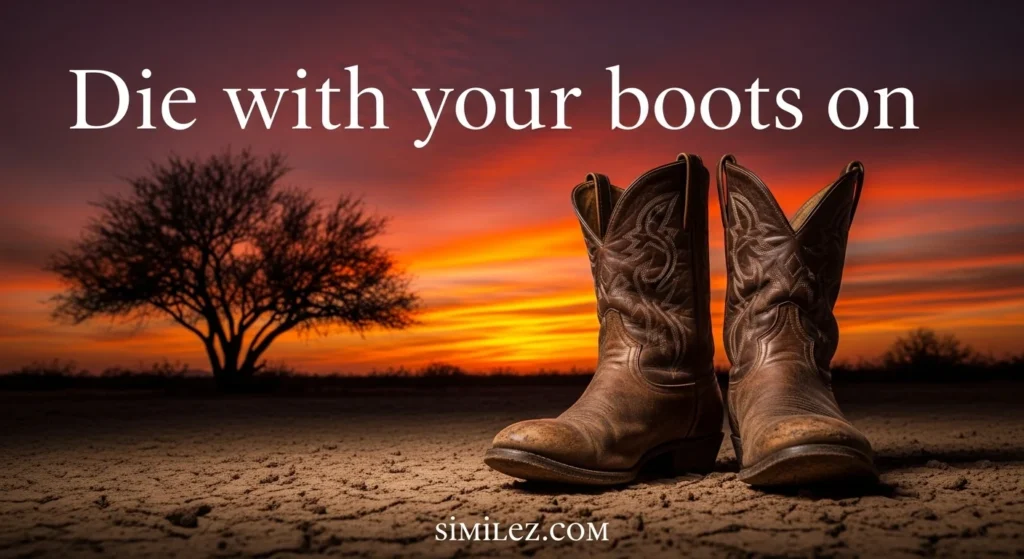
Imagine an old cowboy riding across a dusty plain, refusing to slow down even as the sun sets on his journey. There’s grit in his posture, purpose in his stride, and a quiet refusal to fade away gently.
That vivid image captures the essence of a powerful expression often used to describe a bold approach to life and death one rooted in courage, determination, and unwavering commitment.
This phrase isn’t just about physical endurance or dramatic endings. It reflects a mindset: choosing to remain active, engaged, and purposeful until the very last moment.
Whether in careers, passions, or personal values, it symbolizes living with intensity and exiting life without regret or surrender.
In today’s world where comfort and caution often dominate this idea stands out. It challenges individuals to think deeply about how they live, what they stand for, and how they want their story to end.
This article explores its meaning, origins, applications, and why it continues to resonate across generations.
Meaning and Core Interpretation
At its core, this expression means continuing to work, fight, or stay active until death rather than retiring or giving up.
Key Interpretations:
- Living with purpose and drive until the end
- Refusing to quit or fade quietly
- Embracing courage over comfort
- Maintaining identity and passion throughout life
It’s often associated with people who:
- Never retire mentally or physically
- Stay committed to their goals
- Prefer action over passivity
Origin and Historical Background
The phrase originates from the American Old West, where cowboys were often found wearing boots as part of their daily work. Dying “with boots on” symbolized:
- Being on duty
- Remaining active and engaged
- Not retiring or stepping away from one’s responsibilities
Historical Context:
- Cowboys and soldiers were respected for dying in action
- It became a metaphor for honorable, active endings
- Later adopted in literature, films, and everyday language
Literal vs Figurative Meaning
AspectLiteral MeaningFigurative MeaningContextDying while physically wearing bootsStaying active until deathUsageRare, historicalCommon in modern languageTonePhysical, descriptiveSymbolic, motivationalApplicationCowboys, soldiersProfessionals, leaders, everyday people
Types of Usage in Modern Context
1. Career and Professional Life
People who continue working passionately without early retirement.
Example:
- A lawyer arguing cases in court even in old age
- An artist creating masterpieces till the end
2. Personal Philosophy
Adopting a mindset of never giving up.
Example:
- Someone pursuing dreams despite obstacles
- Staying mentally sharp and curious
3. Cultural and Literary Usage
Often used in:
- Movies
- Books
- Motivational speeches
4. Humor or Irony
Sometimes used lightly to describe stubbornness.
Example:
- “He’ll probably keep working till his last breath.”
Why This Idea Still Matters Today
In a fast-paced, comfort-driven world, this mindset offers a counter-narrative.
Key Reasons:
- Encourages resilience
- Promotes lifelong learning
- Fights against complacency
- Inspires purpose-driven living
Modern challenges like burnout and early disengagement make this philosophy even more relevant.
Real-Life Examples
1. Professionals Who Never Retired
- Doctors treating patients into old age
- Teachers continuing to educate beyond retirement
2. Entrepreneurs and Leaders
- Business leaders staying active in decision-making roles
- Founders working on new ideas even late in life
3. Everyday Individuals
- Farmers working their land till their final days
- Craftsmen perfecting their skills continuously
Benefits of Adopting This Mindset
Personal Benefits:
- Strong sense of purpose
- Mental sharpness
- Emotional fulfillment
Professional Benefits:
- Continuous growth
- Long-term impact
- Legacy building
Social Benefits:
- Inspiration for others
- Contribution to society
- Role modeling perseverance
Potential Downsides and Criticism
Let’s be realistic—this approach isn’t always ideal.
Challenges:
- Risk of burnout
- Neglect of health
- Lack of work-life balance
Criticism:
- Some argue it promotes overwork culture
- May discourage necessary rest or retirement
Balanced Perspective:
- It’s about purpose, not exhaustion
- Staying active doesn’t mean ignoring well-being
Related Concepts and Similar Expressions
Synonyms and Related Ideas:
- Go down fighting
- Never back down
- Stay in the game
- Live life to the fullest
Contrasting Ideas:
- Retiring peacefully
- Slowing down with age
- Choosing comfort over challenge
How to Apply This Philosophy in Your Life
Practical Steps:
- Stay curious: Keep learning new skills
- Set long-term goals: Always have something to pursue
- Maintain health: Physical and mental fitness is key
- Find purpose: Work on what truly matters to you
Simple Framework:
- Purpose → Action → Consistency → Legacy
Common Mistakes to Avoid
- Confusing activity with productivity
- Ignoring health and rest
- Pursuing goals without meaning
- Comparing your journey with others
Table: Balanced Approach to Lifelong Engagement
FactorHealthy ApproachUnhealthy ApproachWorkPassion-drivenOverwork without purposeHealthRegular care and restIgnored until too lateGoalsMeaningful and flexibleRigid and exhaustingLifestyleBalancedExtreme and unsustainable
FAQs
1. What does this phrase really mean?
It refers to staying active, committed, and engaged in life until death rather than retiring or giving up.
2. Is it only about work?
No, it applies to life in general—including passions, learning, and personal growth.
3. Is this mindset healthy?
It can be, if balanced with rest and self-care.
4. Can anyone adopt this approach?
Yes, but it should align with individual goals, health, and circumstances.
5. Does it discourage retirement?
Not necessarily. It promotes active living, not avoiding retirement entirely.
6. Is it a cultural concept?
It has roots in Western history but is now used globally.
7. How is it used in daily conversation?
Often metaphorically, to describe someone who never slows down.
8. What is the biggest takeaway?
Live with purpose, stay engaged, and avoid a passive approach to life.
Conclusion
This powerful expression captures more than just a dramatic ending—it represents a philosophy of living with intensity, courage, and unwavering commitment.
It’s about refusing to fade into inactivity, choosing instead to remain engaged with life’s challenges and opportunities until the very end.
However, the real value lies in balance. A meaningful life isn’t just about constant action; it’s about purposeful action. When combined with self-awareness and care, this mindset can lead to a fulfilling, impactful, and inspiring life.
In the end, the question isn’t whether you’ll slow down—it’s how you choose to live while you’re still moving forward.