
Pain and suffering are some of the most powerful human experiences, yet they are often the hardest to explain in words. This is where similes shine. A simile is a figure of speech that compares two unlike things using words like “as” or “like.” Writers, poets, and everyday speakers use similes to make abstract feelings more concrete and easier to imagine.
When you say someone is “hurting like a broken winged bird,” the reader doesn’t just understand the pain—they feel it. That’s why similes for pain and suffering are so common in figurative language: they turn invisible emotions into vivid mental pictures.
Pain Like a Knife Cutting Deep
Meaning: This simile compares pain to a sharp knife, emphasizing suddenness and intensity.
Emotional Tone: Sharp, violent, overwhelming.
Best Usage Context: Storytelling, dramatic writing, emotional narration.
Example Sentences:
- The betrayal hit him like a knife cutting deep into his chest.
- Her words sliced through me like a knife, leaving me speechless.
- The pain struck like a knife cutting deep, stealing my breath.
- Grief entered his heart like a knife, precise and merciless.
- The truth hurt like a knife cutting deep, impossible to ignore.
Suffering Like a Heavy Weight on the Chest
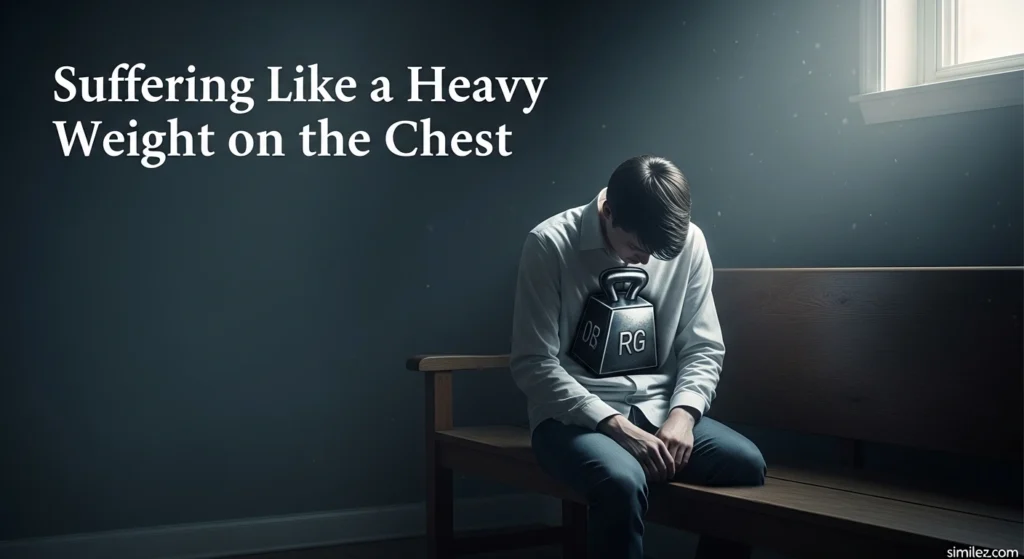
Meaning: This simile shows emotional or mental pain as pressure that makes breathing difficult.
Emotional Tone: Oppressive, suffocating, anxious.
Best Usage Context: Mental health writing, reflective essays, personal narratives.
Example Sentences:
- Anxiety sat on her chest like a heavy weight.
- His guilt pressed down like a heavy weight, never lifting.
- The news landed like a weight on my chest, stealing my air.
- Fear grew heavier, like a crushing weight inside him.
- Grief lingered like a weight, constant and exhausting.
Pain Like Fire Burning Inside
Meaning: Compares pain to fire, suggesting heat, intensity, and uncontrollable spread.
Emotional Tone: Intense, raw, consuming.
Best Usage Context: Poetry, emotional storytelling, physical pain descriptions.
Example Sentences:
- Anger burned like fire inside his veins.
- The injury flared like fire, impossible to ignore.
- Shame spread like fire, scorching every thought.
- Her heartbreak raged like fire in her chest.
- Pain pulsed like fire, relentless and alive.
Suffering Like Drowning in Deep Water
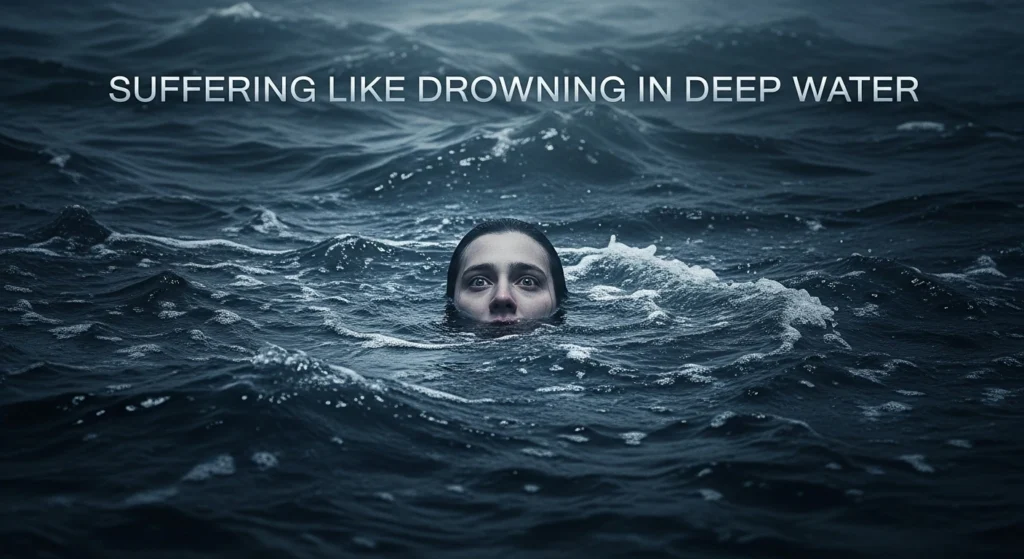
Meaning: This simile shows suffering as overwhelming and inescapable.
Emotional Tone: Desperate, helpless, suffocating.
Best Usage Context: Mental health topics, emotional memoirs, dramatic fiction.
Example Sentences:
- Depression felt like drowning in deep water.
- He struggled daily, like someone drowning without rescue.
- Her thoughts pulled her under like deep water.
- Sorrow swallowed him like a rising tide.
- The pressure felt like drowning, slow and terrifying.
Pain Like a Broken Bone That Never Heals
Meaning: Represents long-lasting emotional pain that doesn’t fade with time.
Emotional Tone: Enduring, sorrowful, resigned.
Best Usage Context: Reflective writing, emotional essays, poetry.
Example Sentences:
- Losing her was like a broken bone that never healed.
- His regret lingered like an old fracture.
- The memory ached like a bone that never healed.
- Their words left damage like a permanent break.
- Pain remained like an unhealed bone, dull but constant.
Suffering Like Carrying a Storm Inside
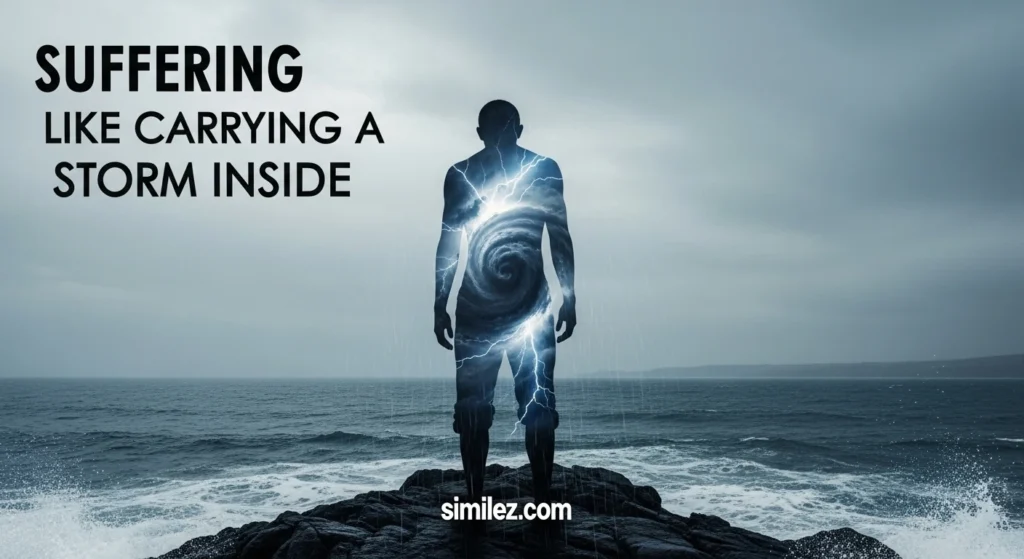
Meaning: Shows emotional turmoil and inner chaos.
Emotional Tone: Turbulent, restless, conflicted.
Best Usage Context: Poetry, character development, expressive prose.
Example Sentences:
- She walked calmly, carrying a storm inside.
- His silence hid a storm raging within.
- Pain brewed like thunderclouds in her heart.
- He smiled while suffering like a storm trapped inside.
- Emotions crashed like waves in a storm.
Pain Like Ice Freezing the Heart
Meaning: Compares pain to coldness, numbness, and emotional shutdown.
Emotional Tone: Cold, distant, numb.
Best Usage Context: Poetry, emotional storytelling, heartbreak narratives.
Example Sentences:
- Betrayal froze her heart like ice.
- Grief spread like cold ice through his chest.
- The loss left him emotionally frozen.
- Fear crept in like ice forming slowly.
- Pain hardened her like ice around the heart.
Suffering Like Walking on Broken Glass

Meaning: Shows pain as constant and unavoidable.
Emotional Tone: Harsh, relentless, fragile.
Best Usage Context: Daily struggles, emotional metaphors, personal stories.
Example Sentences:
- Every conversation felt like walking on broken glass.
- Life became a path of broken glass underfoot.
- He spoke carefully, as if on broken glass.
- The relationship felt sharp and painful.
- Each step hurt like glass cutting skin.
Pain Like a Wound That Keeps Reopening
Meaning: Describes recurring emotional pain triggered repeatedly.
Emotional Tone: Raw, unresolved, vulnerable.
Best Usage Context: Trauma writing, emotional reflection.
Example Sentences:
- Old memories reopened like an unhealed wound.
- Every reminder hurt like a wound reopening.
- The apology came too late; the wound remained.
- Pain returned like a scar splitting open.
- Loss felt fresh like a reopened wound.
Suffering Like Being Trapped in Darkness
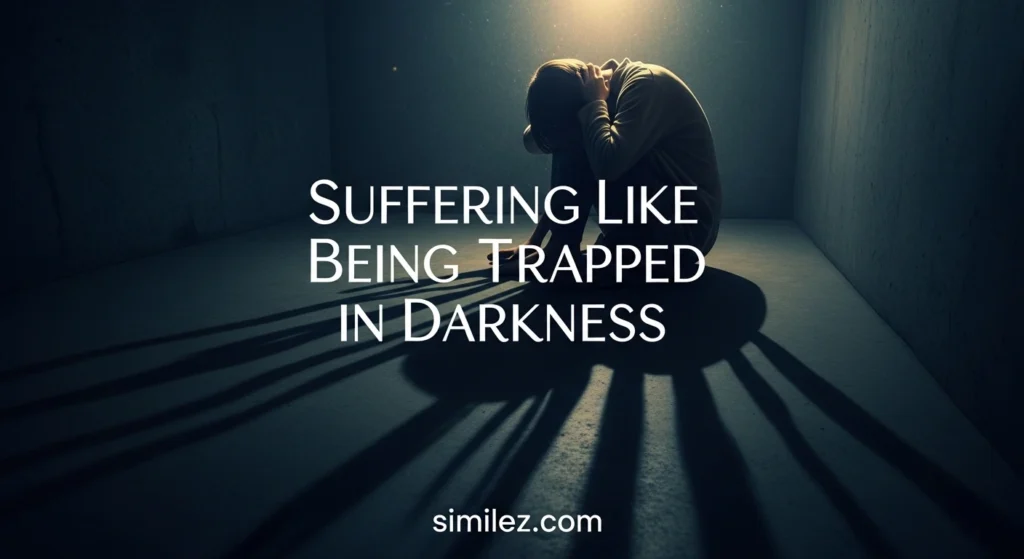
Meaning: Represents hopelessness and lack of direction.
Emotional Tone: Bleak, lonely, despairing.
Best Usage Context: Mental health writing, fiction, poetry.
Example Sentences:
- Depression felt like being trapped in darkness.
- He searched for hope in complete darkness.
- Pain surrounded her like endless night.
- Suffering closed in like a dark room.
- Fear blinded him like darkness without stars.
Pain Like a Thunderbolt Striking Suddenly
Meaning: Describes sudden, shocking pain.
Emotional Tone: Explosive, shocking, intense.
Best Usage Context: Drama, storytelling, impactful moments.
Example Sentences:
- The news hit like a thunderbolt.
- Pain struck sudden and loud.
- Realization crashed like lightning.
- His words landed like thunder.
- Grief came without warning, like lightning.
Suffering Like Carrying a Burden Too Heavy
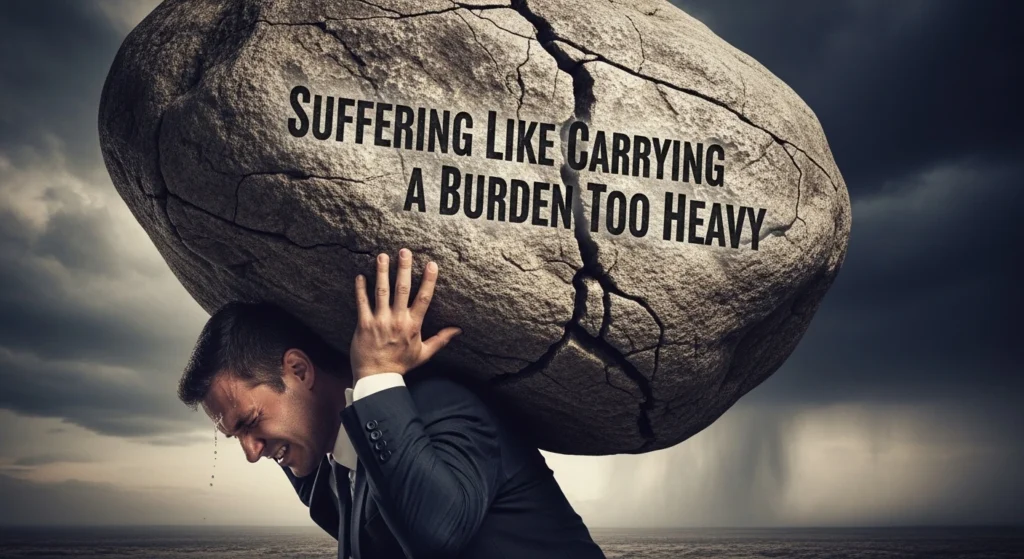
Meaning: Shows long-term emotional or responsibility-based suffering.
Emotional Tone: Exhausting, weary, resigned.
Best Usage Context: Narrative writing, motivational pieces.
Example Sentences:
- He lived carrying a burden too heavy.
- Responsibility weighed like an impossible load.
- Pain dragged her down like chains.
- Regret felt heavier each year.
- Suffering pressed like a lifelong burden.
Pain Like a Silent Screaming Voice
Meaning: Represents pain that cannot be expressed outwardly.
Emotional Tone: Suppressed, internal, desperate.
Best Usage Context: Poetry, introspective writing.
Example Sentences:
- His smile hid a silent scream.
- Pain echoed without sound.
- She suffered in silence, screaming inside.
- The hurt was loud only in his mind.
- Silence became its own scream.
Suffering Like Being Lost in a Maze
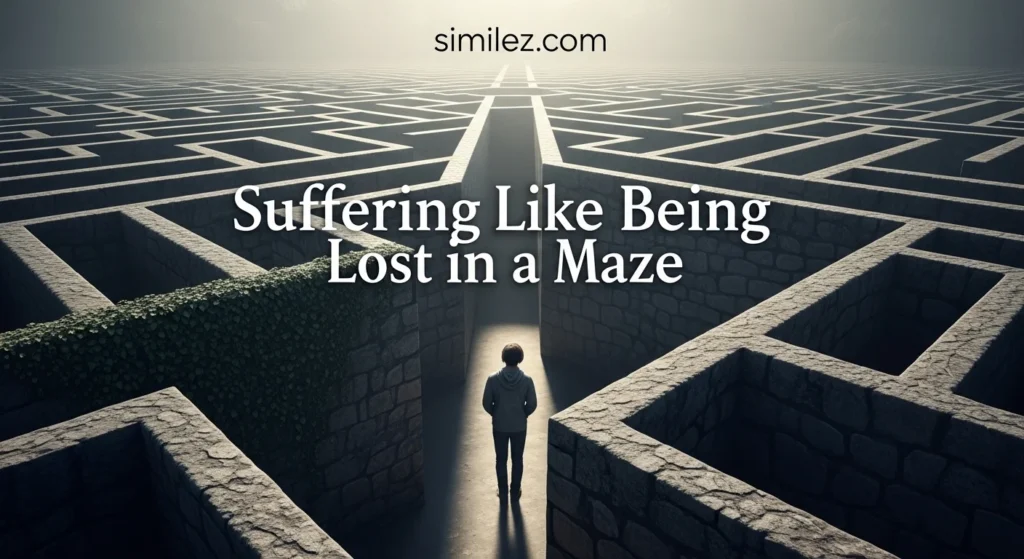
Meaning: Shows confusion and emotional disorientation.
Emotional Tone: Confused, anxious, searching.
Best Usage Context: Self-reflection, character arcs.
Example Sentences:
- Grief felt like being lost in a maze.
- He wandered emotionally without direction.
- Pain twisted like endless corridors.
- She searched for answers inside a maze.
- Suffering trapped him without an exit.
Pain Like Needles Piercing the Skin
Meaning: Describes sharp, repeated physical or emotional pain.
Emotional Tone: Sharp, irritating, relentless.
Best Usage Context: Physical pain descriptions, emotional stress.
Example Sentences:
- Guilt pricked him like needles.
- Pain stabbed again and again.
- Her anxiety felt sharp and poking.
- Each insult pierced like tiny needles.
- Fear jabbed without rest.
Suffering Like a Cracked Mirror

Meaning: Represents broken identity or self-image.
Emotional Tone: Fragile, broken, reflective.
Best Usage Context: Poetry, identity-focused writing.
Example Sentences:
- Trauma left him like a cracked mirror.
- She no longer recognized herself.
- Pain fractured her sense of self.
- Memories reflected in broken pieces.
- Suffering distorted how he saw himself.
Pain Like Chains Around the Soul
Meaning: Shows emotional imprisonment and restriction.
Emotional Tone: Restrained, heavy, hopeless.
Best Usage Context: Poetry, dramatic prose.
Example Sentences:
- Regret wrapped him like chains.
- Fear bound her to the past.
- Pain tightened around his soul.
- Suffering felt inescapable.
- Emotional chains held him back.
Suffering Like Watching a Slow Sunset Fade
Meaning: Represents quiet, gradual loss or sadness.
Emotional Tone: Melancholic, reflective, gentle.
Best Usage Context: Poetry, reflective essays, endings.
Example Sentences:
- Hope faded like a slow sunset.
- Love disappeared quietly and slowly.
- Pain lingered without noise.
- Life dimmed like evening light.
- Suffering came soft but lasting.
Conclusion
Pain and suffering are universal, but words give them shape, meaning, and connection. By using similes for pain and suffering, writers transform deep emotions into images readers can see, feel, and remember. Whether you’re crafting poetry, sharing personal experiences, or simply trying to explain how something hurts, similes add clarity and emotional power.