
Laughter is one of the most human sounds in the world—but describing it well can be surprisingly tricky. This is where similes for laughing come in.
A simile is a figure of speech that compares one thing to another using words like “as” or “like.” Writers use similes to make descriptions more vivid, emotional, and easy to imagine. Instead of simply saying “he laughed,” a simile helps the reader see, hear, and feel that laughter.
In figurative language, similes are powerful because they turn abstract feelings into clear mental pictures. In this article, you’ll explore 18 expressive similes for laughing, each explained in depth with meanings, emotional tones, best usage contexts, and plenty of natural examples—including daily-use and texting-style sentences. Whether you’re writing poetry, stories, essays, or casual messages, these similes will sharpen your expressive writing skills.
Laughing Like a Hyena
Meaning: This simile describes loud, wild, and uncontrollable laughter.
Emotional Tone: Playful, excessive, sometimes chaotic.
Best Usage Context: Storytelling, fiction, casual speech.
Example Sentences:
- He laughed like a hyena, clutching his stomach.
- The kids were laughing like hyenas during the movie.
- She burst out laughing like a hyena at the joke.
- His laugh echoed like a hyena’s cry in the hall.
- Texting: “😂 I’m laughing like a hyena right now!”
Laughing Like a Child
Meaning: Pure, innocent, and carefree laughter.
Emotional Tone: Joyful, warm, nostalgic.
Best Usage Context: Poetry, reflective writing, storytelling.
Example Sentences:
- She laughed like a child, free of worries.
- He laughed like a child on a swing, full of delight.
- The moment made her laugh like a child again.
- His eyes sparkled as he laughed like a child.
- Daily use: “I laughed like a child watching that show.”
Laughing Like Bells Ringing
Meaning: Light, musical, and pleasant laughter.
Emotional Tone: Cheerful, elegant, bright.
Best Usage Context: Poetry, descriptive prose.
Example Sentences:
- Her laughter rang like bells ringing in the air.
- The room filled with laughter like bells.
- She laughed like silver bells, soft and clear.
- His laugh chimed like bells on a windy day.
- Creative writing: “Her laugh was like bells ringing at dawn.”
Laughing Like Thunder
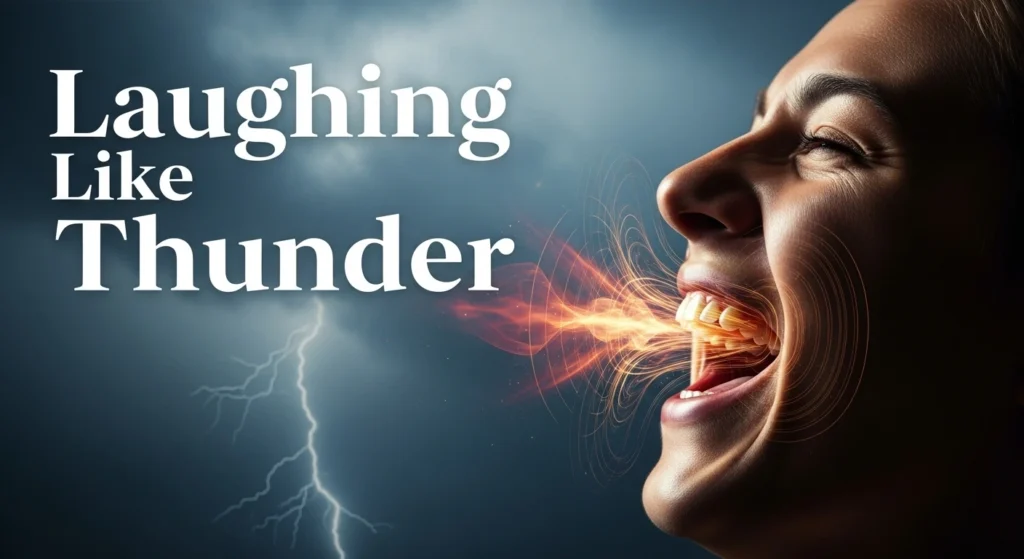
Meaning: Powerful, booming laughter that fills space.
Emotional Tone: Bold, intense, overwhelming.
Best Usage Context: Fiction, dramatic writing.
Example Sentences:
- He laughed like thunder, shaking the room.
- His laughter rolled like thunder across the hall.
- She laughed like thunder after the punchline.
- The king laughed like thunder in the court.
- Casual: “He laughed like thunder—everyone stared!”
Laughing Like a Barking Dog
Meaning: Short, sharp bursts of laughter.
Emotional Tone: Sudden, humorous, awkward.
Best Usage Context: Storytelling, character description.
Example Sentences:
- He laughed like a barking dog, quick and loud.
- Her laugh came out like a dog’s bark.
- She laughed like a barking dog at her own joke.
- His laughter sounded sharp like a bark.
- Texting: “LOL I’m laughing like a barking dog 😂”
Laughing Like a Flowing Stream
Meaning: Smooth, continuous, gentle laughter.
Emotional Tone: Peaceful, soothing, natural.
Best Usage Context: Poetry, descriptive essays.
Example Sentences:
- Her laughter flowed like a gentle stream.
- He laughed like water running over stones.
- The garden echoed with laughter like a stream.
- She laughed softly, like a flowing stream.
- Daily use: “Her laugh is like a calm stream—so relaxing.”
Laughing Like Firecrackers
Meaning: Rapid, explosive bursts of laughter.
Emotional Tone: Excited, energetic, chaotic.
Best Usage Context: Narratives, informal writing.
Example Sentences:
- The class laughed like firecrackers.
- His laughter popped like firecrackers.
- She laughed suddenly, like firecrackers going off.
- The joke set off laughter like firecrackers.
- Casual: “That joke had us laughing like firecrackers!”
Laughing Like a Madman

Meaning: Uncontrolled or exaggerated laughter.
Emotional Tone: Intense, unsettling, dramatic.
Best Usage Context: Fiction, psychological writing.
Example Sentences:
- He laughed like a madman in the dark.
- She laughed like a madman, startling everyone.
- His laughter echoed like madness.
- The villain laughed like a madman.
- Story use: “He laughed like a madman at his own plan.”
Laughing Like Sunshine
Meaning: Warm, uplifting laughter that spreads happiness.
Emotional Tone: Positive, bright, affectionate.
Best Usage Context: Poetry, emotional storytelling.
Example Sentences:
- Her laughter spread like sunshine.
- He laughed like sunshine breaking clouds.
- The room warmed with laughter like sunshine.
- She laughed, bright like morning sunshine.
- Daily use: “Her laugh is pure sunshine.”
Laughing Like a Broken Engine
Meaning: Awkward, forced, or uneven laughter.
Emotional Tone: Uncomfortable, nervous.
Best Usage Context: Character description, humor writing.
Example Sentences:
- He laughed like a broken engine.
- Her laugh sputtered like an old engine.
- The silence made him laugh like a broken engine.
- His nervous laugh sounded mechanical.
- Casual: “My laugh came out like a broken engine 😅”
Laughing Like Birds Chirping
Meaning: Light, quick, cheerful laughter.
Emotional Tone: Fresh, lively, innocent.
Best Usage Context: Poetry, nature writing.
Example Sentences:
- Children laughed like birds chirping.
- Her laughter fluttered like chirping birds.
- The playground echoed with laughter like birds.
- He laughed softly, like birds at dawn.
- Daily use: “Kids laughing like birds—so sweet.”
Laughing Like Waves Crashing
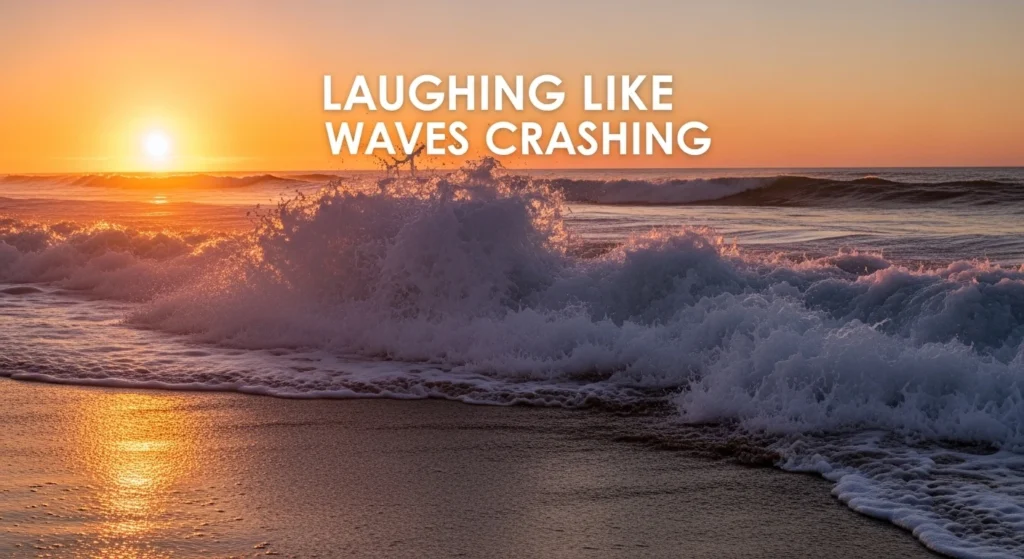
Meaning: Strong laughter that comes in repeated bursts.
Emotional Tone: Energetic, emotional.
Best Usage Context: Descriptive storytelling.
Example Sentences:
- His laughter crashed like ocean waves.
- She laughed again and again, like waves.
- The group’s laughter rolled like waves.
- Laughter rose like waves on shore.
- Casual: “We laughed in waves—couldn’t stop!”
Laughing Like a Witch’s Cackle
Meaning: Sharp, eerie, exaggerated laughter.
Emotional Tone: Mischievous, creepy, dramatic.
Best Usage Context: Fantasy, fiction.
Example Sentences:
- She laughed like a witch’s cackle.
- His laugh cracked like a witch’s cackle.
- The villain laughed like a witch.
- Her laughter sent chills.
- Story use: “She laughed like a witch in the shadows.”
Laughing Like a Drumroll
Meaning: Rhythmic, rolling laughter.
Emotional Tone: Playful, building excitement.
Best Usage Context: Creative writing.
Example Sentences:
- His laughter rolled like a drumroll.
- She laughed in beats like a drumroll.
- The joke triggered laughter like a drumroll.
- Laughter built like a drumroll before applause.
- Daily: “That laugh came out like a drumroll!”
Laughing Like Glass Chimes
Meaning: Delicate, high-pitched laughter.
Emotional Tone: Gentle, graceful.
Best Usage Context: Poetry, romantic writing.
Example Sentences:
- Her laugh tinkled like glass chimes.
- She laughed softly, like chimes in the wind.
- The sound was light and musical.
- Her laughter shimmered.
- Creative: “Her laugh was like glass chimes.”
Laughing Like a Volcano Erupting

Meaning: Sudden, explosive laughter.
Emotional Tone: Overwhelming, intense.
Best Usage Context: Fiction, dramatic scenes.
Example Sentences:
- He laughed like a volcano erupting.
- Laughter burst out uncontrollably.
- She erupted in laughter.
- His laugh surprised everyone.
- Casual: “I just exploded laughing 😂”
Laughing Like a Spring Breeze
Meaning: Soft, refreshing laughter.
Emotional Tone: Calm, joyful, uplifting.
Best Usage Context: Poetry, reflective writing.
Example Sentences:
- Her laughter drifted like a spring breeze.
- He laughed lightly, like a breeze.
- The sound refreshed the mood.
- Laughter floated through the room.
- Daily use: “Her laugh feels like a breeze.”
Laughing Like a Clock Gone Wild
Meaning: Unpredictable, nonstop laughter.
Emotional Tone: Humorous, chaotic.
Best Usage Context: Comedy, informal writing.
Example Sentences:
- He laughed like a clock gone wild.
- Her laughter wouldn’t stop.
- The room filled with endless giggles.
- His laugh ticked and burst.
- Texting: “I can’t stop laughing—it’s wild 😂”
Conclusion
Using similes for laughing transforms simple descriptions into vivid, emotional experiences. Whether you’re crafting poetry, writing stories, improving essays, or sending casual texts, similes help your words feel alive and memorable. By choosing the right comparison, you don’t just describe laughter—you let readers hear it, feel it, and share it.