
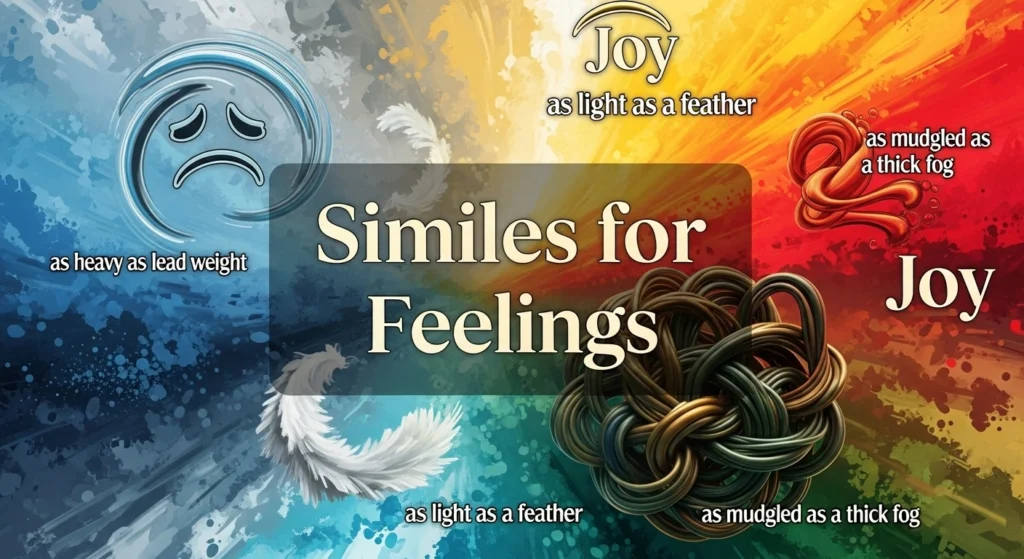
Feelings are often hard to explain with plain words. That is where similes for feelings become incredibly useful. A simile is a figure of speech that compares one thing to another using“like” or“as.” Writers, poets, students, and everyday speakers use similes to make emotions clearer, stronger, and more visual.
Instead of simply saying “I’m sad,” a simile helps the reader see and feel the sadness: “I’m sad like a wilted flower.” This vivid imagery makes language more engaging and memorable.
In this in-depth guide, you’ll explore 18 expressive similes for feelings, learn their meanings, emotional tones, best usage contexts, and see plenty of natural examples—including daily speech and casual texting—to help you use them confidently.
Happy Like a Child on Christmas Morning
Meaning: Pure, excited, and overflowing happiness Emotional Tone:
Joyful, energetic, innocent Best Used In: Storytelling, personal writing, casual speech
This simile captures unfiltered joy and excitement.
Examples:
- She was happy like a child on Christmas morning when she got the job.
- He walked into the room smiling, happy like a child on Christmas morning.
- I felt happy like a child on Christmas morning seeing my family again.
- The puppy wagged its tail, happy like a child on Christmas morning.
- Texting: “Got concert tickets! Feeling happy like a kid on Christmas morning 🎄”
Sad Like a Cloudy Day

Meaning: Gentle, lingering sadness Emotional Tone: Soft, reflective Best Used In: Poetry, reflective writing
This simile suggests quiet emotional heaviness rather than intense grief.
Examples:
- Her mood was sad like a cloudy day with no sun in sight.
- He felt sad like a cloudy day after the farewell.
- The room felt sad like a cloudy day without laughter.
- My thoughts drifted, sad like a cloudy day.
- Daily use: “I’m not upset—just sad like a cloudy day.”
Angry Like a Storm Ready to Break
Meaning: Building, powerful anger Emotional Tone: Intense, volatile Best Used In: Fiction, dramatic narratives
This simile shows anger that is about to explode.
Examples:
- He stood silent, angry like a storm ready to break.
- Her voice trembled, angry like a storm ready to break.
- The argument left him angry like a storm ready to break.
- She clenched her fists, angry like a storm ready to break.
- Casual: “I’m calm now, but earlier I was angry like a storm.”
Calm Like a Still Lake

Meaning: Deep emotional peace Emotional Tone: Serene, balanced Best Used In: Mindfulness writing, poetry
This simile suggests emotional stability and clarity.
Examples:
- After meditation, her mind was calm like a still lake.
- He stayed calm like a still lake during the chaos.
- The morning felt calm like a still lake.
- She spoke calm like a still lake, easing everyone.
- Texting: “Finally relaxed—calm like a still lake 🌊”
Nervous Like a Cat in a New Room
Meaning: Uneasy, alert nervousness Emotional Tone: Tense, cautious
Best Used In: Daily speech, storytelling
This simile captures alert anxiety.
Examples:
- I felt nervous like a cat in a new room before the interview.
- He was nervous like a cat in a new room at the party.
- She glanced around, nervous like a cat in a new room.
- The child stood nervous like a cat in a new room.
- Casual: “First day jitters—nervous like a cat.”
Excited Like Fireworks in the Sky

Meaning: Bursting excitement Emotional Tone: Energetic, celebratory
Best Used In: Personal writing, storytelling
This simile shows joy that can’t be contained.
Examples:
- My heart felt excited like fireworks in the sky.
- The crowd was excited like fireworks in the sky.
- She spoke excited like fireworks in the sky.
- The news left me excited like fireworks.
- Texting: “Road trip tomorrow—excited like fireworks 🎆”
Lonely Like a Single Star at Night
Meaning: Quiet emotional isolation Emotional Tone: Melancholic, gentle Best Used In: Poetry, emotional narratives
This simile reflects soft loneliness.
Examples:
- He felt lonely like a single star at night.
- The house seemed lonely like a single star at night.
- She stared out the window, lonely like a single star.
- His voice sounded lonely like a single star.
- Daily use: “Some nights feel lonely like a single star.”
Proud Like a Peacock

Meaning: Confident pride Emotional Tone: Bold, self-assured Best Used In: Storytelling, motivational writing
Examples:
- She stood proud like a peacock after her victory.
- He walked in proud like a peacock.
- They smiled, proud like peacocks.
- The child beamed, proud like a peacock.
- Casual: “Finished my project—proud like a peacock 🦚”
Scared Like a Deer in Headlights
Meaning: Frozen fear Emotional Tone: Shocked, vulnerable Best Used In: Fiction, daily speech
Examples:
- He froze, scared like a deer in headlights.
- I stood scared like a deer in headlights.
- She looked scared like a deer.
- The sudden noise left him scared like a deer.
- Texting: “Boss called unexpectedly—deer in headlights 😳”
Loved Like Warm Sunshine

Meaning: Deep emotional comfort Emotional Tone: Gentle, reassuring
Best Used In: Romantic writing, poetry
Examples:
- She felt loved like warm sunshine.
- His words wrapped around her, loved like warm sunshine.
- The hug felt loved like warm sunshine.
- Home always feels loved like sunshine.
- Casual: “That message made me feel loved like sunshine ☀️”
Confused Like a Lost Map
Meaning: Mental uncertainty Emotional Tone: Disoriented
Best Used In: Academic writing, narratives
Examples:
- I felt confused like a lost map.
- His thoughts were confused like a lost map.
- She looked confused like a lost map.
- The instructions left me confused like a lost map.
- Daily: “This assignment has me confused like a lost map.”
Hopeful Like a Budding Flower
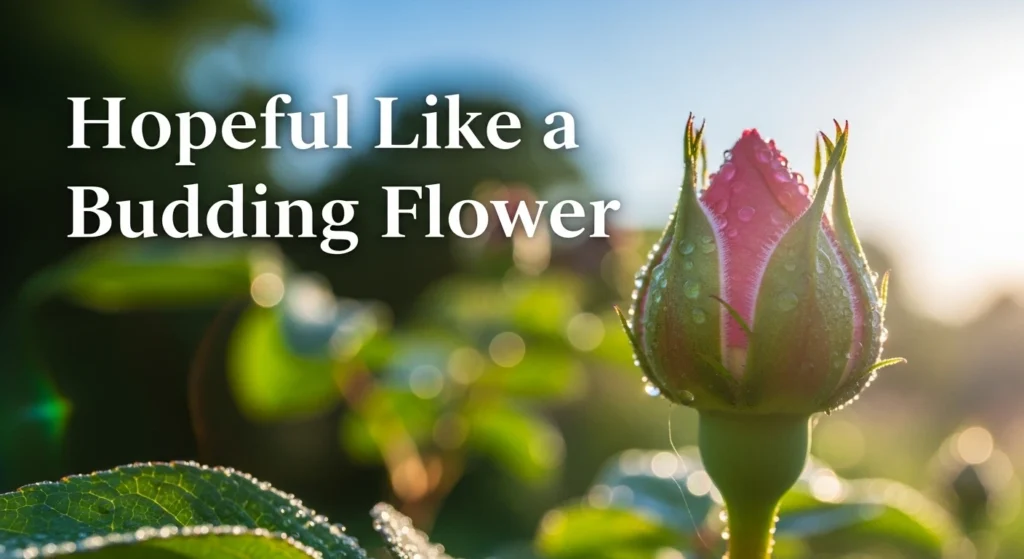
Meaning: Growing optimism Emotional Tone: Gentle, positive Best Used In: Inspirational writing
Examples:
- She felt hopeful like a budding flower.
- His dreams grew hopeful like a budding flower.
- The future seemed hopeful like a flower.
- They waited, hopeful like budding flowers.
- Texting: “New beginnings—hopeful like a budding flower 🌱”
Tired Like a Drained Battery
Meaning: Complete exhaustion Emotional Tone: Weary, honest Best Used In: Daily speech
Examples:
- I’m tired like a drained battery.
- She sounded tired like a drained battery.
- He collapsed, tired like a drained battery.
- We felt tired like drained batteries.
- Casual: “Long day—battery at 1% 😴”
Relieved Like a Heavy Load Lifted

Meaning: Stress released Emotional Tone: Light, grateful Best Used In: Storytelling
Examples:
- I felt relieved like a heavy load lifted.
- She sighed, relieved like a heavy load lifted.
- His smile showed he was relieved like a load lifted.
- The news left us relieved like a heavy load lifted.
- Daily: “Exam done—huge relief!”
Jealous Like a Green-Eyed Monster
Meaning: Envious feelings Emotional Tone: Intense, uneasy Best Used In: Literature
Examples:
- Jealousy crept in, like a green-eyed monster.
- He felt jealous like a green-eyed monster.
- Her thoughts turned green-eyed.
- The emotion grew like a green-eyed monster.
- Casual: “Not jealous… okay, maybe a little 😅”
Brave Like a Lion

Meaning: Courage and strength Emotional Tone: Bold, empowering Best Used In: Motivational writing
Examples:
- She stood brave like a lion.
- He faced fear, brave like a lion.
- The child acted brave like a lion.
- Her voice sounded brave like a lion.
- Texting: “Wish me luck—lion mode activated 🦁”
17. Guilty Like a Stolen Cookie
Meaning: Obvious guilt Emotional Tone: Light, humorous Best Used In: Casual speech
Examples:
- He smiled, guilty like a stolen cookie.
- She looked guilty like a stolen cookie.
- I felt guilty like a stolen cookie.
- The silence felt guilty like a stolen cookie.
- Daily: “Yep, I ate it 😬”
Free Like the Open Sky
Meaning: Emotional liberation Emotional Tone: Uplifting, expansive Best Used In: Poetry, reflective writing
Examples:
- She felt free like the open sky.
- His spirit soared, free like the open sky.
- Travel makes me feel free like the open sky.
- They laughed, free like the open sky.
- Casual: “No deadlines today—free like the sky ✈️”
Final Thoughts
Using similes for feelings transforms ordinary language into expressive, memorable communication. Whether you’re writing poetry, telling stories, improving academic work, or simply texting a friend, similes help emotions feel real, visual, and human.