

Experience shapes who we are, what we believe, and how we see the world. To describe experience more vividly, writers and speakers often rely on similes—comparisons using like or as—to turn abstract ideas into clear, memorable images.
In simple terms, similes are a type of figurative language that compare one thing to another to help readers see, feel, or understand an idea better. They are commonly used in poetry, storytelling, speeches, and even daily conversation because they make language more colorful and relatable. When we talk about experience, similes help capture emotions, growth, struggle, joy, and learning in ways plain words cannot.
Below are 18 carefully chosen similes for experience, each explained in depth, with emotional tone, best usage context, and multiple natural example sentences—including some for daily use or casual texting—to make them practical and engaging.
Experience Is Like a Teacher That Never Sleeps
Meaning: Experience constantly teaches lessons, even when we are not actively seeking them.
Emotional Tone: Wise, reflective, slightly serious.
Best Usage Context: Essays, motivational writing, speeches, academic reflection.
Example Sentences:
- Experience is like a teacher that never sleeps, always correcting our mistakes.
- I learned more from experience than from any classroom lesson.
- Her experience guided her decisions like a patient mentor.
- Life keeps teaching us—experience never takes a break.
- Daily use: “Trust me, experience is the best teacher.”
Experience Is Like a Long Road with Many Turns
Meaning: Experience is a journey filled with surprises, challenges, and growth.
Emotional Tone: Hopeful, thoughtful.
Best Usage Context: Storytelling, personal essays, motivational content.
Example Sentences:
- Experience is like a long road with many turns you never expect.
- Every year adds another mile to our experience.
- His experience took him through failures and success alike.
- The road of experience is rarely straight.
- Casual text: “Still learning—this road has many turns.”
Experience Is Like a Book Written by Life
Meaning: Each experience adds a new chapter to our personal story.
Emotional Tone: Creative, reflective.
Best Usage Context: Poetry, reflective writing, creative storytelling.
Example Sentences:
- Experience is like a book written by life itself.
- Every mistake added a page to her story.
- His experiences shaped a powerful life narrative.
- Some chapters are painful, others inspiring.
- Daily use: “That’s another chapter of my life.”
Experience Is Like Fire That Refines Gold
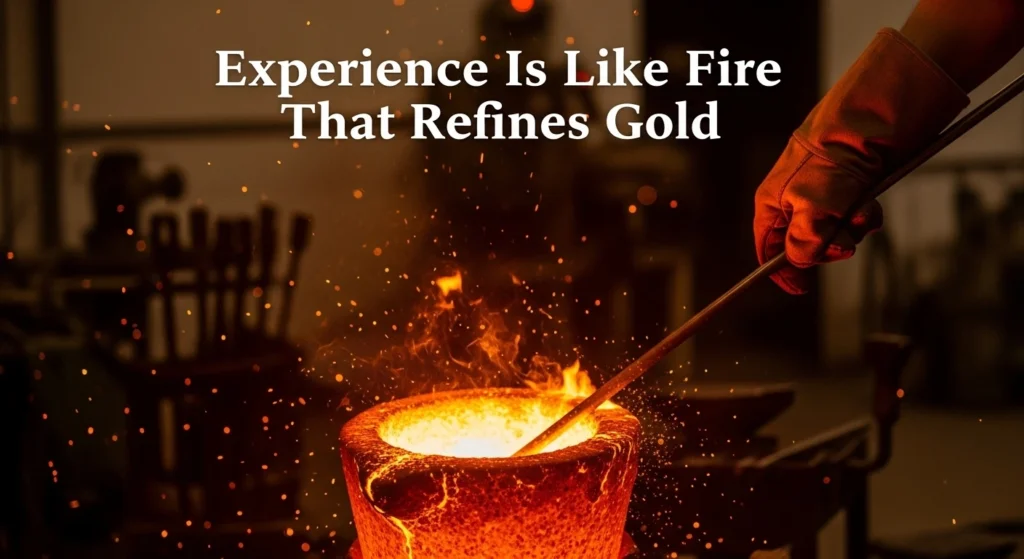
Meaning: Difficult experiences improve character and strength.
Emotional Tone: Intense, inspiring.
Best Usage Context: Motivational writing, speeches, self-development content.
Example Sentences:
- Experience is like fire that refines gold.
- Hard times shaped her into a stronger person.
- Experience burned away his weaknesses.
- Growth often comes through discomfort.
- Casual text: “This struggle is refining me.”
Experience Is Like a Mirror
Meaning: Experience reflects our true strengths, flaws, and values.
Emotional Tone: Honest, introspective.
Best Usage Context: Self-reflection, psychology, personal essays.
Example Sentences:
- Experience is like a mirror showing who we really are.
- Failure reflected his hidden resilience.
- Experience reveals truths we ignore.
- The mirror of life doesn’t lie.
- Daily use: “Life really showed me today.”
Experience Is Like a Heavy Backpack
Meaning: Experience carries lessons and memories, sometimes burdensome.
Emotional Tone: Serious, emotional.
Best Usage Context: Narratives, emotional storytelling.
Example Sentences:
- Experience is like a heavy backpack we carry everywhere.
- His past weighed on him.
- Some experiences are hard to put down.
- Wisdom often comes with weight.
- Casual text: “Carrying a lot from the past.”
Experience Is Like a Compass
Meaning: Experience helps guide future decisions.
Emotional Tone: Confident, reassuring.
Best Usage Context: Leadership writing, career advice.
Example Sentences:
- Experience is like a compass in uncertain times.
- She trusted her experience to lead her.
- Past lessons pointed the right direction.
- Experience keeps us from getting lost.
- Daily use: “Experience guides me now.”
Experience Is Like a Sculptor

Meaning: Experience slowly shapes personality and character.
Emotional Tone: Artistic, thoughtful.
Best Usage Context: Creative writing, philosophy.
Example Sentences:
- Experience is like a sculptor shaping us over time.
- Every event carved his personality.
- Pain and joy molded her strength.
- Experience never stops shaping us.
- Casual text: “Life is shaping me.”
Experience Is Like a Storm
Meaning: Experience can be intense, chaotic, but transformative.
Emotional Tone: Dramatic, powerful.
Best Usage Context: Poetry, emotional storytelling.
Example Sentences:
- Experience is like a storm that changes the landscape.
- The storm left him wiser.
- Hard times shook her deeply.
- Calm followed the experience.
- Daily use: “That was an emotional storm.”
Experience Is Like a Map of Mistakes
Meaning: Experience shows where we went wrong and how to improve.
Emotional Tone: Practical, honest.
Best Usage Context: Educational writing, self-help.
Example Sentences:
- Experience is like a map of mistakes.
- His errors showed the right path.
- Experience teaches through failure.
- Mistakes become guidance.
- Casual text: “Learning from my mistakes.”
Experience Is Like an Old Friend
Meaning: Experience becomes familiar and trustworthy over time.
Emotional Tone: Warm, comforting.
Best Usage Context: Personal essays, speeches.
Example Sentences:
- Experience is like an old friend offering advice.
- She relied on experience.
- Experience never abandons you.
- It speaks softly but clearly.
- Daily use: “Experience has my back.”
Experience Is Like a Test Without a Syllabus

Meaning: Life teaches without warning or preparation.
Emotional Tone: Realistic, slightly humorous.
Best Usage Context: Modern writing, blogs.
Example Sentences:
- Experience is like a test without a syllabus.
- Life doesn’t give study guides.
- You learn while doing.
- Experience surprises us.
- Casual text: “Life really tested me today.”
Experience Is Like a Silent Teacher
Meaning: Lessons are learned quietly through living.
Emotional Tone: Calm, reflective.
Best Usage Context: Poetry, reflective prose.
Example Sentences:
- Experience is like a silent teacher.
- It teaches without words.
- Lessons appear over time.
- Silence carries wisdom.
- Daily use: “Experience taught me quietly.”
Experience Is Like a Puzzle
Meaning: Understanding experience takes time and reflection.
Emotional Tone: Curious, thoughtful.
Best Usage Context: Analytical writing, storytelling.
Example Sentences:
- Experience is like a puzzle.
- Pieces come together slowly.
- Understanding comes later.
- Life makes sense in hindsight.
- Casual text: “Still figuring it out.”
Experience Is Like a Bridge
Meaning: Experience connects past lessons to future actions.
Emotional Tone: Hopeful, forward-looking.
Best Usage Context: Career writing, leadership content.
Example Sentences:
- Experience is like a bridge between past and future.
- Lessons crossed into wisdom.
- Experience connects growth.
- Progress depends on it.
- Daily use: “Past helps my future.”
Experience Is Like a Shadow

Meaning: Experience always follows us.
Emotional Tone: Deep, emotional.
Best Usage Context: Literary writing.
Example Sentences:
- Experience is like a shadow that never leaves.
- His past followed him.
- Memories linger.
- Experience shapes reactions.
- Casual text: “Past still follows me.”
Experience Is Like a Key
Meaning: Experience unlocks understanding and opportunity.
Emotional Tone: Empowering.
Best Usage Context: Motivational, professional writing.
Example Sentences:
- Experience is like a key to wisdom.
- Doors open with experience.
- Knowledge grows through action.
- Experience unlocks success.
- Daily use: “Experience opened doors.”
Experience Is Like a River
Meaning: Experience flows continuously, shaping life.
Emotional Tone: Peaceful, philosophical.
Best Usage Context: Poetry, reflective essays.
Example Sentences:
- Experience is like a river that never stops flowing.
- Life carries us forward.
- Every moment adds movement.
- Change is constant.
- Casual text: “Just going with the flow.”
Conclusion
Similes for experience allow us to transform abstract life lessons into vivid, meaningful images. Whether you are writing poetry, telling a personal story, crafting an essay, or simply texting a friend, the right simile can bring depth, clarity, and emotion to your words.
By using expressive comparisons, you don’t just describe experience—you bring it to life. Keep exploring language creatively, and let your experiences flow into words that truly connect with readers.