
Language becomes memorable when it paints pictures in the reader’s mind. That is exactly what similes do. A simile is a figure of speech that compares two unlike things using “like” or “as” to make ideas clearer, more vivid, and emotionally engaging. Writers, poets, students, and everyday speakers use similes because they turn abstract ideas into something readers can see and feel instantly.
When describing how someone or something is different, similes are especially powerful. They help explain uniqueness, contrast, originality, or even strangeness in a creative and relatable way. In this in-depth guide, you’ll explore similes for different, their meanings, emotional tones, best usage contexts, and plenty of original examples you can use in writing, conversation, or even casual texts.
Different Like Night and Day
Meaning: This simile highlights a complete and obvious contrast between two things.
Emotional Tone: Clear, strong, and decisive.
Best Used In:
- Storytelling
- Essays
- Everyday speech
Example Sentences:
- Their personalities are different like night and day.
- The new system is night and day compared to the old one.
- Life before and after the move felt different like night and day.
- Her mood today is night and day from yesterday.
- Working alone is night and day compared to teamwork.
Daily-use tip:
“Wow, this update is night and day better!”
Different Like Apples and Oranges
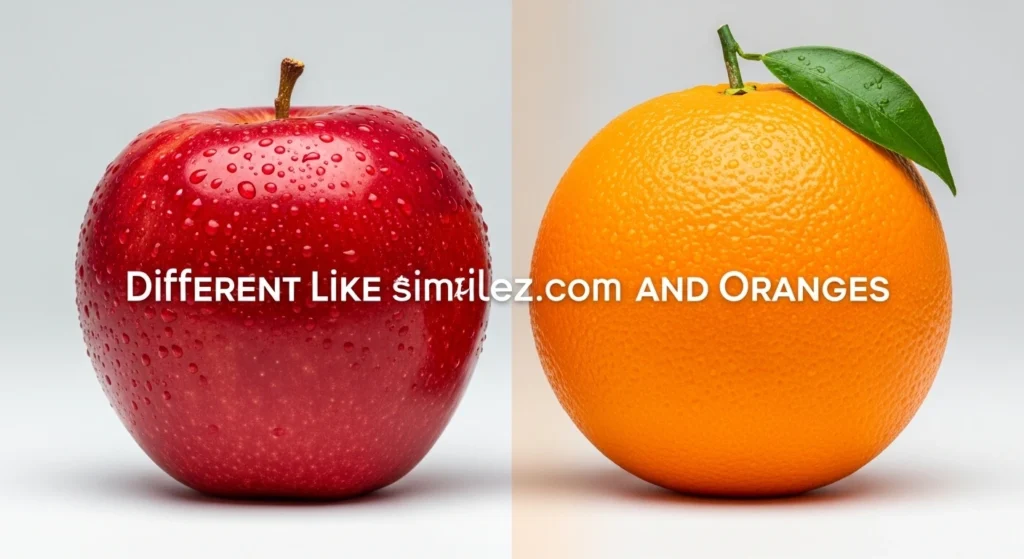
Meaning: Used when two things are so different they cannot be fairly compared.
Emotional Tone: Logical and explanatory.
Best Used In:
- Academic writing
- Discussions
- Debates
Example Sentences:
- Comparing the two plans is like apples and oranges.
- Art and science are different like apples and oranges.
- Their goals are apples and oranges altogether.
- You can’t judge those careers—they’re apples and oranges.
- The teaching styles are different like apples and oranges.
Different Like Fire and Ice
Meaning: Shows extreme contrast, often in personality or emotion.
Emotional Tone: Dramatic and intense.
Best Used In:
- Poetry
- Fiction
- Character descriptions
Example Sentences:
- The sisters are different like fire and ice.
- His anger and her calm were fire and ice.
- Their leadership styles clash like fire and ice.
- The twins couldn’t be more fire and ice.
- Passion and logic stood like fire and ice.
Different Like Chalk and Cheese
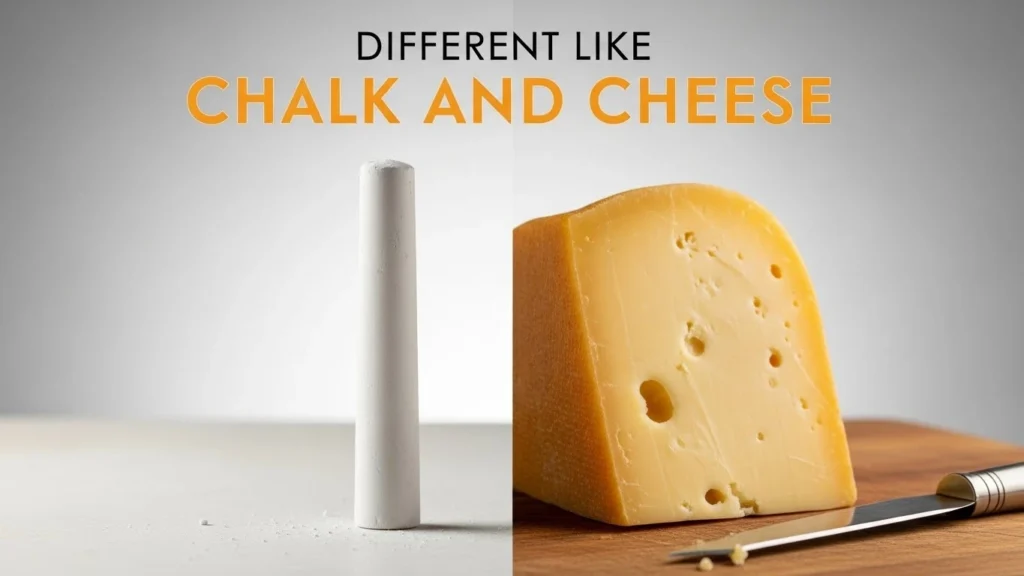
Meaning: Emphasizes noticeable and undeniable difference.
Emotional Tone: Casual and expressive.
Best Used In:
- Informal writing
- Conversations
Example Sentences:
- Their tastes are chalk and cheese.
- City life and village life are chalk and cheese.
- His old job and new one are chalk and cheese.
- The two movies were chalk and cheese.
- Their approaches feel chalk and cheese.
Different Like Oil and Water
Meaning: Describes things that do not mix or get along.
Emotional Tone: Neutral to slightly tense.
Best Used In:
- Relationship descriptions
- Social commentary
Example Sentences:
- Their personalities are like oil and water.
- Creativity and strict rules felt oil and water.
- Those teammates mix like oil and water.
- His style and the company culture were oil and water.
- They coexist like oil and water.
Different Like Black and White
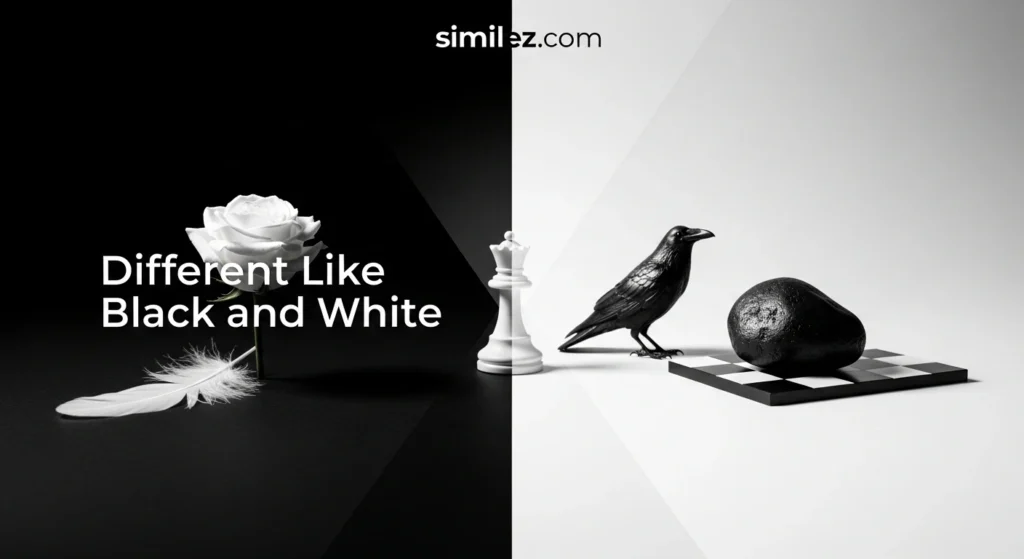
Meaning: Highlights stark and unmistakable contrast.
Emotional Tone: Direct and absolute.
Best Used In:
- Arguments
- Moral discussions
Example Sentences:
- The rules are black and white now.
- Her opinions are black and white compared to his.
- The outcomes were different like black and white.
- Truth and lies stood black and white.
- The difference is black and white.
Different Like East and West
Meaning: Shows vast cultural or ideological differences.
Emotional Tone: Reflective and broad.
Best Used In:
- Essays
- Cultural writing
Example Sentences:
- Their beliefs are different like East and West.
- Tradition and modernity felt East and West.
- Their thinking is East and West apart.
- The lifestyles remain East and West.
- Perspectives clashed like East and West.
Different Like Daylight and Darkness
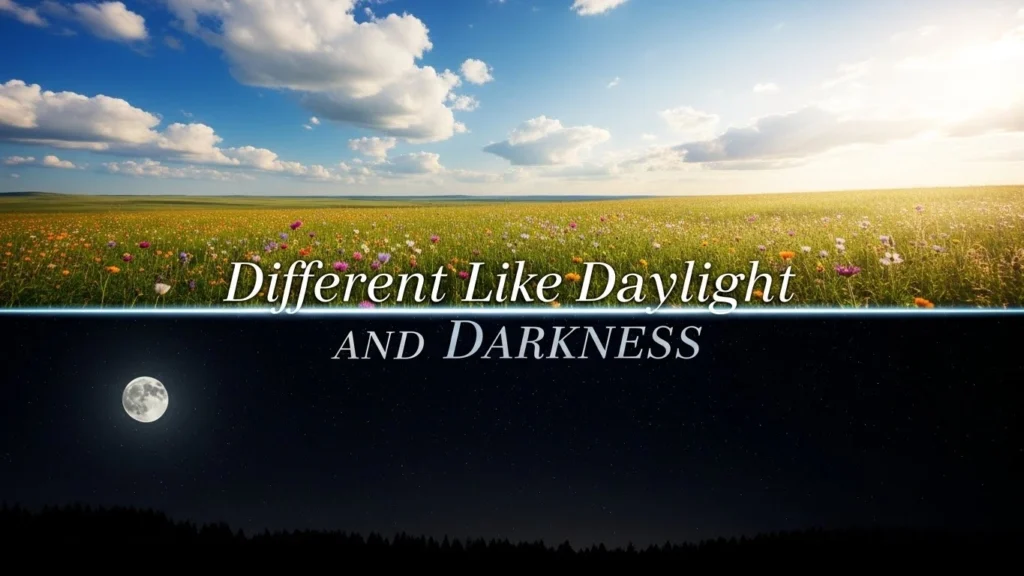
Meaning: Suggests contrast between clarity and uncertainty.
Emotional Tone: Emotional and vivid.
Best Used In:
- Storytelling
- Reflective writing
Example Sentences:
- His honesty and her secrecy were daylight and darkness.
- The truth stood out like daylight from darkness.
- Life before healing was darkness, now daylight.
- Their intentions were daylight and darkness.
- Hope and fear felt daylight and darkness.
Different Like a Square Peg in a Round Hole
Meaning: Describes someone or something that doesn’t fit.
Emotional Tone: Sympathetic or critical.
Best Used In:
- Workplace writing
- Personal reflection
Example Sentences:
- He felt like a square peg in a round hole.
- The role made her a square peg.
- His ideas were square pegs there.
- That system is a round hole for no one.
- I felt square-peg different.
Different Like Two Sides of a Coin
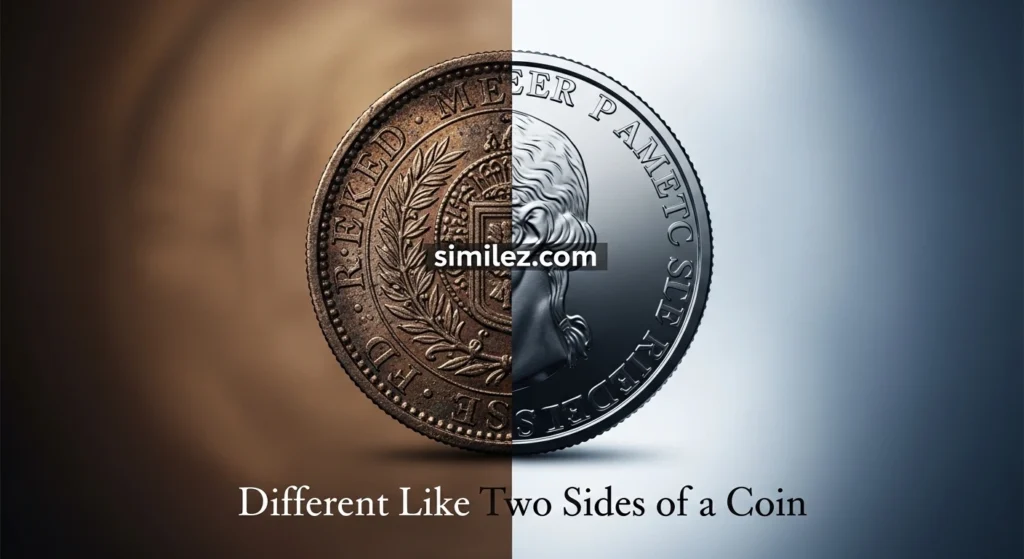
Meaning: Shows contrast while still being connected.
Emotional Tone: Balanced and thoughtful.
Best Used In:
- Essays
- Philosophical writing
Example Sentences:
- Logic and emotion are two sides of a coin.
- Their methods differ like coin sides.
- Success and failure felt coin-sided.
- Leadership has two sides of a coin.
- Their views are connected yet different.
Different Like Snowflakes
Meaning: Emphasizes uniqueness.
Emotional Tone: Positive and gentle.
Best Used In:
- Inspirational writing
- Education
Example Sentences:
- Every student is different like snowflakes.
- Ideas fell like unique snowflakes.
- No two dreams are snowflake-alike.
- Their talents were snowflake different.
- People shine like snowflakes.
Different Like a New World
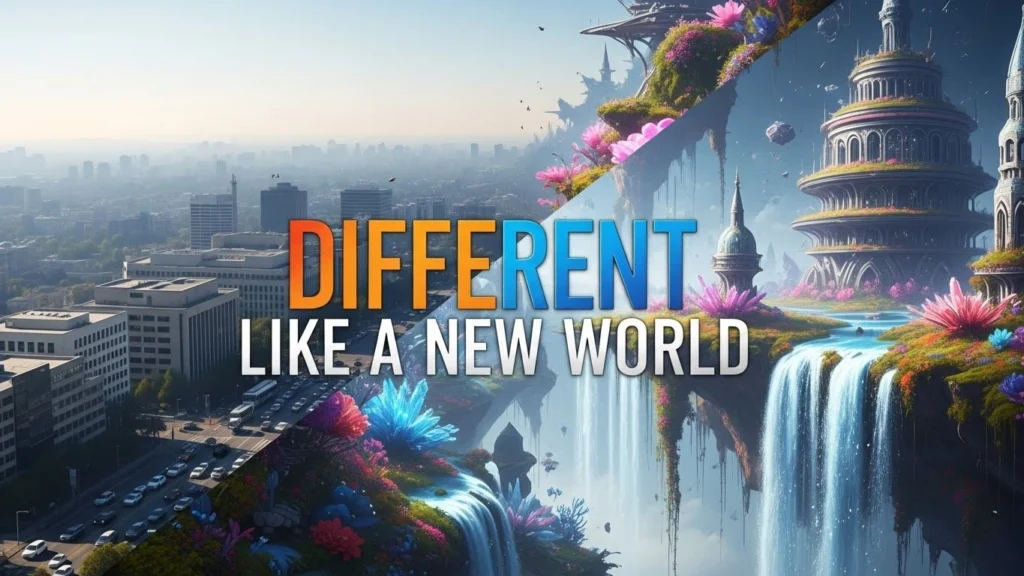
Meaning: Suggests a dramatic and exciting difference.
Emotional Tone: Wonder and excitement.
Best Used In:
- Travel writing
- Storytelling
Example Sentences:
- The experience felt like a new world.
- Life after change was a new world.
- The city felt new-world different.
- The job opened a new world.
- Learning felt like stepping into a new world.
Different Like a Fish Out of Water
Meaning: Describes discomfort due to difference.
Emotional Tone: Relatable and empathetic.
Best Used In:
- Personal stories
- Casual speech
Example Sentences:
- I felt like a fish out of water.
- The culture made him fish-out-of-water different.
- She looked like a fish out of water there.
- New roles feel fish-out-of-water strange.
- He smiled despite feeling out of water.
Different Like a Puzzle Piece That Doesn’t Match

Meaning: Shows misalignment or incompatibility.
Emotional Tone: Thoughtful and reflective.
Best Used In:
- Personal essays
- Fiction
Example Sentences:
- The idea was a puzzle piece that didn’t match.
- He felt puzzle-piece different.
- Their values didn’t fit the puzzle.
- That choice felt off-puzzle.
- It never matched the puzzle.
Different Like Thunder and Silence
Meaning: Highlights contrast in presence or intensity.
Emotional Tone: Dramatic and poetic.
Best Used In:
- Poetry
- Descriptive prose
Example Sentences:
- Their voices were thunder and silence.
- His anger roared; hers stayed silent.
- The reactions were thunder and silence.
- Power speaks like thunder, wisdom like silence.
- Their emotions clashed loud and silent.
Different Like Old Paint and Fresh Color
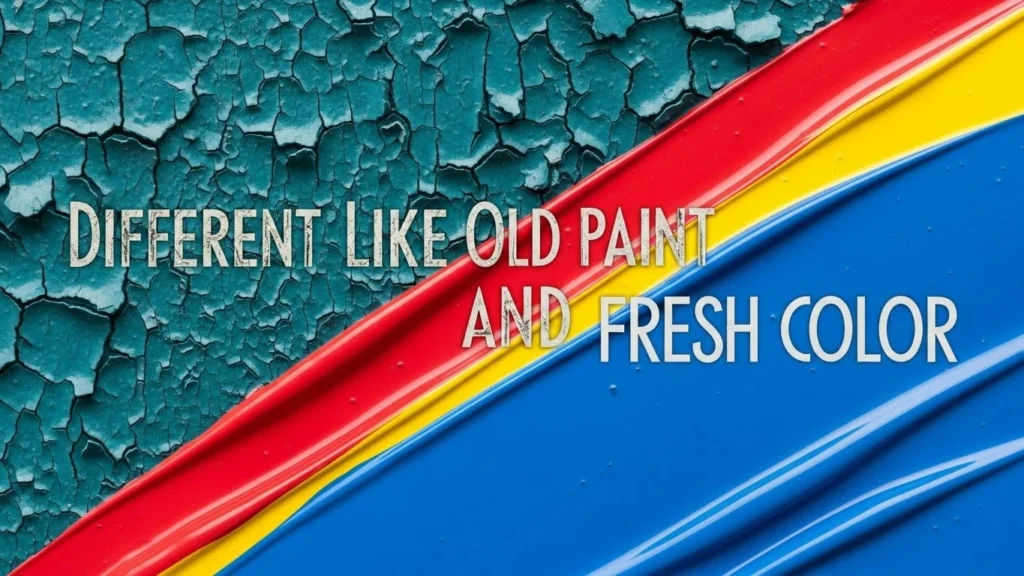
Meaning: Shows contrast between outdated and new.
Emotional Tone: Hopeful and refreshing.
Best Used In:
- Creative writing
- Motivation
Example Sentences:
- The redesign felt like fresh color.
- His ideas were fresh paint among old walls.
- Change felt colorfully different.
- The update erased old paint.
- Innovation shines like fresh color.
Different Like Tradition and Revolution
Meaning: Represents deep ideological contrast.
Emotional Tone: Bold and serious.
Best Used In:
- Academic writing
- Opinion pieces
Example Sentences:
- Their ideas were tradition and revolution.
- The shift felt revolutionary.
- Past and future stood opposed.
- Leadership changed from tradition to revolution.
- The mindset was revolution different.
Different Like One-of-a-Kind Art
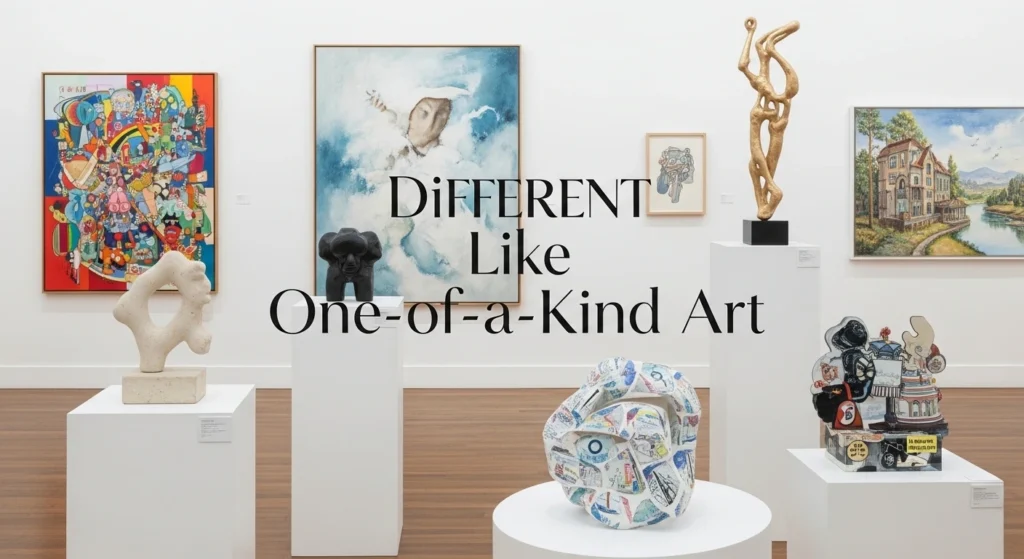
Meaning: Highlights rarity and originality.
Emotional Tone: Admiring and positive.
Best Used In:
- Compliments
- Creative writing
Example Sentences:
- Her style is like one-of-a-kind art.
- The solution felt artistically different.
- His mind works like unique art.
- The idea stood gallery-worthy.
- Creativity shines like rare art.
Conclusion
Using similes for different transforms plain descriptions into vivid, memorable expressions. Whether you’re writing poetry, crafting stories, speaking casually, or improving academic clarity, similes help readers see differences instead of just reading about them. They add emotion, creativity, and depth—turning ordinary language into expressive art.