
Crying is one of the most universal human experiences, yet describing it powerfully can be surprisingly hard. That’s where similes come in. A simile is a figure of speech that compares two different things using words like “as” or “like.” Writers and speakers use similes because they help readers see, feel, and imagine emotions more clearly.
In figurative language, similes for crying turn invisible feelings—sadness, grief, joy, or overwhelm—into vivid images we can all relate to. Whether you’re writing poetry, telling a story, crafting dialogue, or even sending a heartfelt text, these similes add depth, clarity, and emotional impact.
Crying Like a Baby
Meaning: Crying loudly, openly, and without restraint Emotional Tone:
Raw, vulnerable, intense Best Used In: Daily speech, storytelling, informal writing
This simile compares someone’s crying to a baby’s uninhibited wailing, emphasizing lack of control.
Examples:
- She was crying like a baby after hearing the news.
- He tried to stay strong, but soon he was crying like a baby.
- I was crying like a baby during the final scene of the movie.
- When the pain hit, I sat on the floor crying like a baby.
- “I’m crying like a baby right now,” she texted her friend.
Crying Like Rain from the Sky
Meaning: Continuous, steady crying Emotional Tone:
Sad, reflective, gentle sorrow Best Used In: Poetry, descriptive storytelling
This simile suggests tears falling endlessly, just like rainfall.
Examples:
- Tears fell from her eyes like rain from the sky.
- He cried like rain from the sky, quietly soaking his shirt.
- Her tears poured down like rain during a long storm.
- She sat by the window, crying like rain outside.
- The sadness came down like rain from the sky.
Crying Like a Broken Faucet
Meaning: Tears flowing nonstop Emotional Tone: Overwhelming, helpless
Best Used In: Casual speech, humorous or emotional writing
This simile emphasizes the inability to stop crying.
Examples:
- Once she started, she cried like a broken faucet.
- My eyes were leaking like a broken faucet all night.
- He laughed and said, “I’m crying like a broken faucet.”
- Her tears flowed like a broken faucet left on.
- I couldn’t stop crying—like a broken faucet stuck open.
Crying Like a Wounded Animal
Meaning: Crying in pain or fear Emotional Tone:
Intense, desperate, primal Best Used In: Fiction, dramatic scenes
This simile highlights raw emotional or physical suffering.
Examples:
- He cried like a wounded animal after the loss.
- She sobbed like a wounded animal in the dark.
- The grief made her cry like a wounded animal.
- His voice shook, crying like a wounded animal.
- The sound of her crying was haunting, like a wounded animal.
Crying Like the World Is Ending
Meaning: Extreme emotional reaction Emotional Tone:
Dramatic, overwhelming Best Used In: Storytelling, expressive speech
This simile exaggerates emotion for impact.
Examples:
- She cried like the world was ending.
- He was crying like the world had fallen apart.
- I thought it was minor, but she cried like the world was ending.
- The breakup made him cry like the world was over.
- She texted, “I’m crying like the world is ending.”
Crying Like a Storm Breaking Loose
Meaning: Sudden, powerful emotional release Emotional Tone:
Explosive, cathartic Best Used In: Poetry, narrative writing
This simile suggests bottled-up emotions bursting out.
Examples:
- Her tears came like a storm breaking loose.
- He cried like a storm breaking loose after years of silence.
- The emotions hit her like a storm breaking loose.
- She finally cried, like a storm breaking loose inside.
- His sobs echoed like thunder after the storm broke loose.
Crying Like Melted Snow
Meaning: Quiet, gentle crying Emotional Tone:
Soft sadness, subtle grief Best Used In: Poetry, literary writing
This simile emphasizes softness and quiet emotion.
Examples:
- Tears slid down her face like melted snow.
- He cried softly, like melted snow slipping away.
- Her tears were like melted snow—silent and cold.
- She sat crying like melted snow under the sun.
- The sadness faded like melted snow with tears.
Crying Like a Child Lost in a Crowd

Meaning: Fearful, panicked crying Emotional Tone:
Anxious, lonely Best Used In: Storytelling, emotional scenes
This simile highlights fear and helplessness.
Examples:
- She cried like a child lost in a crowd.
- His voice trembled, crying like a lost child.
- The loneliness made her cry like a child lost in a crowd.
- He looked around, crying like a child lost in chaos.
- Her sobs sounded like a lost child’s call.
Crying Like Glass Shattering
Meaning: Sharp, painful crying Emotional Tone:
Hurt, shocking Best Used In: Dramatic writing, fiction
This simile suggests emotional pain cutting deep.
Examples:
- Her cries were like glass shattering in the room.
- He cried like glass shattering under pressure.
- The sound of her crying felt like glass shattering.
- His sobs cut the silence like glass shattering.
- She cried like glass breaking inside her chest.
Crying Like a River Overflowing Its Banks
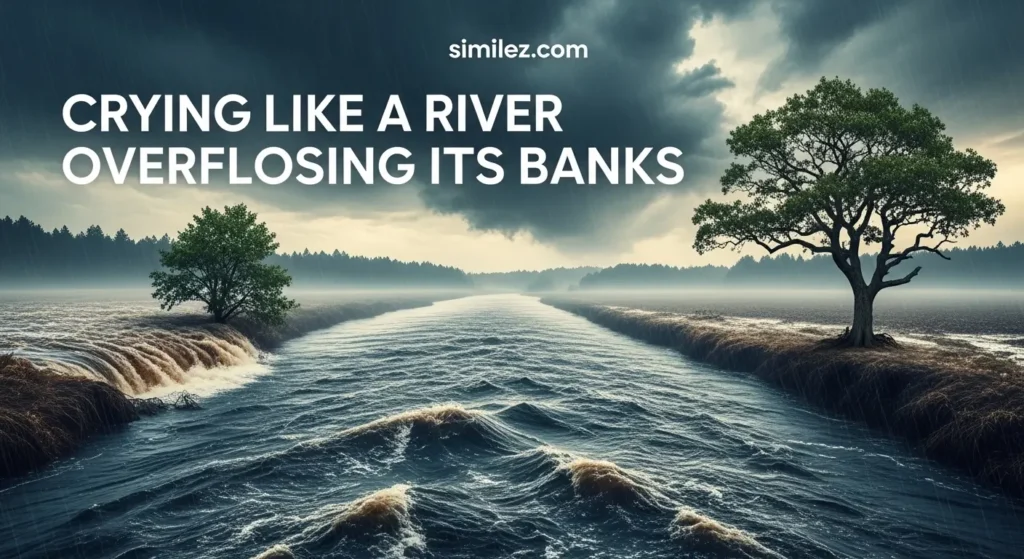
Meaning: Excessive, unstoppable crying Emotional Tone:
Deep grief, emotional overload Best Used In: Storytelling, poetic language
Examples:
- Tears flowed like a river overflowing its banks.
- He cried like a river that couldn’t hold itself anymore.
- Her grief spilled like a river overflowing its banks.
- I cried like a river overflowing after the news.
- The tears came like a river breaking free.
Crying Like a Lonely Wind
Meaning: Soft, mournful crying Emotional Tone:
Lonely, reflective Best Used In: Poetry, descriptive prose
Examples:
- She cried like a lonely wind at night.
- His tears whispered like a lonely wind.
- The room felt empty as she cried like a lonely wind.
- He sat alone, crying like a lonely wind outside.
- Her sadness moved quietly like a lonely wind.
Crying Like a Cracked Bell

Meaning: Broken, uneven crying Emotional Tone:
Damaged, sorrowful Best Used In: Literary writing
Examples:
- His cries rang like a cracked bell.
- She sobbed like a cracked bell echoing pain.
- The sound of his crying was like a cracked bell.
- Her voice broke, crying like a cracked bell.
- The silence echoed with a cracked-bell cry.
Crying Like Waves Crashing on Shore
Meaning: Rhythmic, repeating crying Emotional Tone:
Heavy sadness, ongoing grief Best Used In: Poetry, storytelling
Examples:
- Her sobs came like waves crashing on shore.
- He cried in waves, like the sea at night.
- The tears hit him like waves crashing endlessly.
- She cried like waves returning again and again.
- His grief rolled in like ocean waves.
Crying Like a Puppet with Cut Strings

Meaning: Emotionally exhausted crying Emotional Tone:
Drained, defeated Best Used In: Fiction, emotional narratives
Examples:
- She collapsed, crying like a puppet with cut strings.
- He cried like a puppet no longer held together.
- The stress left her crying like cut strings falling.
- His tears came as he dropped like a puppet.
- She felt empty, crying like cut strings.
Crying Like Ice Melting Under Heat
Meaning: Gradual emotional breakdown Emotional Tone:
Subtle, inevitable Best Used In: Literary writing
Examples:
- Her strength melted as she cried like ice under heat.
- He slowly cried, like ice melting away.
- The sadness thawed her like ice under heat.
- She resisted, then cried like ice melting.
- His tears came slowly, like ice giving in.
Crying Like Thunder Without Rain

Meaning: Loud crying without tears Emotional Tone:
Anger, frustration Best Used In: Expressive writing
Examples:
- He shouted, crying like thunder without rain.
- Her voice roared like thunder without tears.
- The argument ended with crying like thunder.
- He cried loudly but dry, like thunder without rain.
- Her emotions boomed without falling tears.
Crying Like a Candle Dripping Wax
Meaning: Quiet, steady tears Emotional Tone: Calm sadness Best Used In: Poetry, gentle descriptions
Examples:
- Tears fell like a candle dripping wax.
- She cried silently, like wax melting slowly.
- His tears slipped down like candle wax.
- The sadness burned softly, dripping like wax.
- She wept like a candle in the dark.
Crying Like a Heart Breaking Open
Meaning: Deep emotional pain Emotional Tone:
Heartbreaking, sincere Best Used In: All forms—poetry, storytelling, speech
Examples:
- She cried like her heart was breaking open.
- His tears came as his heart broke open.
- I cried like my heart couldn’t hold itself anymore.
- The goodbye left her crying like a broken heart.
- He whispered, “I’m crying like my heart is breaking.”
Final Thoughts
Using similes for crying allows writers and speakers to transform simple tears into powerful emotional imagery. These comparisons help readers feel emotions rather than just understand them. Whether you’re writing poetry, telling a story, or sending a heartfelt message, expressive similes make your words more human, memorable, and alive.