
Confusion is a feeling everyone experiences, yet it can be surprisingly hard to describe. That’s where similes come in. A simile is a figure of speech that compares two unlike things using words like “as” or “like.” Writers use similes to turn abstract emotions—such as confusion—into clear, visual images readers instantly understand.
In everyday conversation, poetry, storytelling, and even academic writing, similes help ideas feel more vivid and relatable. Instead of simply saying “I was confused,” a simile paints a picture that sticks in the reader’s mind.
Confused Like a Deer in Headlights
Meaning: This simile describes sudden confusion paired with shock or fear, often caused by unexpected events.
Emotional Tone: Startled, frozen, overwhelmed.
Best Usage Context: Storytelling, daily speech, descriptive writing.
Example Sentences:
- He stood confused like a deer in headlights when the teacher called his name.
- She looked confused like a deer in headlights after hearing the surprise announcement.
- The sudden question left me confused like a deer in headlights.
- The child froze, confused like a deer in headlights, when everyone stared.
- He blinked repeatedly, confused like a deer in headlights.
Confused Like a Lost Puppy

Meaning: This simile conveys gentle, helpless confusion, often mixed with innocence.
Emotional Tone: Vulnerable, innocent, uncertain.
Best Usage Context: Narratives, emotional scenes, character descriptions.
Example Sentences:
- She wandered through the crowd confused like a lost puppy.
- He looked confused like a lost puppy on his first day at work.
- The intern stood confused like a lost puppy, unsure where to go.
- The child’s eyes darted around, confused like a lost puppy.
- I felt confused like a lost puppy in the unfamiliar city.
Confused Like a Chicken Without a Head
Meaning: This simile emphasizes chaotic and frantic confusion.
Emotional Tone: Panicked, frantic, disorderly.
Best Usage Context: Informal speech, storytelling, dramatic descriptions.
Example Sentences:
- Everyone ran around confused like chickens without heads.
- He searched for his keys confused like a chicken without a head.
- The office was confused like chickens without heads after the system crash.
- I felt confused like a chicken without a head during finals week.
- The team scattered, confused like chickens without heads.
Confused Like a Maze With No Exit
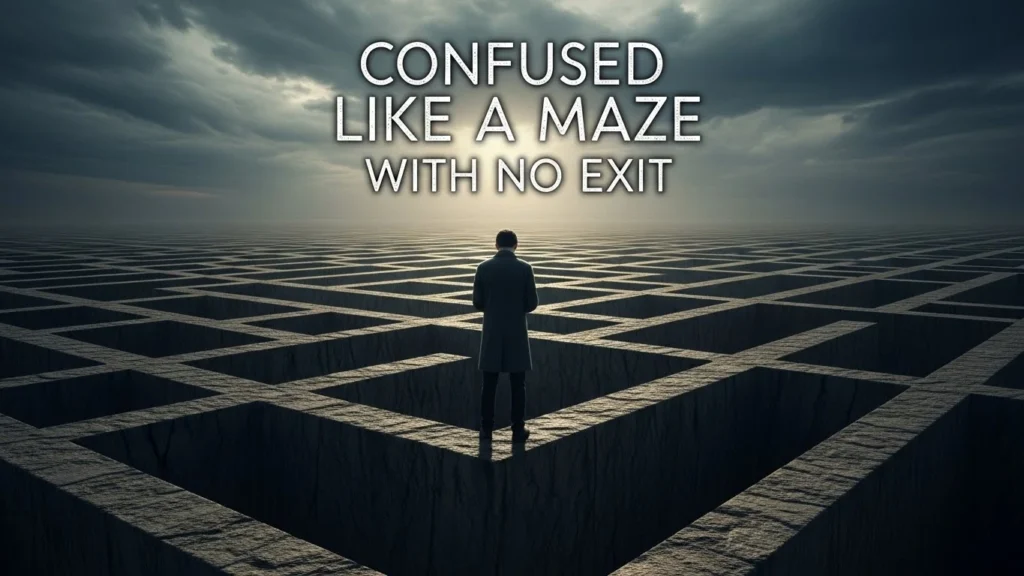
Meaning: Describes deep mental confusion where clarity feels unreachable.
Emotional Tone: Trapped, overwhelmed, frustrated.
Best Usage Context: Poetry, reflective writing, academic essays.
Example Sentences:
- My thoughts were confused like a maze with no exit.
- She felt confused like a maze with no exit after the diagnosis.
- His explanation left me confused like a maze with no exit.
- The problem seemed confused like a maze with no exit.
- I wandered mentally, confused like a maze with no exit.
Confused Like Fog on a Cold Morning
Meaning: This simile highlights mental cloudiness and lack of clarity.
Emotional Tone: Dull, hazy, slow.
Best Usage Context: Poetry, descriptive prose, reflective writing.
Example Sentences:
- My mind felt confused like fog on a cold morning.
- She spoke slowly, confused like fog on a cold morning.
- His memory was confused like fog on a cold morning.
- I woke up confused like fog on a cold morning.
- The idea remained confused like fog on a cold morning.
Confused Like a Compass Without North
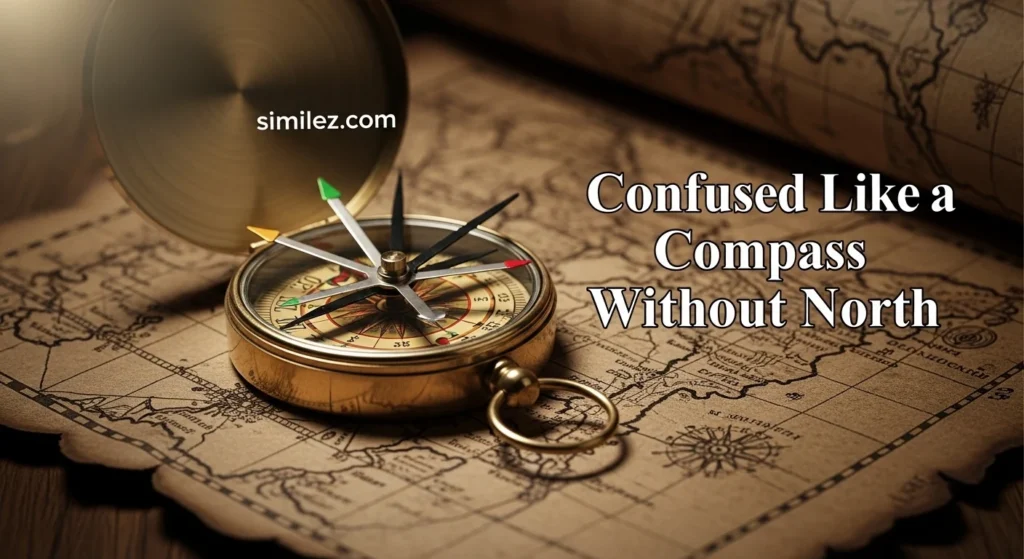
Meaning: Shows confusion tied to a lack of direction or purpose.
Emotional Tone: Lost, uncertain, disoriented.
Best Usage Context: Motivational writing, life reflections, storytelling.
Example Sentences:
- Without guidance, he felt confused like a compass without north.
- I wandered through life confused like a compass without north.
- She stood confused like a compass without north after graduation.
- His career path felt confused like a compass without north.
- They felt confused like compasses without north.
Confused Like Words in a Foreign Language
Meaning: Describes confusion caused by unfamiliarity.
Emotional Tone: Disconnected, uncertain, alienated.
Best Usage Context: Everyday speech, storytelling, explanatory writing.
Example Sentences:
- The lecture sounded confused like words in a foreign language.
- Math always feels confused like words in a foreign language to me.
- His instructions were confused like words in a foreign language.
- I stared at the manual, confused like words in a foreign language.
- The legal terms felt confused like words in a foreign language.
Confused Like a Puzzle With Missing Pieces

Meaning: Represents partial understanding without full clarity.
Emotional Tone: Frustrated, curious, incomplete.
Best Usage Context: Academic writing, problem-solving narratives.
Example Sentences:
- The story felt confused like a puzzle with missing pieces.
- Her explanation left me confused like a puzzle with missing pieces.
- The case remained confused like a puzzle with missing pieces.
- I felt confused like a puzzle with missing pieces.
- The plan seemed confused like a puzzle with missing pieces.
Confused Like Spaghetti Thoughts Tangled Together
Meaning: Describes messy, overlapping thoughts.
Emotional Tone: Overwhelmed, cluttered.
Best Usage Context: Casual writing, journaling, modern storytelling.
Example Sentences:
- My thoughts were confused like spaghetti tangled together.
- She laughed nervously, confused like spaghetti thoughts tangled together.
- Exams left me confused like spaghetti thoughts tangled together.
- His explanation sounded confused like spaghetti tangled together.
- I felt confused like spaghetti thoughts tangled together.
Confused Like a Map Turned Upside Down

Meaning: Shows disorientation due to incorrect perspective.
Emotional Tone: Disoriented, puzzled.
Best Usage Context: Travel writing, storytelling, metaphors.
Example Sentences:
- I felt confused like a map turned upside down.
- The city seemed confused like a map turned upside down.
- His advice left me confused like a map turned upside down.
- She looked confused like a map turned upside down.
- The instructions felt confused like a map turned upside down.
Confused Like Static on a Radio
Meaning: Represents noisy, unclear mental processing.
Emotional Tone: Distracted, frustrated.
Best Usage Context: Modern prose, introspective writing.
Example Sentences:
- My thoughts buzzed confused like static on a radio.
- He spoke confused like static on a radio.
- The message came through confused like static on a radio.
- I felt confused like static on a radio.
- Her voice sounded confused like static on a radio.
Confused Like a Clock Without Hands
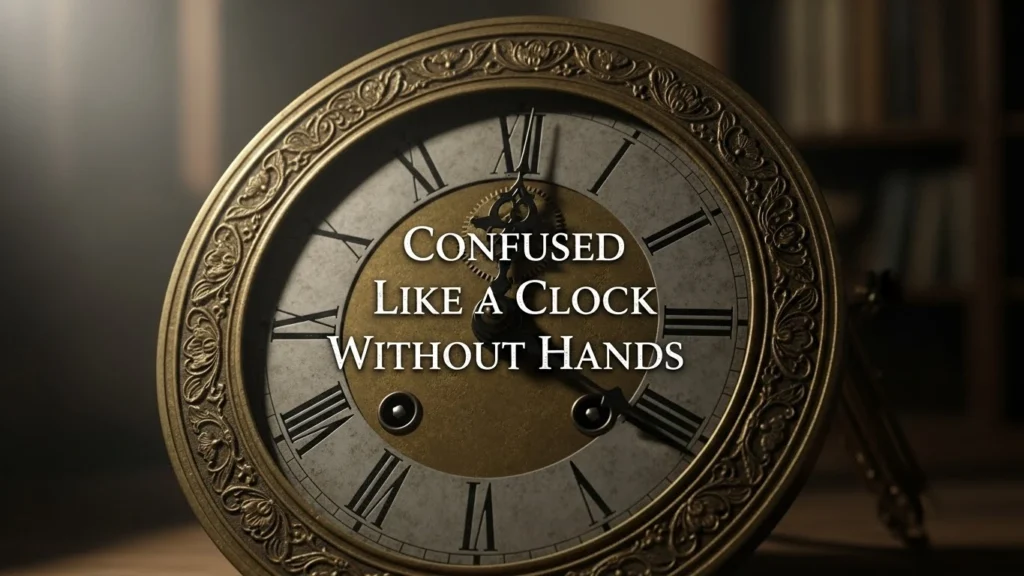
Meaning: Symbolizes confusion tied to lost sense of time or order.
Emotional Tone: Disoriented, detached.
Best Usage Context: Poetry, philosophical writing.
Example Sentences:
- He felt confused like a clock without hands.
- Time passed confused like a clock without hands.
- My days felt confused like a clock without hands.
- She stared, confused like a clock without hands.
- The routine felt confused like a clock without hands.
Confused Like a Scribbled Notebook
Meaning: Represents chaotic, unorganized thoughts.
Emotional Tone: Messy, overwhelmed.
Best Usage Context: Creative writing, journaling.
Example Sentences:
- My brain felt confused like a scribbled notebook.
- His ideas sounded confused like a scribbled notebook.
- I spoke confused like a scribbled notebook.
- Her notes were confused like a scribbled notebook.
- The plan looked confused like a scribbled notebook.
Confused Like a Traffic Jam in the Mind
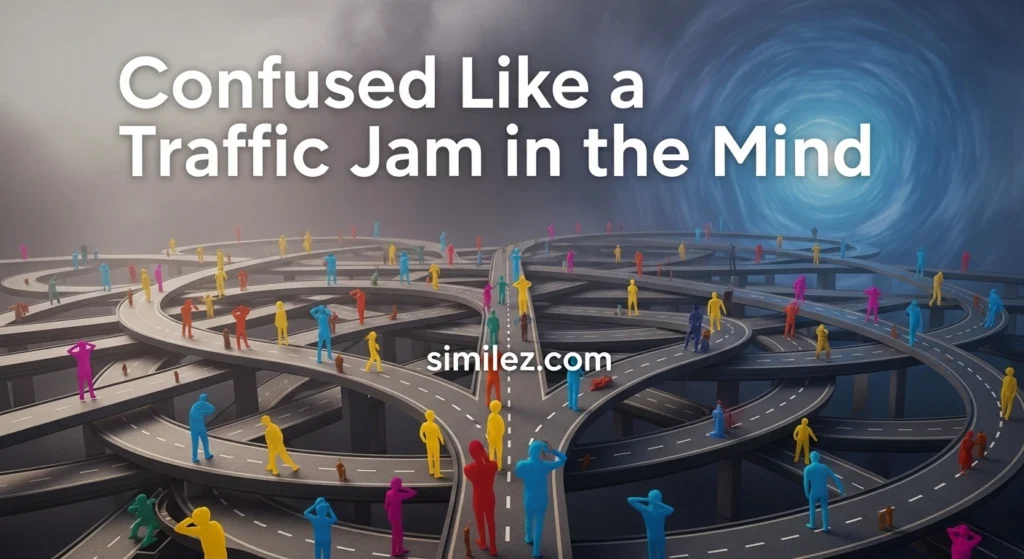
Meaning: Shows mental overload with too many thoughts at once.
Emotional Tone: Stressed, overloaded.
Best Usage Context: Self-help writing, casual speech.
Example Sentences:
- My thoughts were confused like a traffic jam in the mind.
- He paused, confused like a traffic jam in the mind.
- Stress left me confused like a traffic jam in the mind.
- Her expression showed confused like a traffic jam in the mind.
- I felt confused like a traffic jam in the mind.
Confused Like a Broken Mirror Reflection
Meaning: Indicates fragmented understanding.
Emotional Tone: Distorted, unsettled.
Best Usage Context: Poetry, literary prose.
Example Sentences:
- My thoughts looked confused like a broken mirror reflection.
- The truth felt confused like a broken mirror reflection.
- He saw himself confused like a broken mirror reflection.
- The memory appeared confused like a broken mirror reflection.
- Her explanation sounded confused like a broken mirror reflection.
Confused Like a Storm Without Direction

Meaning: Conveys emotional turmoil and aimlessness.
Emotional Tone: Chaotic, restless.
Best Usage Context: Poetry, emotional narratives.
Example Sentences:
- My emotions swirled confused like a storm without direction.
- He acted confused like a storm without direction.
- The crowd moved confused like a storm without direction.
- I felt confused like a storm without direction.
- Her thoughts were confused like a storm without direction.
Confused Like Pages Out of Order
Meaning: Shows disrupted logic or sequence.
Emotional Tone: Disorganized, puzzled.
Best Usage Context: Academic writing, storytelling.
Example Sentences:
- The story felt confused like pages out of order.
- My thoughts ran confused like pages out of order.
- His explanation sounded confused like pages out of order.
- I felt confused like pages out of order.
- The lecture left me confused like pages out of order.
Confused Like Trying to Catch Smoke
Meaning: Describes confusion caused by something elusive or unclear.
Emotional Tone: Frustrated, helpless.
Best Usage Context: Poetry, reflective writing.
Example Sentences:
- Understanding him felt confused like trying to catch smoke.
- The idea remained confused like trying to catch smoke.
- I felt confused like trying to catch smoke.
- Her explanation was confused like trying to catch smoke.
- The truth seemed confused like trying to catch smoke.
Conclusion
Mastering similes for confused allows writers and speakers to transform vague uncertainty into clear, memorable imagery. Whether you’re crafting poetry, improving storytelling, enhancing essays, or simply texting a friend, similes make confusion relatable and vivid.