
Cold weather is more than just low temperatures—it’s a feeling, an atmosphere, and often an emotion. Writers, poets, students, and everyday speakers use similes for cold weather to describe that feeling in a way that readers can instantly imagine.
A simile is a figure of speech that compares two different things using the words “like” or “as.” Similes are widely used in figurative language because they:
Below are 18 carefully explained similes for cold weather, each with meaning, tone, best usage context, and at least five original example sentences to help you use them naturally in writing or daily conversation.
Cold as Ice
Meaning: Extremely cold, often unpleasant or shocking Emotional Tone: Harsh, sharp, intense Best Used In: Daily speech, storytelling, descriptive writing
Examples:
- The water was cold as ice when I stepped into the river.
- Her hands felt cold as ice after waiting outside.
- The wind blew cold as ice across the empty street.
- His voice turned cold as ice when he heard the news.
- The metal railing was cold as ice under my fingers.
Daily-use tip:
“Don’t touch that—it’s cold as ice!”
Cold as a Freezer
Meaning: Very cold, like indoor freezing conditions Emotional Tone: Casual, relatable Best Used In: Everyday conversation, informal writing
Examples:
- This office is cold as a freezer today.
- My room felt cold as a freezer last night.
- The bus was cold as a freezer with all the windows open.
- The classroom stayed cold as a freezer all winter.
- Even with a jacket, it felt cold as a freezer outside.
Cold as a Snowman
Meaning: Playfully very cold Emotional Tone: Light, humorous Best Used In: Children’s stories, friendly speech
Examples:
- My nose was cold as a snowman’s face.
- He laughed, saying his hands were cold as a snowman.
- The playground felt cold as a snowman in January.
- Her boots were cold as a snowman’s feet.
- The morning air felt cold as a snowman’s smile.
Cold as the Arctic
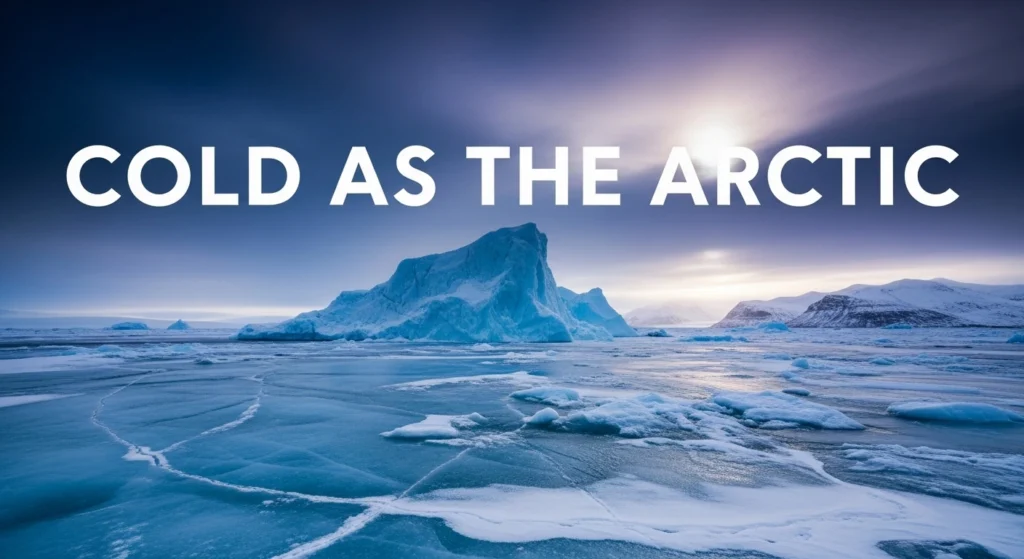
Meaning: Extremely and dangerously cold Emotional Tone: Serious, dramatic Best Used In: Descriptive writing, essays, storytelling
Examples:
- The night was cold as the Arctic.
- That mountain peak stays cold as the Arctic year-round.
- The wind made the air feel cold as the Arctic.
- His breath froze in air cold as the Arctic.
- The storm turned the town cold as the Arctic.
Cold as Death
Meaning: Lifeless, chilling cold Emotional Tone: Dark, intense Best Used In: Gothic writing, serious literature
Examples:
- His fingers were cold as death.
- The abandoned house felt cold as death inside.
- Her skin turned cold as death in the storm.
- The room fell silent and cold as death.
- The night air felt cold as death itself.
Cold as Steel
Meaning: Hard, metallic, biting cold Emotional Tone: Sharp, emotionless Best Used In: Descriptive prose, symbolism
Examples:
- The bench was cold as steel beneath him.
- Her stare felt cold as steel.
- The morning air struck cold as steel.
- The knife handle was cold as steel in his grip.
- His tone turned cold as steel.
Cold as a Glacier
Meaning: Slow, deep, lasting cold Emotional Tone: Calm, distant Best Used In: Poetry, reflective writing
Examples:
- The valley stayed cold as a glacier.
- Her silence felt cold as a glacier.
- Winter mornings here are cold as a glacier.
- His heart seemed cold as a glacier.
- The air moved slow and cold as a glacier.
Cold as a Frozen Lake
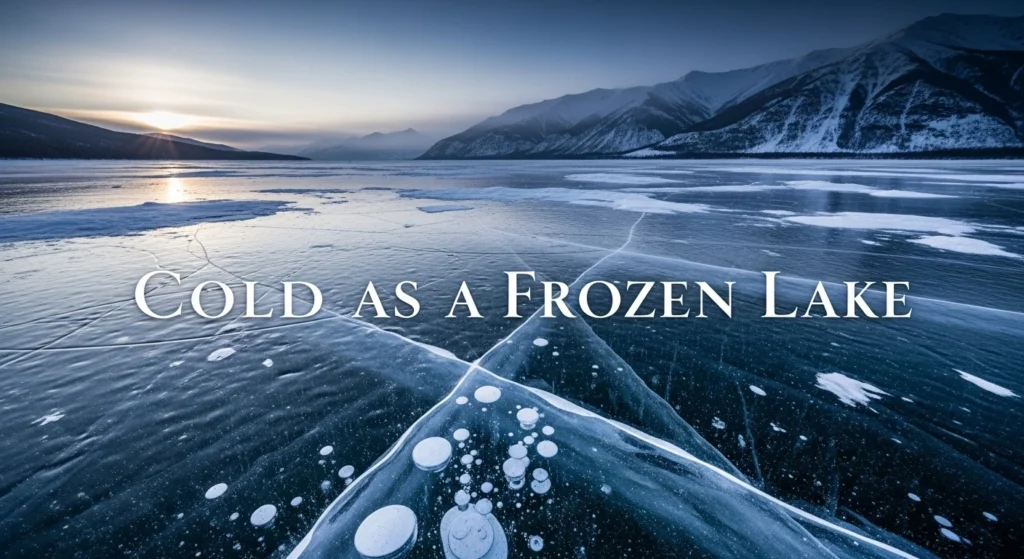
Meaning: Solid, penetrating cold Emotional Tone: Still, quiet Best Used In: Nature writing, storytelling
Examples:
- The field lay cold as a frozen lake.
- His hands felt cold as a frozen lake.
- The silence was cold as a frozen lake.
- The road shimmered cold as a frozen lake.
- Dawn arrived cold as a frozen lake.
Cold as Winter’s Breath
Meaning: Naturally bitter cold air Emotional Tone: Poetic, atmospheric Best Used In: Poetry, creative writing
Examples:
- The wind came cold as winter’s breath.
- Morning air touched my face cold as winter’s breath.
- The forest felt cold as winter’s breath.
- The breeze whispered cold as winter’s breath.
- The night exhaled cold as winter’s breath.
Cold as a Tomb
Meaning: Dead, still, chilling cold Emotional Tone: Eerie, solemn Best Used In: Horror, dramatic storytelling
Examples:
- The cellar was cold as a tomb.
- His room felt cold as a tomb without heat.
- The hallway stayed cold as a tomb.
- Silence fell, cold as a tomb.
- The stone walls felt cold as a tomb.
Cold as Frostbite
Meaning: Painfully cold Emotional Tone: Urgent, harsh Best Used In: Survival writing, realism
Examples:
- The wind cut cold as frostbite.
- My ears burned cold as frostbite.
- The storm turned cold as frostbite.
- His fingers went numb, cold as frostbite.
- The night air felt cold as frostbite.
Cold as a Polar Night

Meaning: Endless, deep cold Emotional Tone: Isolated, heavy Best Used In: Literary writing
Examples:
- The village slept cold as a polar night.
- His loneliness felt cold as a polar night.
- The desert turned cold as a polar night.
- The stars hung cold as a polar night.
- Time moved cold as a polar night.
Cold as a Marble Floor
Meaning: Clean, sharp indoor cold Emotional Tone: Neutral, realistic Best Used In: Modern fiction, daily speech
Examples:
- The bathroom floor felt cold as marble.
- Her feet touched tiles cold as marble.
- The hall stayed cold as a marble floor.
- Winter mornings felt cold as marble.
- The lobby was cold as marble.
Cold as a Northern Wind
Meaning: Natural, biting chill Emotional Tone: Crisp, fresh Best Used In: Nature writing
Examples:
- The air blew cold as a northern wind.
- His coat flapped in wind cold as a northern wind.
- The hills stood cold as a northern wind.
- Dawn arrived cold as a northern wind.
- The breeze felt cold as a northern wind.
Cold as Ice Water
Meaning: Shockingly cold Emotional Tone: Sudden, intense Best Used In: Storytelling, daily speech
Examples:
- The splash felt cold as ice water.
- His hands were cold as ice water.
- The rain hit cold as ice water.
- Her face flushed from air cold as ice water.
- The stream ran cold as ice water.
Cold as a Frozen Grave
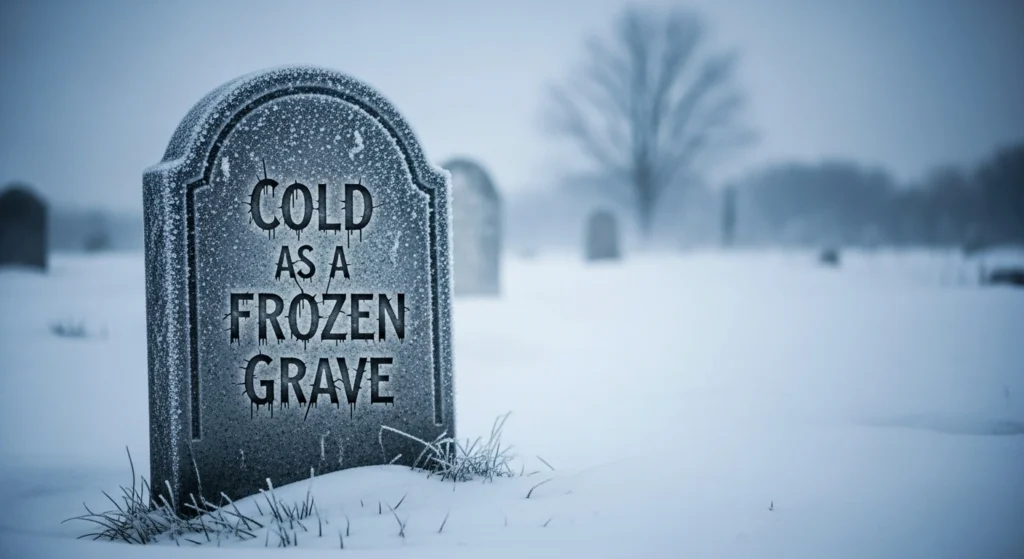
Meaning: Deep, haunting cold Emotional Tone: Dark, solemn Best Used In: Gothic literature
Examples:
- The ground lay cold as a frozen grave.
- The silence felt cold as a frozen grave.
- The wind blew cold as a frozen grave.
- The ruins stayed cold as a frozen grave.
- His fear grew cold as a frozen grave.
Cold as a January Morning
Meaning: Familiar winter cold Emotional Tone: Relatable, descriptive Best Used In: Everyday writing
Examples:
- The air felt cold as a January morning.
- My breath fogged cold as a January morning.
- The road shimmered cold as a January morning.
- The bus stop was cold as a January morning.
- Dawn broke cold as a January morning.
Cold as a Snow-Covered Graveyard
Meaning: Quiet, eerie cold Emotional Tone: Mysterious, reflective Best Used In: Creative storytelling
Examples:
- The night fell cold as a snow-covered graveyard.
- The silence was cold as a snow-covered graveyard.
- The town stood cold as a snow-covered graveyard.
- His thoughts turned cold as a snow-covered graveyard.
- The field lay cold as a snow-covered graveyard.
Final Thoughts
Using similes for cold weather transforms plain descriptions into powerful imagery. Whether you’re writing poetry, telling a story, crafting an essay, or texting a friend, similes help readers feel the cold instead of just reading about it.
Expressive language isn’t about sounding fancy—it’s about making ideas come alive. Keep experimenting, stay creative, and let your words carry the chill, the mood, and the magic of winter