

Books are more than paper and ink—they are experiences, emotions, and entire worlds. One of the best ways writers and speakers describe those experiences is through similes. A simile is a figure of speech that compares two different things using “like” or “as” to create vivid imagery.
Similes are widely used in figurative language because they help readers see, feel, and understand ideas more clearly. When talking about books, similes can express joy, escape, wisdom, comfort, or excitement in a way plain words often cannot.
In this in-depth guide, you’ll explore similes for books, their meanings, emotional tones, best usage contexts, and plenty of natural example sentences you can use in writing, conversation, or even casual texts.
Books Are Like Windows to the World
Meaning: Books allow readers to see new places, cultures, and ideas. Emotional Tone: Curious, expansive, enlightening Best Used In: Essays, educational writing, motivational speech
Examples:
- Books are like windows to the world, opening views I could never reach alone.
- Every novel feels like a window into another life.
- To a child, books are windows that reveal endless possibilities.
- History books are windows showing how the past shaped today.
- Reading before bed feels like opening a quiet window to another world.
📱 Daily-use text: “I love reading—books are like windows to places I’ll never visit.”
Books Are Like Friends Who Never Leave
Meaning: Books offer constant companionship and comfort. Emotional Tone: Warm, comforting, loyal Best Used In: Personal essays, speeches, storytelling
Examples:
- Books are like friends who never leave, no matter how often you return.
- A favorite book stays loyal through every reread.
- In lonely moments, books feel like patient friends.
- Libraries are full of friends waiting quietly.
- Old novels greet me like friends after a long absence.
Books Are Like Treasure Chests of Knowledge
Meaning: Books hold valuable information and wisdom. Emotional Tone: Curious, intellectual, rewarding Best Used In: Academic writing, educational content
Examples:
- Textbooks are like treasure chests filled with knowledge.
- Each chapter unlocks a new gem of understanding.
- Books store wisdom the way chests store gold.
- Research books feel like buried treasure.
- Reading reveals riches no money can buy.
Books Are Like Time Machines
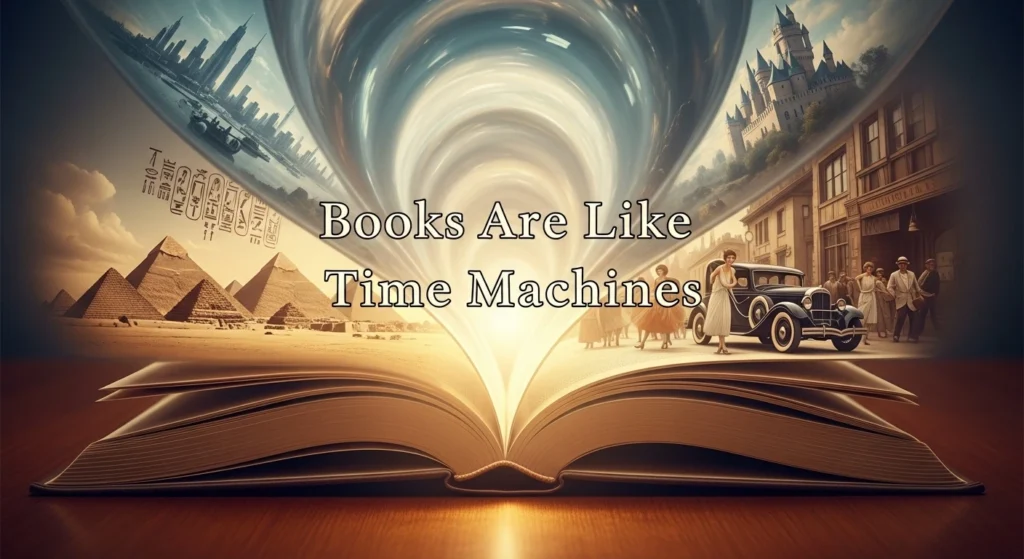
Meaning: Books transport readers across time. Emotional Tone: Adventurous, imaginative Best Used In: Creative writing, storytelling
Examples:
- History books are like time machines to forgotten eras.
- One page took me centuries into the past.
- Fiction lets me travel through time without moving.
- Books carry memories across generations.
- Reading feels like stepping into another century.
Books Are Like Maps for the Mind
Meaning: Books guide thinking and understanding. Emotional Tone: Thoughtful, guiding Best Used In: Self-help, educational writing
Examples:
- Philosophy books are maps for the mind.
- This book guided my thinking like a map.
- Books help navigate complex ideas.
- Learning feels easier with a good mental map.
- Each chapter marked a new direction.
Books Are Like Escape Doors
Meaning: Books provide relief from reality. Emotional Tone: Relaxing, freeing Best Used In: Personal blogs, storytelling
Examples:
- Novels are escape doors from daily stress.
- I opened a book and left reality behind.
- Reading offers a quiet escape.
- Books let me breathe when life feels heavy.
- A story can unlock freedom in minutes.
Books Are Like Lamps in the Dark
Meaning: Books provide guidance and clarity. Emotional Tone: Hopeful, reassuring Best Used In: Inspirational writing
Examples:
- Self-help books are lamps in dark moments.
- Knowledge lights the way forward.
- Books bring clarity during confusion.
- Reading gave me direction when I felt lost.
- Wisdom shines through pages.
Books Are Like Gardens of Ideas
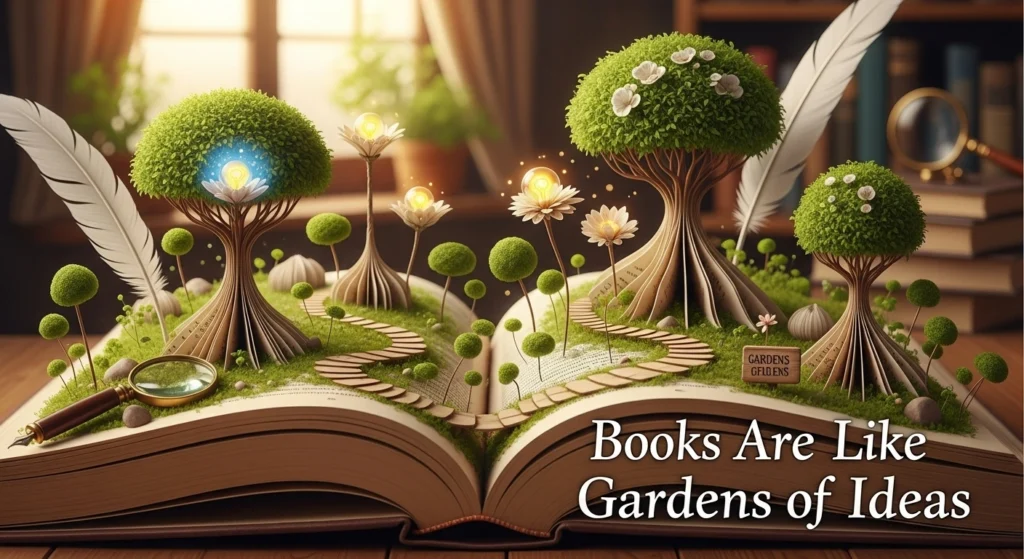
Meaning: Books contain ideas that grow over time. Emotional Tone: Creative, thoughtful Best Used In: Essays, reflective writing
Examples:
- Libraries are gardens of ideas.
- Each book planted a new thought.
- Ideas grow long after reading ends.
- Books bloom in the reader’s mind.
- Reading nurtures creativity.
Books Are Like Safe Harbors
Meaning: Books offer emotional safety and peace. Emotional Tone: Calm, comforting Best Used In: Personal narratives
Examples:
- Books feel like safe harbors during storms.
- Reading shelters me from chaos.
- Stories calm anxious thoughts.
- Books provide emotional refuge.
- Quiet reading heals the mind.
Books Are Like Mirrors
Meaning: Books reflect personal experiences and emotions. Emotional Tone: Introspective, emotional Best Used In: Literary analysis
Examples:
- This novel felt like a mirror to my life.
- Books reflect hidden emotions.
- Characters revealed parts of myself.
- Reading encourages self-discovery.
- Stories mirror human struggles.
Books Are Like Keys to Understanding
Meaning: Books unlock knowledge and insight. Emotional Tone: Empowering Best Used In: Academic or motivational writing
Examples:
- Education books are keys to understanding.
- Reading unlocked new perspectives.
- Books open locked questions.
- Knowledge grows with every key turned.
- Learning begins with reading.
Books Are Like Oceans of Stories
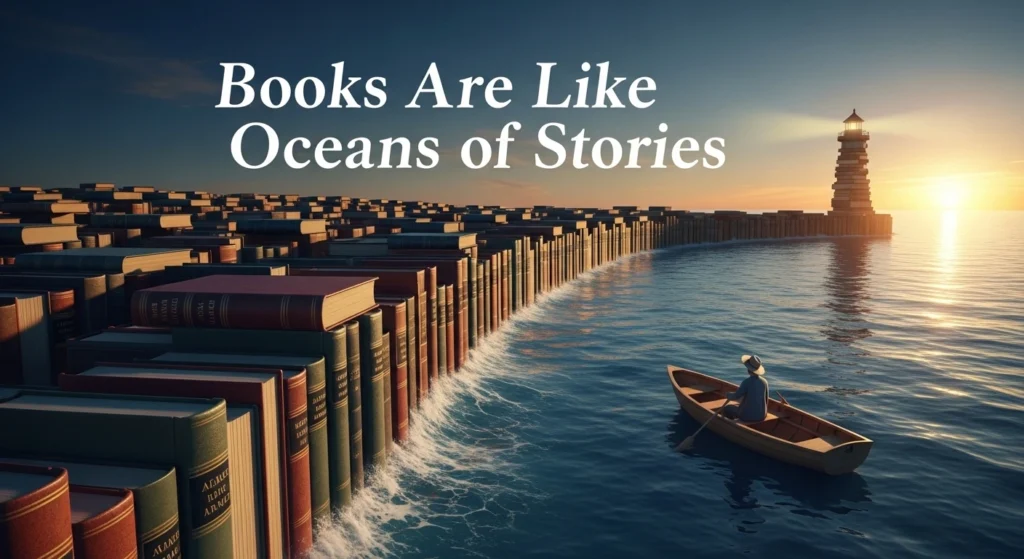
Meaning: Books contain vast, endless narratives. Emotional Tone: Awe-inspiring Best Used In: Creative descriptions
Examples:
- Libraries feel like oceans of stories.
- I dived into a sea of novels.
- Stories stretch endlessly.
- Books hold deep emotional waters.
- Reading feels limitless.
Books Are Like Comfort Food for the Mind
Meaning: Books soothe mental stress. Emotional Tone: Cozy, soothing Best Used In: Casual writing, blogs
Examples:
- Reading is comfort food for my mind.
- A good book relaxes me instantly.
- Familiar stories feel warm.
- Books reduce mental fatigue.
- Reading restores balance.
Books Are Like Teachers Without Voices
Meaning: Books educate silently. Emotional Tone: Respectful, thoughtful Best Used In: Educational content
Examples:
- Books teach without speaking.
- Pages instruct patiently.
- Learning happens quietly.
- Books mentor readers gently.
- Knowledge flows silently.
Books Are Like Bridges Between Minds
Meaning: Books connect people and ideas. Emotional Tone: Connecting, thoughtful Best Used In: Essays, speeches
Examples:
- Books bridge cultures and minds.
- Reading connects strangers.
- Stories unite perspectives.
- Books create shared understanding.
- Ideas travel across pages.
Books Are Like Blankets on Cold Days

Meaning: Books provide warmth and comfort. Emotional Tone: Cozy, gentle Best Used In: Personal writing
Examples:
- Books feel like blankets on cold days.
- Reading warms my heart.
- Stories wrap me in comfort.
- Books ease emotional coldness.
- Reading feels safe and warm.
Books Are Like Puzzles Waiting to Be Solved
Meaning: Books challenge thinking. Emotional Tone: Curious, engaging Best Used In: Analytical writing
Examples:
- Mystery novels are puzzles waiting to be solved.
- Books challenge the mind.
- Each chapter reveals clues.
- Reading sharpens thinking skills.
- Stories invite interpretation.
Books Are Like Seeds of Change
Meaning: Books inspire growth and transformation. Emotional Tone: Hopeful, empowering Best Used In: Motivational content
Examples:
- Books plant seeds of change.
- Reading reshaped my mindset.
- Ideas grow into action.
- Books inspire transformation.
- Knowledge leads to progress.
Conclusion
Similes for books do more than decorate language—they bring reading to life, helping writers and speakers express deep emotions, complex ideas, and personal experiences with clarity and beauty. Whether you’re writing poetry, essays, stories, or casual messages, using similes enriches expression and strengthens connection with readers.