
Blue eyes have inspired writers, poets, and everyday speakers for centuries. To describe them memorably, we often turn to similes—comparisons that use like or as to make imagery clearer and more emotional. In this article, you’ll explore powerful similes for blue eyes, understand what each one means, the feeling it conveys, and when it works best in writing or speech.
Similes are a key part of figurative language. They help readers see what you mean instead of just reading plain facts. Whether you’re writing poetry, fiction, essays, captions, or casual messages, the right simile can instantly make your words more vivid and engaging.
Below are 18 carefully explained similes for blue eyes, each with meanings, emotional tone, best usage context, and at least five original example sentences to spark your creativity.
Blue Eyes Like the Sky on a Clear Day
Meaning: This simile compares blue eyes to a bright, cloudless sky, emphasizing clarity and openness.
Emotional Tone: Peaceful, pure, calm, and hopeful.
Best Usage Context: Poetry, romantic writing, descriptive storytelling.
Examples:
- Her blue eyes were like the sky on a clear day, open and endlessly calm.
- He looked at me with eyes like the summer sky, honest and bright.
- The child’s blue eyes, like a clear sky, reflected innocence.
- In the sunlight, her eyes shone like the sky after rain.
- Daily use: “Your eyes today are like the sky—so clear and cheerful.”
Blue Eyes Like the Ocean
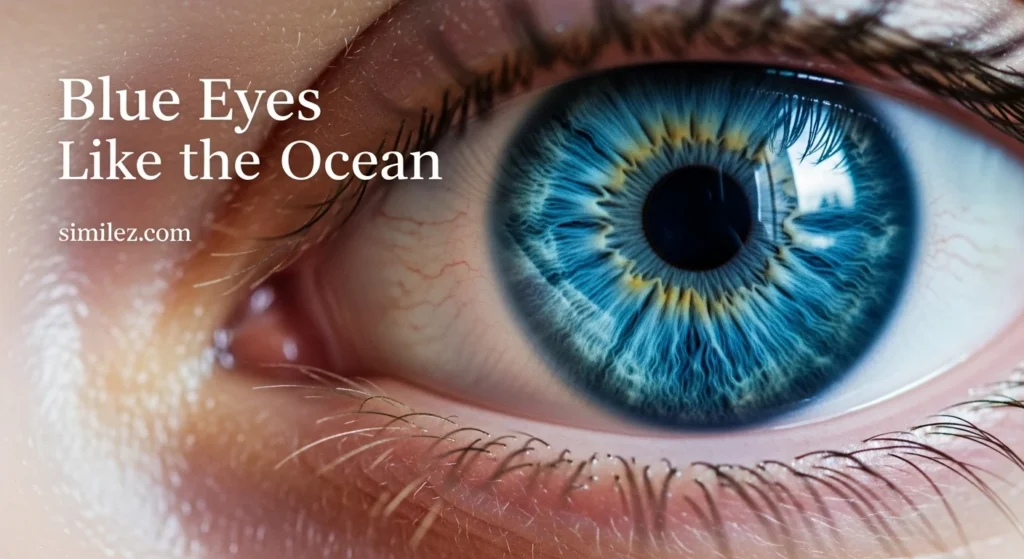
Meaning: This simile highlights depth, mystery, and emotional intensity.
Emotional Tone: Romantic, deep, mesmerizing.
Best Usage Context: Poetry, novels, love descriptions.
Examples:
- His blue eyes were like the ocean—deep and impossible to read.
- She stared back with eyes like the sea, full of hidden stories.
- The ocean-blue eyes pulled me in without warning.
- Her gaze rolled like ocean waves, calm but powerful.
- Texting: “Your eyes are like the ocean—can’t stop looking.”
Blue Eyes Like Sapphire Gems
Meaning: Compares blue eyes to precious stones, suggesting beauty and value.
Emotional Tone: Elegant, luxurious, admiring.
Best Usage Context: Formal writing, poetry, character descriptions.
Examples:
- Her blue eyes sparkled like sapphire gems.
- He had sapphire-blue eyes that caught the light.
- The jewels couldn’t compete with her eyes.
- His gaze shone like polished sapphires.
- Daily use: “Those eyes look like blue gems today!”
Blue Eyes Like Ice
Meaning: Suggests sharpness, coldness, or emotional distance.
Emotional Tone: Intense, chilling, serious.
Best Usage Context: Thrillers, dramatic scenes, strong character portrayal.
Examples:
- His blue eyes were like ice, freezing me in place.
- She glanced over with icy blue eyes.
- The villain’s eyes felt colder than winter.
- Ice-blue eyes reflected no mercy.
- Casual: “Whoa, those ice-blue eyes are intense.”
Blue Eyes Like Morning Dew
Meaning: Shows freshness, purity, and gentleness.
Emotional Tone: Soft, innocent, refreshing.
Best Usage Context: Poetry, gentle storytelling.
Examples:
- Her blue eyes were like morning dew, fresh and bright.
- He smiled with eyes clear as dew.
- Dew-like blue eyes greeted the dawn.
- Her gaze felt clean and gentle.
- Daily use: “Your eyes look fresh like morning dew.”
Blue Eyes Like a Summer Lake
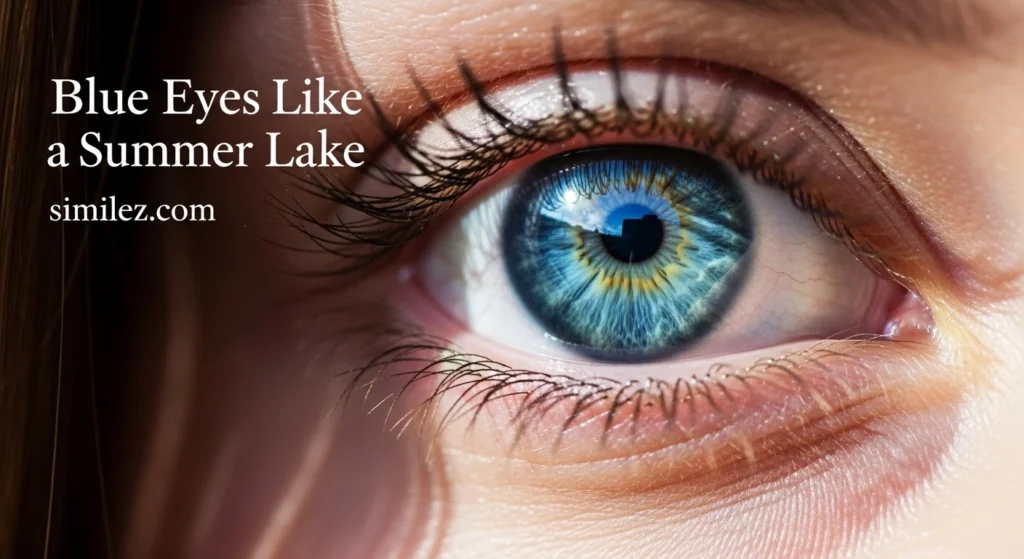
Meaning: Represents calmness and quiet depth.
Emotional Tone: Soothing, peaceful.
Best Usage Context: Nature writing, reflective prose.
Examples:
- His blue eyes were like a summer lake, still and calm.
- She spoke softly, eyes like water at rest.
- A lake-blue gaze steadied my thoughts.
- The calmness in his eyes was contagious.
- Casual: “Your eyes are calm like a lake today.”
Blue Eyes Like Frozen Glass
Meaning: Highlights clarity mixed with emotional distance.
Emotional Tone: Cold, sharp, detached.
Best Usage Context: Dark fiction, psychological writing.
Examples:
- Her eyes were like frozen glass, clear but cold.
- He watched silently, eyes unblinking.
- Glassy blue eyes reflected no warmth.
- The stare cut deeper than words.
- Texting: “Those eyes look sharp today.”
Blue Eyes Like Bluebells in Spring
Meaning: Compares eyes to blue flowers, suggesting natural beauty.
Emotional Tone: Fresh, romantic, gentle.
Best Usage Context: Poetry, descriptive essays.
Examples:
- Her blue eyes bloomed like bluebells.
- Spring seemed alive in her gaze.
- Bluebell eyes danced with joy.
- His eyes carried the season’s warmth.
- Daily use: “Your eyes look bright like spring flowers.”
Blue Eyes Like the Horizon
Meaning: Symbolizes hope, distance, and possibility.
Emotional Tone: Dreamy, inspiring.
Best Usage Context: Motivational writing, fiction.
Examples:
- His blue eyes stretched like the horizon.
- She looked ahead with endless hope.
- Horizon-blue eyes promised adventure.
- The gaze felt limitless.
- Casual: “Your eyes look full of dreams today.”
Blue Eyes Like Arctic Ice
Meaning: Emphasizes extreme coldness and sharp intensity.
Emotional Tone: Powerful, intimidating.
Best Usage Context: Action scenes, villains, drama.
Examples:
- Arctic ice stared back at me.
- His eyes were dangerously cold.
- The blue burned like frost.
- No warmth lived there.
- Daily: “Those eyes are seriously icy.”
Blue Eyes Like Polished Steel
Meaning: Suggests strength, focus, and control.
Emotional Tone: Determined, strong.
Best Usage Context: Hero descriptions, leadership writing.
Examples:
- His blue eyes were like steel.
- She stared with unwavering focus.
- Steel-blue eyes never blinked.
- Confidence shone through his gaze.
- Casual: “You’ve got that strong look today.”
Blue Eyes Like the Winter Sky
Meaning: Shows pale beauty mixed with coldness.
Emotional Tone: Quiet, distant, beautiful.
Best Usage Context: Poetry, seasonal writing.
Examples:
- Her eyes matched the winter sky.
- Pale blue stared softly back.
- The cold beauty stunned me.
- Silence lived in her gaze.
- Daily: “Your eyes look winter-cool today.”
Blue Eyes Like Crystal Water
Meaning: Represents clarity and honesty.
Emotional Tone: Pure, trustworthy.
Best Usage Context: Character descriptions, romance.
Examples:
- His eyes were clear as crystal water.
- Nothing hid behind that gaze.
- Honesty flowed through her eyes.
- Clear blue truth stared back.
- Casual: “Your eyes look super clear today.”
Blue Eyes Like Neon Light
Meaning: Suggests brightness and intensity.
Emotional Tone: Energetic, striking.
Best Usage Context: Modern writing, urban fiction.
Examples:
- Neon-blue eyes glowed in the dark.
- His gaze lit the room.
- Electric blue stared back.
- The intensity was unforgettable.
- Texting: “Your eyes are glowing today!”
Blue Eyes Like Painted Porcelain
Meaning: Indicates delicate and artistic beauty.
Emotional Tone: Elegant, fragile.
Best Usage Context: Artistic prose, classic fiction.
Examples:
- Her eyes looked painted, unreal.
- Porcelain-blue beauty froze time.
- Art lived in her gaze.
- Delicate yet striking.
- Daily: “Your eyes look like artwork.”
Blue Eyes Like Lightning
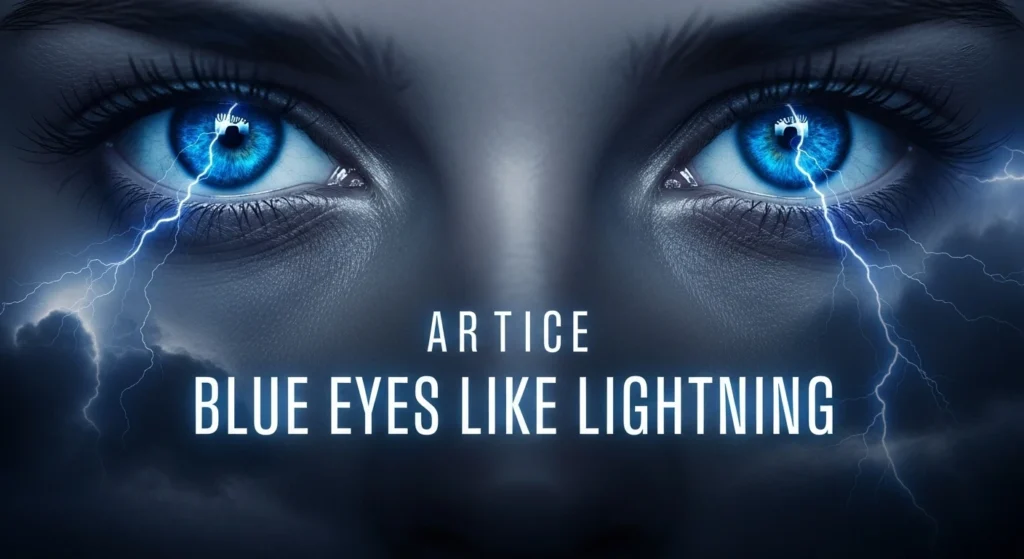
Meaning: Shows quick intensity and power.
Emotional Tone: Bold, dramatic.
Best Usage Context: Action scenes, emotional moments.
Examples:
- Lightning flashed in his eyes.
- Her stare struck suddenly.
- Power surged through that gaze.
- Electric blue filled the air.
- Casual: “Those eyes are intense today!”
Blue Eyes Like Moonlit Ice
Meaning: Combines beauty with cold mystery.
Emotional Tone: Enchanting, distant.
Best Usage Context: Fantasy, poetic writing.
Examples:
- Moonlit ice shimmered in her eyes.
- The gaze felt unreal.
- Cold beauty glowed softly.
- Mystery lived there.
- Daily: “Your eyes look magical tonight.”
Blue Eyes Like a Dream
Meaning: Suggests surreal beauty and emotional pull.
Emotional Tone: Romantic, soft, enchanting.
Best Usage Context: Love poetry, emotional writing.
Examples:
- His blue eyes were like a dream.
- I felt lost in her gaze.
- Dreamlike beauty held me.
- The moment felt unreal.
- Texting: “Your eyes feel unreal today.”
Conclusion
Using similes for blue eyes allows your writing to move beyond simple description into vivid imagination. Whether you’re crafting poetry, storytelling, essays, or everyday messages, the right simile helps readers feel what you’re describing. Creative comparisons don’t just decorate language—they give it life.