

Sadness is a universal human emotion, but describing it accurately can be difficult. That’s where similes for being sad come in. A simile is a figure of speech that compares one thing to another using words like“as” or“like.” Writers and speakers use similes to paint vivid pictures in the reader’s mind, making emotions easier to imagine and feel.
In figurative language, similes are especially powerful because they turn abstract feelings—like sadness—into something concrete and relatable. Whether you’re writing poetry, telling a story, sending a text, or improving your vocabulary, these similes can help you express sadness more creatively and clearly.
Below are 18 in-depth similes for being sad, each explained with meaning, emotional tone, best usage context, and at least five natural example sentences to help you use them confidently in real life.
Sad as a Rainy Day
Meaning: Compares sadness to gloomy, overcast weather. Emotional Tone:
Gentle, reflective, mildly depressing. Best Used In: Daily speech, storytelling, descriptive writing.
Examples:
- She felt as sad as a rainy day, staring out the window.
- His voice sounded sad as a rainy day in autumn.
- The house felt sad as a rainy day after everyone left.
- I woke up feeling sad as a rainy day, even though nothing was wrong.
- Texting example: “Not feeling great today—just sad as a rainy day.”
Sad Like a Bird with a Broken Wing

Meaning: Suggests helplessness and emotional pain. Emotional Tone:
Vulnerable, fragile. Best Used In: Poetry, emotional storytelling.
Examples:
- She sat quietly, sad like a bird with a broken wing.
- He wandered through life sad like a bird with a broken wing.
- The child looked sad like a bird with a broken wing after losing his toy.
- Her smile faded, leaving her sad like a bird with a broken wing.
- The poem describes love lost, sad like a bird with a broken wing.
Sad as a Lonely Star
Meaning: Expresses isolation and emotional distance. Emotional Tone:
Quiet, distant, melancholic. Best Used In: Poetry, reflective writing.
Examples:
- He felt sad as a lonely star in the night sky.
- The character drifts through life, sad as a lonely star.
- Her thoughts were sad as a lonely star, shining without warmth.
- She stood apart, sad as a lonely star.
- The diary entry felt sad as a lonely star.
Sad Like a Wilted Flower

Meaning: Represents loss of energy, hope, or joy. Emotional Tone:
Soft, sorrowful. Best Used In: Descriptive writing, poetry.
Examples:
- She looked sad like a wilted flower after the breakup.
- His confidence faded, sad like a wilted flower.
- The room felt sad like a wilted flower without laughter.
- Her voice sounded sad like a wilted flower.
- Daily-use: “I’m feeling sad like a wilted flower today.”
Sad as a Song Played in Minor Key
Meaning: Emotional sadness tied to music and mood. Emotional Tone:
Artistic, emotional. Best Used In: Creative writing, essays, poetry.
Examples:
- His words were sad as a song played in minor key.
- The story unfolded sad as a song played in minor key.
- Her laughter turned sad as a song played in minor key.
- The ending felt sad as a song played in minor key.
- The scene lingered, sad as a song played in minor key.
Sad Like an Empty House
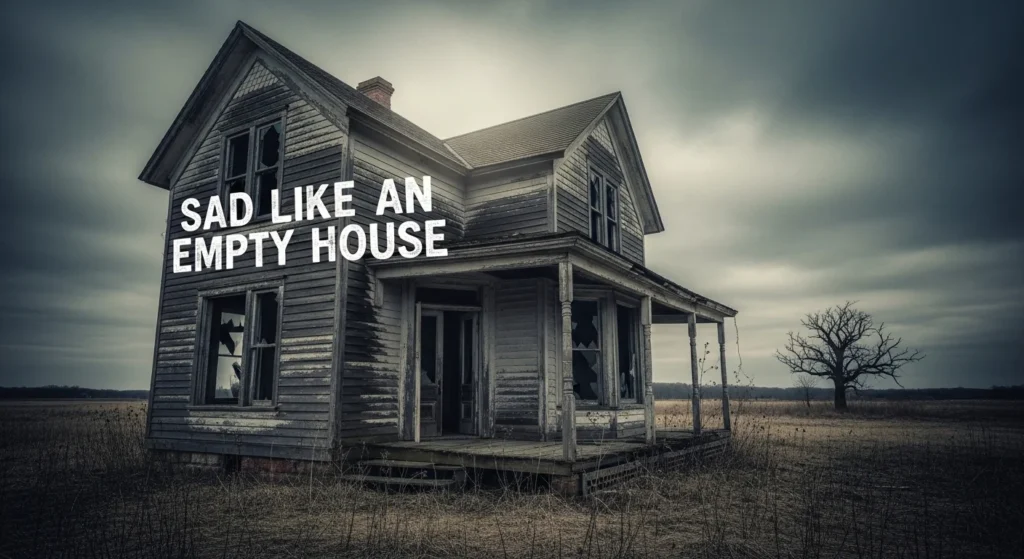
Meaning: Highlights loneliness and absence. Emotional Tone:
Hollow, quiet. Best Used In: Storytelling, emotional narratives.
Examples:
- The home felt sad like an empty house.
- He returned to memories sad like an empty house.
- Her heart felt sad like an empty house.
- The silence was sad like an empty house.
- Texting: “Miss you—everything feels sad like an empty house.”
Sad as a Clouded Sky
Meaning: Reflects emotional heaviness and dullness. Emotional Tone:
Calm, muted. Best Used In: Descriptive writing, everyday speech.
Examples:
- His mood was sad as a clouded sky.
- The day felt sad as a clouded sky.
- Her thoughts drifted, sad as a clouded sky.
- The story opens sad as a clouded sky.
- I felt sad as a clouded sky all afternoon.
Sad Like Tears in the Rain

Meaning: Sadness that feels unnoticed or lost. Emotional Tone:
Deep, poetic. Best Used In: Poetry, literary writing.
Examples:
- His pain vanished, sad like tears in the rain.
- Her sorrow felt sad like tears in the rain.
- The moment passed, sad like tears in the rain.
- The character’s grief was sad like tears in the rain.
- The ending lingered, sad like tears in the rain.
Sad as a Fading Sunset
Meaning: Represents endings and gentle loss. Emotional Tone:
Soft, reflective. Best Used In: Poetry, descriptive prose.
Examples:
- Their goodbye felt sad as a fading sunset.
- The chapter closed sad as a fading sunset.
- Her smile was sad as a fading sunset.
- He watched memories slip away, sad as a fading sunset.
- The scene ended sad as a fading sunset.
Sad Like a Child Who Lost Their Balloon

Meaning: Innocent, heartfelt disappointment. Emotional Tone:
Gentle, emotional. Best Used In: Storytelling, casual writing.
Examples:
- She looked sad like a child who lost their balloon.
- His face fell, sad like a child who lost their balloon.
- The moment was sad like a child who lost their balloon.
- He felt sad like a child who lost their balloon.
- Casual: “Today’s been rough—sad like a child who lost their balloon.”
Sad as a Cold Fireplace
Meaning: Loss of warmth or comfort.
Emotional Tone: Quiet, empty. Best Used In: Creative writing.
Examples:
- The room felt sad as a cold fireplace.
- Her heart was sad as a cold fireplace.
- The house stood sad as a cold fireplace.
- His words echoed, sad as a cold fireplace.
- The story felt sad as a cold fireplace.
Sad Like a Forgotten Letter
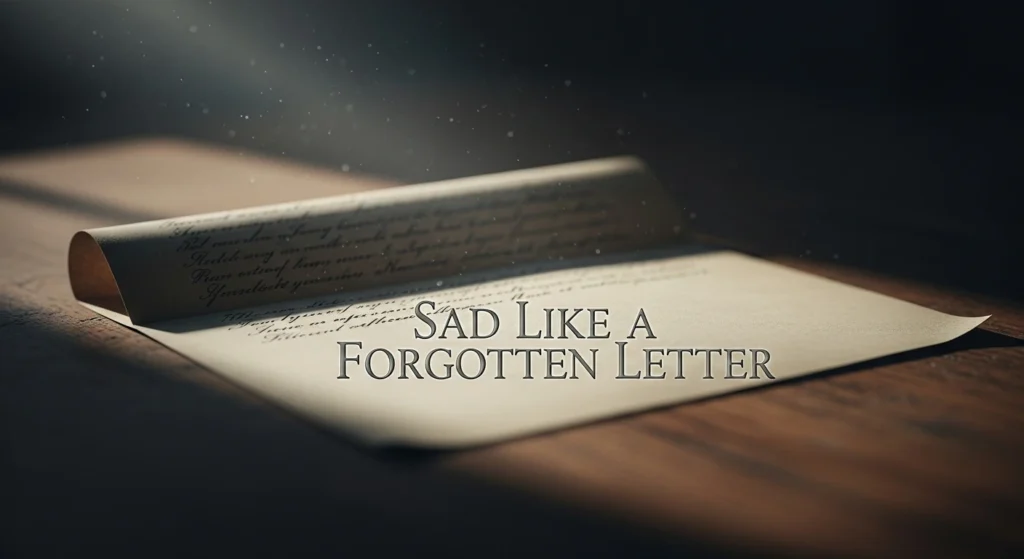
Meaning: Neglected or overlooked sadness. Emotional Tone:
Nostalgic, emotional. Best Used In: Literary writing.
Examples:
- She felt sad like a forgotten letter.
- His memories were sad like a forgotten letter.
- The story read sad like a forgotten letter.
- Her silence was sad like a forgotten letter.
- The past lingered, sad like a forgotten letter.
Sad as a Broken Clock
Meaning: Emotional stagnation or feeling stuck.
Emotional Tone: Heavy, reflective. Best Used In: Symbolic writing.
Examples:
- He felt sad as a broken clock.
- Time stood still, sad as a broken clock.
- Her life felt sad as a broken clock.
- The mood froze, sad as a broken clock.
- The novel opens sad as a broken clock.
Sad Like a Candle Burning Out

Meaning: Slow loss of hope or energy. Emotional Tone:
Gentle, sorrowful. Best Used In: Poetry, emotional prose.
Examples:
- Her strength faded, sad like a candle burning out.
- His hope dimmed, sad like a candle burning out.
- The night felt sad like a candle burning out.
- The story ended sad like a candle burning out.
- She whispered goodbye, sad like a candle burning out.
Sad as an Unanswered Call
Meaning: Feeling ignored or disconnected. Emotional Tone:
Modern, relatable. Best Used In: Contemporary writing, daily speech.
Examples:
- His message felt sad as an unanswered call.
- She waited, sad as an unanswered call.
- The silence was sad as an unanswered call.
- The moment passed sad as an unanswered call.
- Texting: “No reply yet—feels sad as an unanswered call.”
Sad Like a Winter Morning

Meaning: Cold, quietsadness. Emotional Tone:
Calm, lonely. Best Used In: Descriptive writing.
Examples:
- The town felt sad like a winter morning.
- His thoughts drifted, sad like a winter morning.
- The mood was sad like a winter morning.
- She walked alone, sad like a winter morning.
- The chapter opens sad like a winter morning.
Sad as a Shadow at Dusk
Meaning: Fading joy and lingering sorrow.
Emotional Tone: Poetic, subtle. Best Used In: Poetry, storytelling.
Examples:
- His smile faded, sad as a shadow at dusk.
- The day closed sad as a shadow at dusk.
- Her memories felt sad as a shadow at dusk.
- The scene ended sad as a shadow at dusk.
- The feeling lingered, sad as a shadow at dusk.
Sad Like Silence After Laughter

Meaning: Emotional emptiness after joy.
Emotional Tone: Deep, reflective. Best Used In: Emotional writing, essays.
Examples:
- The room fell sad like silence after laughter.
- He felt the loss, sad like silence after laughter.
- The party ended sad like silence after laughter.
- Her heart echoed, sad like silence after laughter.
- The story closed sad like silence after laughter.
Final Thoughts
Mastering similes for being sad allows you to express emotion with clarity, beauty, and depth. Whether you’re writing creatively, improving your communication, or simply trying to describe how you feel, similes transform ordinary language into something vivid and memorable. Keep experimenting, keep observing, and let expressive writing turn emotions into powerful images that truly connect with readers.