
Anxiety is something almost everyone experiences—but explaining it clearly can be difficult. This is where similes become incredibly useful. A simile is a figure of speech that compares one thing to another using words like “as” or “like.” Writers, speakers, and poets use similes because they help readers see, feel, and imagine emotions more vividly.
When it comes to emotions like anxiety, similes turn invisible feelings into relatable images. Instead of simply saying “I feel anxious,” you can say something far more expressive. In this in-depth guide, you’ll discover similes for anxious feelings that work beautifully in writing, conversation, poetry, and even casual texting—helping your words feel more alive, human, and memorable.
Anxious Like a Cat on a Hot Tin Roof
Meaning: This simile describes extreme restlessness and nervous energy.
Emotional Tone: High tension, jittery, unsettled.
Best Usage Context: Storytelling, creative writing, informal speech.
Example Sentences:
- She paced the room, anxious like a cat on a hot tin roof.
- Before the interview, he felt anxious like a cat trapped in noise.
- The crowd waited, anxious like cats sensing danger.
- I’ve been anxious like a cat all morning.
- The child sat anxious like a cat near strangers.
Daily-Use Texting Example:
“I’m anxious like a cat on a hot tin roof waiting for your reply 😬”
Anxious Like a Tight Knot in the Chest
Meaning: Shows physical discomfort caused by anxiety.
Emotional Tone: Heavy, internal, intense.
Best Usage Context: Personal reflection, emotional essays, poetry.
Example Sentences:
- Anxiety felt like a tight knot in her chest.
- His chest stayed anxious like a knot pulled too tight.
- The news left me anxious like a knot that won’t loosen.
- She spoke with an anxious knot in her chest.
- The silence tied anxiety like a knot inside him.
Anxious Like Leaves Shaking in the Wind
Meaning: Represents trembling fear and emotional sensitivity.
Emotional Tone: Fragile, nervous, delicate.
Best Usage Context: Poetry, descriptive storytelling.
Example Sentences:
- Her hands trembled, anxious like leaves in the wind.
- He stood anxious like leaves during a storm.
- The voice sounded anxious like rustling leaves.
- Anxiety made her feel like shaking leaves.
- I felt anxious like leaves before the speech.
Anxious Like a Clock Ticking Too Loud
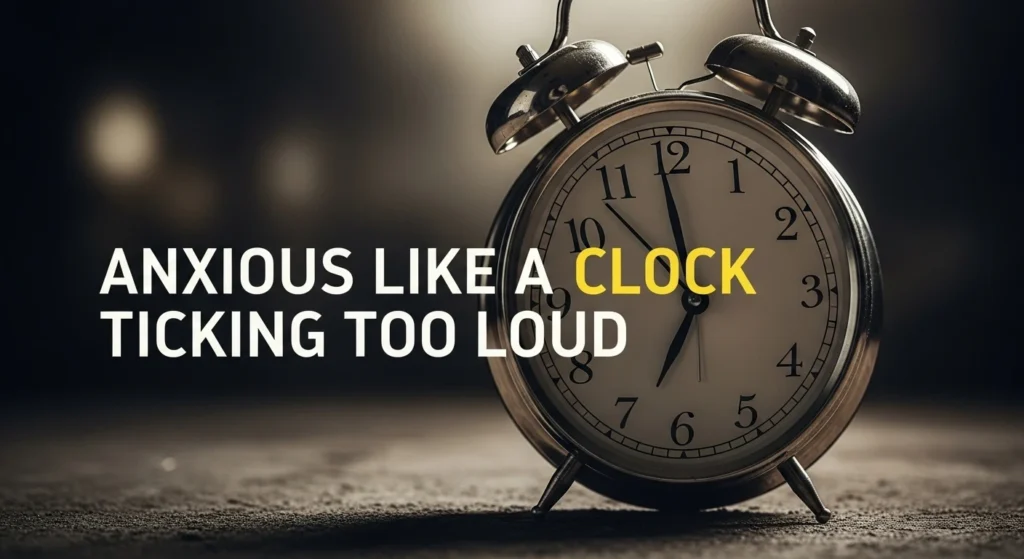
Meaning: Describes obsessive awareness of time and pressure.
Emotional Tone: Stressful, urgent.
Best Usage Context: Modern writing, mental health content.
Example Sentences:
- Waiting felt anxious like a clock ticking too loud.
- His mind echoed anxious like ticking seconds.
- Deadlines made her anxious like a noisy clock.
- Anxiety ticked louder with every minute.
- The silence felt anxious like time shouting.
Anxious Like a Trapped Bird
Meaning: Shows panic and desire to escape.
Emotional Tone: Claustrophobic, fearful.
Best Usage Context: Poetry, emotional narratives.
Example Sentences:
- She felt anxious like a trapped bird.
- His thoughts fluttered anxious like wings in a cage.
- Anxiety beat inside him like a trapped bird.
- The room made her anxious like captivity.
- He breathed anxious like a bird seeking freedom.
Anxious Like Walking on Thin Ice
Meaning: Represents fear of making mistakes.
Emotional Tone: Cautious, tense.
Best Usage Context: Professional writing, storytelling.
Example Sentences:
- He spoke anxious like walking on thin ice.
- The meeting felt like thin ice beneath her.
- Anxiety followed each step carefully.
- She lived anxious like fragile ground.
- One word wrong felt disastrous.
Anxious Like Thunder Before the Storm
Meaning: Indicates impending emotional outburst.
Emotional Tone: Foreboding, heavy.
Best Usage Context: Literary writing, dramatic scenes.
Example Sentences:
- The room felt anxious like thunder waiting.
- His silence grew anxious like storm clouds.
- Anxiety rolled inside her like distant thunder.
- The tension warned of emotional rain.
- Everyone sensed the coming storm.
Anxious Like Hands That Won’t Stop Shaking
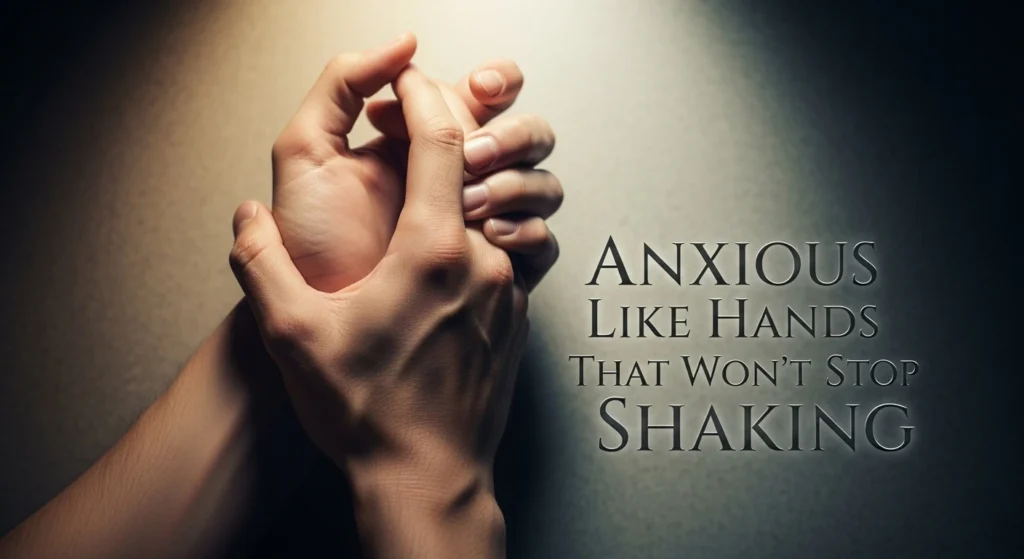
Meaning: Physical manifestation of nervousness.
Emotional Tone: Vulnerable, intense.
Best Usage Context: Realistic fiction, mental health blogs.
Example Sentences:
- His hands shook anxious like loose wires.
- Anxiety moved through her fingers.
- She hid her anxious hands in pockets.
- The tremble betrayed his nerves.
- Anxiety wouldn’t let her stay still.
Anxious Like Waiting for Bad News
Meaning: Captures dread and anticipation.
Emotional Tone: Fearful, heavy.
Best Usage Context: Everyday speech, storytelling.
Example Sentences:
- He felt anxious like waiting for bad news.
- Every ring made her anxious.
- Anxiety sat heavy in the silence.
- Waiting felt unbearable.
- The pause screamed worry.
Anxious Like a Mind on Overdrive
Meaning: Shows excessive overthinking.
Emotional Tone: Overwhelming, chaotic.
Best Usage Context: Self-help writing, casual speech.
Example Sentences:
- My brain feels anxious like overdrive.
- Thoughts raced uncontrollably.
- Anxiety flooded her mind nonstop.
- He couldn’t slow down.
- Sleep felt impossible.
Text Example:
“My mind’s anxious like it won’t switch off tonight.”
Anxious Like Holding Your Breath Too Long
Meaning: Represents sustained tension.
Emotional Tone: Suffocating, intense.
Best Usage Context: Poetry, emotional essays.
Example Sentences:
- Anxiety felt like breath held too long.
- She waited, lungs tight with worry.
- The pause stole his air.
- Relief finally let her breathe.
- Anxiety choked her calm.
Anxious Like Standing Before an Exam
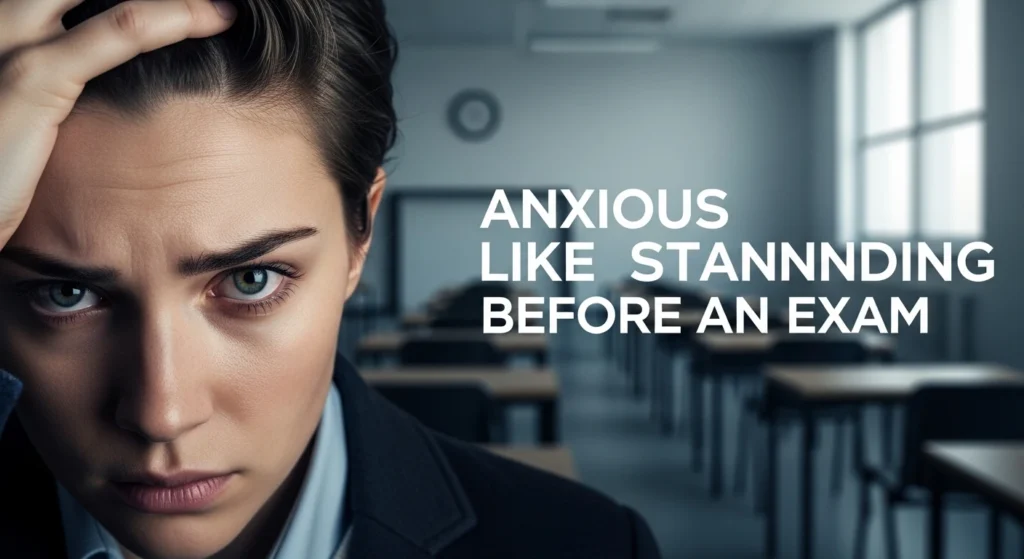
Meaning: Relatable academic anxiety.
Emotional Tone: Nervous, pressured.
Best Usage Context: Student writing, daily conversation.
Example Sentences:
- He felt anxious like exam day.
- The silence felt like test halls.
- Anxiety filled the room.
- She revised mentally nonstop.
- Fear whispered failure.
Anxious Like a Phone with Low Battery
Meaning: Mental exhaustion and stress.
Emotional Tone: Drained, uneasy.
Best Usage Context: Modern writing, casual tone.
Example Sentences:
- I feel anxious like low battery mode.
- Energy drained fast.
- Anxiety blinked warnings.
- She needed rest.
- Stress powered everything down.
Anxious Like Footsteps Behind You
Meaning: Paranoia and constant alertness.
Emotional Tone: Suspenseful, fearful.
Best Usage Context: Thrillers, fiction.
Example Sentences:
- Anxiety felt like unseen footsteps.
- He kept looking back.
- Fear followed closely.
- The night amplified worry.
- Every sound startled her.
Anxious Like Glass About to Shatter
Meaning: Extreme emotional fragility.
Emotional Tone: Intense, fragile.
Best Usage Context: Poetry, dramatic scenes.
Example Sentences:
- She felt anxious like cracking glass.
- Pressure pushed her limits.
- One word could break her.
- Anxiety thinned her patience.
- Silence felt dangerous.
Anxious Like Static in the Air
Meaning: Persistent unease.
Emotional Tone: Subtle, restless.
Best Usage Context: Atmospheric writing.
Example Sentences:
- Anxiety buzzed like static.
- The room crackled with tension.
- He felt discomfort everywhere.
- Calm felt unreachable.
- Energy hummed nervously.
Anxious Like a Door That Won’t Stay Closed
Meaning: Intrusive thoughts and worry.
Emotional Tone: Unsettling, invasive.
Best Usage Context: Mental health writing.
Example Sentences:
- Anxiety crept in like an open door.
- Thoughts refused to stay shut.
- Worry entered repeatedly.
- Peace slipped away.
- Silence felt impossible.
Anxious Like Balancing on a Wire
Meaning: Fear of losing control.
Emotional Tone: Precarious, tense.
Best Usage Context: Metaphorical writing, speeches.
Example Sentences:
- Life felt anxious like a tightrope.
- One mistake felt fatal.
- Anxiety demanded focus.
- Balance felt fragile.
- Fear surrounded every step.
Conclusion
Using similes for anxious emotions allows you to turn abstract feelings into vivid, relatable images. Whether you’re writing poetry, telling a story, journaling, or sending a simple text, the right simile can make your words more powerful, human, and emotionally real.
Creative language doesn’t just decorate writing—it connects people. Keep exploring similes, and you’ll find that even anxiety can be expressed with clarity, beauty, and meaning.