
Anger is one of the strongest human emotions, and writers often struggle to describe it vividly without sounding repetitive or flat. That’s where similes come in.
A simile is a figure of speech that compares two different things using “like” or “as”. Similes are widely used in figurative language because they help readers see, feel, and understand emotions more clearly. Instead of simply saying someone is angry, a simile paints a picture—making the emotion more memorable and impactful.
In this in-depth guide, you’ll find 18 carefully explained similes for anger, each broken down with meaning, emotional tone, best usage context, and multiple original examples. Whether you’re writing poetry, fiction, essays, or everyday messages, these similes will sharpen your expressive power and enrich your language.
Angry like a storm ready to break
Meaning: This simile compares anger to an approaching storm—quiet but dangerous, full of building tension.
Emotional tone: Intense, ominous, and restrained anger.
Best usage: Storytelling, descriptive writing, emotional narratives.
Examples:
- He stood silent, angry like a storm ready to break.
- Her calm voice hid fury, angry like a storm gathering clouds.
- The room felt heavy, angry like a storm before thunder.
- He clenched his fists, angry like a storm on the horizon.
- She smiled politely, angry like a storm waiting to explode.
Angry like a volcano about to erupt
Meaning: This simile suggests explosive anger that has been building for a long time.
Emotional tone: Violent, uncontrollable rage.
Best usage: Dramatic scenes, fiction, intense arguments.
Examples:
- He was angry like a volcano about to erupt.
- Her patience cracked, angry like a volcano beneath the surface.
- The crowd grew angry like a volcano under pressure.
- His words burst out, angry like a volcano erupting.
- She paced the room, angry like a volcano moments from explosion.
Angry like fire in dry grass
Meaning: This simile shows anger that spreads quickly and fiercely.
Emotional tone: Sudden, fast-moving rage.
Best usage: Action writing, conflict scenes, emotional reactions.
Examples:
- His anger spread like fire in dry grass.
- One insult made her angry like fire in dry grass.
- The argument turned ugly, angry like fire catching wind.
- Rumors made the crowd angry like fire in dry grass.
- He snapped instantly, angry like fire sparked by fuel.
Angry like a caged animal
Meaning: This simile reflects anger caused by frustration, restriction, or helplessness.
Emotional tone: Wild, trapped, dangerous.
Best usage: Character development, emotional depth in stories.
Examples:
- He paced the room, angry like a caged animal.
- She felt angry like a caged animal denied freedom.
- His eyes flashed, angry like a trapped beast.
- The prisoner growled, angry like a caged animal.
- He slammed the door, angry like a cornered animal.
Angry like thunder without rain
Meaning: This simile suggests loud anger with little action—more noise than damage.
Emotional tone: Blustery, dramatic, expressive.
Best usage: Dialogue, personality descriptions.
Examples:
- He yelled, angry like thunder without rain.
- Her threats were angry like thunder, but empty.
- The boss scolded us, angry like thunder without rain.
- His voice boomed, angry like thunder in the sky.
- She complained loudly, angry like thunder but harmless.
Angry like boiling water
Meaning: Anger that rises steadily until it spills over.
Emotional tone: Pressurized, simmering rage.
Best usage: Metaphorical writing, emotional tension.
Examples:
- His anger boiled like water in a pot.
- She stayed quiet, angry like boiling water inside.
- The meeting heated up, angry like water nearing boil.
- He trembled, angry like boiling water.
- Her patience evaporated, angry like boiling water.
Angry like a hornet’s nest disturbed
Meaning: This simile describes anger triggered suddenly by provocation.
Emotional tone: Sharp, aggressive, reactive.
Best usage: Action scenes, warnings, vivid storytelling.
Examples:
- The crowd turned angry like a disturbed hornet’s nest.
- One comment made him angry like hornets attacked.
- The team reacted, angry like a hornet’s nest disturbed.
- She snapped, angry like hornets swarming.
- The room buzzed, angry like stirred hornets.
Angry like a red-hot iron

Meaning: Intense, burning anger that feels physically painful.
Emotional tone: Seething, scorching fury.
Best usage: Poetry, emotional prose.
Examples:
- His anger felt like red-hot iron.
- She spoke through teeth, angry like heated iron.
- The betrayal burned, angry like red-hot iron.
- His thoughts scorched, angry like molten metal.
- She glared, angry like iron fresh from fire.
Angry like a lion protecting its pride
Meaning: Righteous, defensive anger rooted in protection.
Emotional tone: Fierce, justified, powerful.
Best usage: Heroic narratives, moral conflicts.
Examples:
- He stood up, angry like a lion protecting its pride.
- She roared back, angry like a lion defending family.
- His voice rose, angry like a guarding lion.
- They fought back, angry like lions under threat.
- She challenged them, angry like a lioness.
Angry like a ticking time bomb

Meaning: Anger waiting to explode at any moment.
Emotional tone: Tense, suspenseful.
Best usage: Thrillers, dramatic storytelling.
Examples:
- He sat quietly, angry like a ticking time bomb.
- Her silence was angry like a ticking bomb.
- The office felt tense, angry like a bomb counting down.
- He smiled thinly, angry like a ticking bomb.
- Everyone backed away, angry like time running out.
Angry like smoke trapped in a room
Meaning: Anger that builds without escape.
Emotional tone: Suffocating, internalized rage.
Best usage: Introspective writing, emotional analysis.
Examples:
- His anger filled him like smoke trapped inside.
- She breathed hard, angry like trapped smoke.
- The silence grew thick, angry like smoke in a room.
- He held it in, angry like smoke choking him.
- Her mind clouded, angry like smoke with no exit.
Angry like shattered glass

Meaning: Sharp, cutting anger that causes emotional harm.
Emotional tone: Bitter, harsh, painful.
Best usage: Dialogue, emotional confrontations.
Examples:
- His words were angry like shattered glass.
- She replied sharply, angry like broken glass.
- The argument cut deep, angry like shards.
- His tone cracked, angry like shattered glass.
- She spoke coldly, angry like splintered glass.
Angry like a wounded bear
Meaning: Dangerous anger born from pain.
Emotional tone: Savage, defensive.
Best usage: Action scenes, intense character moments.
Examples:
- He lashed out, angry like a wounded bear.
- She snapped, angry like an injured animal.
- His rage surged, angry like a wounded bear.
- They approached cautiously—angry like a wounded beast.
- Pain fueled him, angry like a wounded bear.
Angry like lightning striking twice
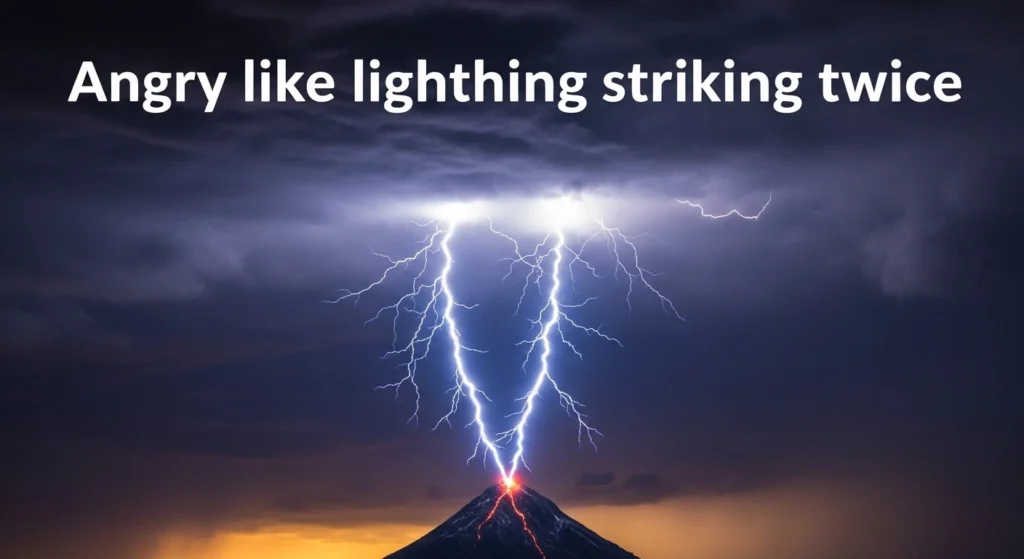
Meaning: Sudden, repeated bursts of anger.
Emotional tone: Unpredictable, explosive.
Best usage: Fast-paced storytelling.
Examples:
- He snapped again, angry like lightning twice.
- Her temper flared, angry like lightning.
- The argument reignited, angry like lightning striking.
- He exploded twice, angry like lightning returning.
- Words flashed, angry like sudden lightning.
Angry like a clenched fist
Meaning: Controlled but powerful anger.
Emotional tone: Restrained, tense.
Best usage: Subtle emotional writing.
Examples:
- His jaw tightened, angry like a clenched fist.
- She stayed quiet, angry like a clenched fist.
- The silence spoke, angry like clenched knuckles.
- He stood stiff, angry like a clenched fist.
- Her calm masked anger like a clenched fist.
Angry like a growling engine
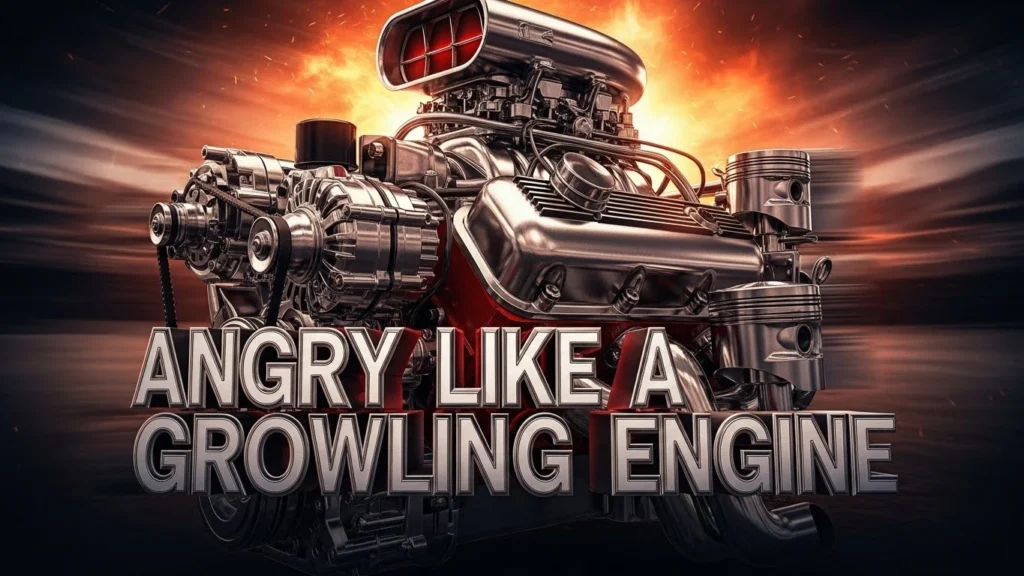
Meaning: Low, steady anger ready to surge.
Emotional tone: Threatening, controlled.
Best usage: Character mood descriptions.
Examples:
- His voice growled, angry like an engine.
- She hummed with rage, angry like machinery.
- The tension vibrated, angry like a growling engine.
- He spoke slowly, angry like an engine idling.
- Her temper rumbled, angry like an engine ready.
Angry like a storm locked behind glass
Meaning: Anger visible but restrained by self-control.
Emotional tone: Contained, intense.
Best usage: Emotional restraint, literary prose.
Examples:
- His eyes stormed, angry like thunder behind glass.
- She smiled tightly, angry like a trapped storm.
- The rage showed, angry like rain behind glass.
- He nodded, angry like a storm contained.
- Her calm hid fury, angry like sealed thunder.
Angry like a blade sharpened by silence

Meaning: Quiet anger made sharper over time.
Emotional tone: Cold, dangerous.
Best usage: Poetry, dramatic fiction.
Examples:
- His silence was angry like a sharpened blade.
- She waited, angry like steel honed by quiet.
- The room felt sharp, angry like hidden knives.
- He spoke softly, angry like a sharpened blade.
- Her calm cut deep, angry like sharpened steel.
Conclusion
Similes for anger transform raw emotion into vivid imagery, helping readers feel what words alone cannot explain. Whether you’re crafting poetry, building characters, writing essays, or sending everyday messages, the right simile adds depth, clarity, and emotional resonance.
By using expressive similes thoughtfully, you don’t just describe anger—you bring it to life. Keep experimenting, stay creative, and let figurative language sharpen your voice as a writer.