
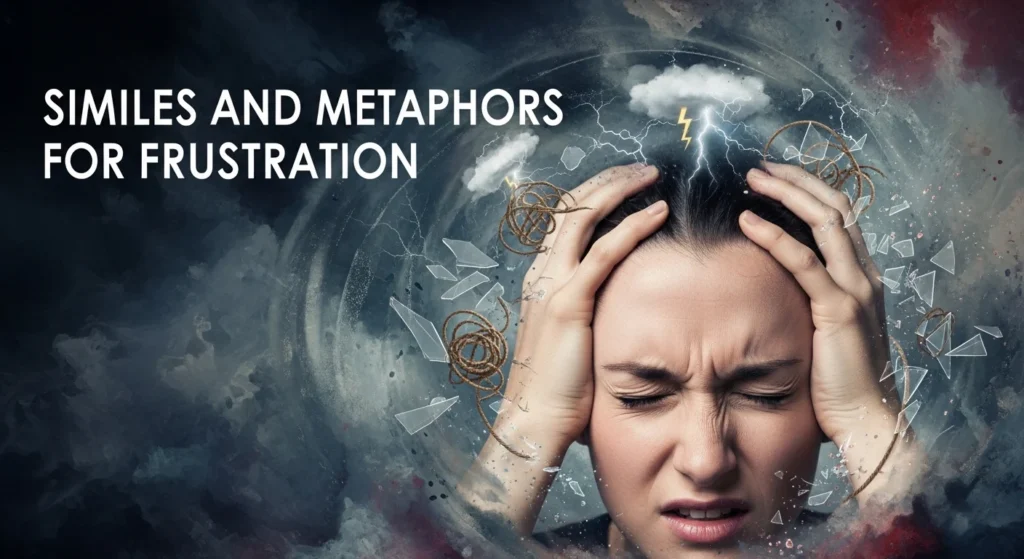
Frustration is a feeling almost everyone experiences, yet it can be surprisingly hard to describe. This is where similes and metaphors for frustration become incredibly useful.
A simile is a figure of speech that compares two different things using words like “as” or “like.” Writers and speakers use similes because they help readers see, feel, and imagine emotions more clearly. When frustration is compared to something physical—pressure, fire, storms—it suddenly becomes vivid and relatable.
In this in-depth guide, you’ll find 18 expressive similes and metaphors for frustration, each carefully explained with meaning, emotional tone, best usage context, and multiple original examples. Whether you’re writing poetry, storytelling, essays, or just texting a friend, these expressions will help you communicate frustration more powerfully and naturally.
Frustration Like a Pressure Cooker Ready to Explode
Meaning: This simile compares frustration to steam building inside a sealed pot, ready to burst.
Emotional Tone: Intense, tense, explosive
Best Usage: Storytelling, emotional writing, daily speech
Examples:
- His frustration was like a pressure cooker, hissing louder with every delay.
- She smiled politely, but inside she felt like a pressure cooker about to explode.
- Weeks of silence turned my patience into a pressure cooker.
- In meetings, his calm voice hid frustration building like steam.
- Texting: “I swear I’m a pressure cooker right now 😤”
Frustration Like Shouting Into the Wind
Meaning: This simile expresses the feeling of being unheard or ignored.
Emotional Tone: Hopeless, weary, resigned
Best Usage: Poetry, reflective writing, conversations
Examples:
- Arguing with him felt like shouting into the wind.
- Every complaint vanished like words lost in air.
- She stopped explaining because it changed nothing.
- Teaching unwilling students can feel like this.
- Daily use: “Talking to them is like shouting into the wind.”
Frustration Like a Jammed Door That Won’t Open
Meaning: Represents blocked progress and repeated failure.
Emotional Tone: Irritating, stuck, tense
Best Usage: Narratives, motivational writing, academic reflection
Examples:
- Every solution felt like a jammed door refusing to open.
- He pushed harder, but nothing changed.
- The project stalled like a locked entrance.
- Career setbacks often feel this way.
- Casual: “This app update is a jammed door.”
Frustration Like Fire Under the Skin

Meaning: Describes irritation that burns internally.
Emotional Tone: Angry, restless, intense
Best Usage: Poetry, emotional prose, character development
Examples:
- His frustration burned like fire under the skin.
- She felt heat rise with every insult.
- Silence only fed the flames.
- The waiting ignited his temper.
- Texting: “I’ve got fire under my skin today.”
Frustration Like Running on a Treadmill
Meaning: Effort without progress.
Emotional Tone: Exhausted, discouraged
Best Usage: Self-help writing, work-life discussions
Examples:
- Working overtime felt like running on a treadmill.
- No matter how fast she ran, she stayed in place.
- The routine drained his motivation.
- Many office jobs feel like this.
- Daily use: “Another treadmill day at work.”
Frustration Like Knots in the Stomach
Meaning: Physical discomfort caused by stress and irritation.
Emotional Tone: Anxious, tense
Best Usage: Personal writing, mental health topics
Examples:
- Frustration twisted her stomach into knots.
- Bad news tightened his insides.
- She couldn’t eat from the tension.
- Stress often lives in the gut.
- Casual: “I’ve got stomach knots over this.”
Frustration Like a Broken Record
Meaning: Repeating the same issue without resolution.
Emotional Tone: Annoyed, tired
Best Usage: Dialogue, everyday speech
Examples:
- Complaining felt like a broken record.
- He repeated himself endlessly.
- No one seemed to listen.
- Parents feel this often.
- Texting: “I sound like a broken record 😩”
Frustration Like Carrying a Heavy Backpack

Meaning: Emotional burden that weighs you down.
Emotional Tone: Drained, heavy
Best Usage: Reflective essays, storytelling
Examples:
- She carried frustration like a heavy backpack.
- Each problem added weight.
- Rest didn’t remove the load.
- Life pressures build slowly.
- Daily use: “Today feels heavy.”
Frustration Like Being Trapped in Traffic
Meaning: Forced waiting with no control.
Emotional Tone: Irritated, impatient
Best Usage: Modern writing, daily conversation
Examples:
- The delay felt like being stuck in traffic.
- No shortcuts existed.
- Every minute dragged.
- Bureaucracy feels like this.
- Casual: “This process is traffic-level annoying.”
Frustration Like Scratching an Itch That Won’t Go Away
Meaning: Relentless irritation without relief.
Emotional Tone: Restless, nagging
Best Usage: Creative writing, introspection
Examples:
- Frustration was an itch she couldn’t scratch.
- Relief stayed out of reach.
- Ignoring it made it worse.
- Small issues can feel huge.
- Daily: “This problem won’t let me rest.”
Frustration Like a Storm Cloud Overhead
Meaning: A constant, looming emotional presence.
Emotional Tone: Dark, oppressive
Best Usage: Poetry, descriptive prose
Examples:
- A storm cloud of frustration followed him.
- Even happy moments felt dim.
- The mood thickened the air.
- Anticipation worsened it.
- Casual: “Storm-cloud mood today.”
Frustration Like Nails on a Chalkboard

Meaning: Sharp, instant irritation.
Emotional Tone: Harsh, grating
Best Usage: Informal speech, humor
Examples:
- That sound was nails on a chalkboard.
- Repeating errors drove her crazy.
- Some habits trigger instant annoyance.
- Overuse reduces impact—use carefully.
- Texting: “That noise 😖”
Frustration Like Spinning Wheels in Mud
Meaning: Effort wasted due to resistance.
Emotional Tone: Defeated, exhausted
Best Usage: Motivational writing, narratives
Examples:
- His plans spun like wheels in mud.
- Progress stalled despite effort.
- External obstacles blocked success.
- Many startups face this.
- Daily: “Still stuck in the mud.”
Frustration Like a Leaking Balloon
Meaning: Energy and motivation slowly draining.
Emotional Tone: Deflated, tired
Best Usage: Emotional storytelling
Examples:
- His excitement leaked away like air.
- Each setback deflated her spirit.
- Hope grew thinner daily.
- Motivation needs refilling.
- Casual: “Feeling deflated today.”
Frustration Like Hitting a Brick Wall
Meaning: Sudden, absolute resistance.
Emotional Tone: Sharp, final
Best Usage: Essays, daily speech
Examples:
- Negotiations hit a brick wall.
- No argument worked.
- Progress stopped instantly.
- Common in debates.
- Texting: “Brick wall situation.”
Frustration Like Static in the Mind

Meaning: Mental noise blocking clarity.
Emotional Tone: Confused, restless
Best Usage: Psychological writing, poetry
Examples:
- Thoughts buzzed like static.
- Focus disappeared.
- Stress clouded logic.
- Meditation can help.
- Daily: “My brain feels noisy.”
Frustration Like Trying to Hold Water in Your Hands
Meaning: Futile attempts to control outcomes.
Emotional Tone: Helpless, resigned
Best Usage: Philosophical writing, reflection
Examples:
- Control slipped like water through fingers.
- Efforts dissolved quickly.
- Acceptance brought peace.
- Life often resists grip.
- Casual: “Can’t hold onto this.”
Frustration Like a Ticking Clock
Meaning: Pressure intensified by time.
Emotional Tone: Anxious, urgent
Best Usage: Thrillers, academic stress writing
Examples:
- The deadline ticked louder each minute.
- Frustration grew with every second.
- Waiting became unbearable.
- Time pressure amplifies stress.
- Texting: “Clock’s ticking 😬”
Conclusion
Frustration doesn’t have to stay locked inside. By using similes and metaphors for frustration, you transform raw emotion into clear, relatable, and memorable language. These comparisons help readers feel what you feel—and help you understand it better too.
Whether you’re writing creatively, speaking casually, or aiming for expressive clarity, figurative language gives frustration a voice. Use it thoughtfully, and your words will resonate far beyond the moment.