
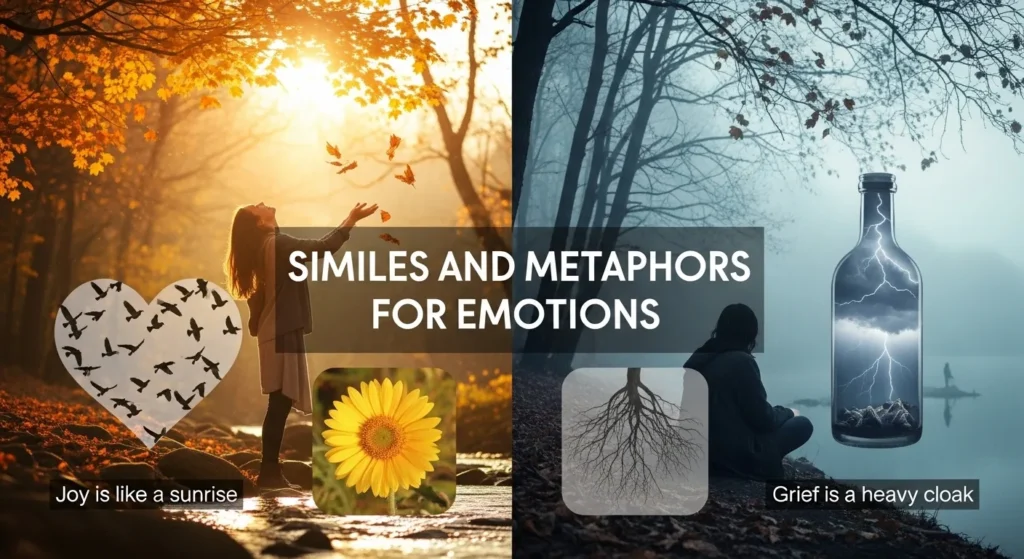
Emotions can be hard to explain. Sometimes a simple word like happy, sad, or angry doesn’t fully capture what we feel inside. This is where similes and metaphors for emotions become incredibly useful.
A simile is a figure of speech that compares two different things using words like “as” or “like.” Writers and speakers use similes because they make ideas more vivid, relatable, and visual. Instead of telling readers what an emotion is, similes show it by creating a mental picture. They help readers feel the emotion rather than just understand it intellectually.
In this in-depth guide, you’ll explore expressive similes and metaphors for emotions, learn their meanings, emotional tones, best usage contexts, and see plenty of original examples you can use in writing, conversation, poetry, or even casual texting.
As Happy as the Sun Breaking Through Clouds
Meaning: This simile compares happiness to sunlight after darkness,
symbolizing sudden joy and relief.
Emotional Tone: Warm, hopeful, uplifting
Best Used In: Storytelling, poetry, personal writing, daily speech
Example Sentences:
- She smiled, as happy as the sun breaking through clouds after a long storm.
- He felt as happy as the sun breaking through clouds when he heard the good news.
- Her laughter made the room feel as happy as the sun breaking through clouds.
- After passing the exam, I was as happy as the sun breaking through clouds.
- Seeing her again made him as happy as the sun breaking through clouds.
Daily-use: 👉 “Got my results today—feeling as happy as the sun breaking through clouds!”
Like a Heavy Stone on the Heart (Sadness)
Meaning: This simile describes sadness as emotional weight pressing down on the heart.
Emotional Tone: Deep, sorrowful, reflective
Best Used In: Poetry, emotional storytelling, reflective essays
Example Sentences:
- The loss sat on her chest like a heavy stone on the heart.
- His silence felt like a heavy stone on the heart.
- Regret weighed on him like a heavy stone on the heart.
- The goodbye left her feeling like a heavy stone rested on her heart.
- That memory still lies like a heavy stone on my heart.
As Angry as a Storm Ready to Break
Meaning: This simile compares anger to a brewing storm,
suggesting intensity and potential explosion.
Emotional Tone: Intense, volatile, dramatic
Best Used In: Narrative writing, character descriptions, dramatic speech
Example Sentences:
- He stood there, as angry as a storm ready to break.
- Her voice shook, as angry as a storm ready to break.
- The crowd grew as angry as a storm ready to break.
- I was as angry as a storm ready to break after hearing the lie.
- His eyes flashed, as angry as a storm ready to break.
Casual use: 👉 “Don’t talk to me right now—I’m as angry as a storm ready to break.”
Like Butter Melting in the Sun (Love)

Meaning: This simile describes love as something soft, warm, and irresistible.
Emotional Tone: Tender, romantic, gentle
Best Used In: Romantic writing, poetry, love letters
Example Sentences:
- My heart felt like butter melting in the sun when she smiled.
- His words made her feel like butter melting in the sun.
- She melted like butter in the sun whenever he held her hand.
- Love made his worries fade like butter melting in the sun.
- Her kindness melted him like butter in the sun.
As Nervous as Leaves in the Wind
Meaning: This simile compares nervousness to trembling leaves,
suggesting restlessness and fear.
Emotional Tone: Anxious, uncertain, fragile
Best Used In: Storytelling, exams or interview descriptions, daily conversation
Example Sentences:
- Before the interview, I was as nervous as leaves in the wind.
- She stood on stage, as nervous as leaves in the wind.
- His hands shook, as nervous as leaves in the wind.
- I felt as nervous as leaves in the wind waiting for the results.
- The child looked as nervous as leaves in the wind.
Like a Balloon Ready to Burst (Excitement)
Meaning: This simile shows excitement building to an uncontrollable level.
Emotional Tone: Energetic, joyful, eager
Best Used In: Casual writing, storytelling, informal speech
Example Sentences:
- I was like a balloon ready to burst with excitement.
- She felt like a balloon ready to burst before the trip.
- His excitement grew like a balloon ready to burst.
- The kids were like balloons ready to burst on Eid morning.
- My heart felt like a balloon ready to burst.
As Cold as Ice (Emotional Detachment)
Meaning: This simile describes emotional numbness or lack of warmth.
Emotional Tone: Distant, harsh, unemotional
Best Used In: Character analysis, dramatic writing
Example Sentences:
- His response was as cold as ice.
- She looked at him with eyes as cold as ice.
- The room felt as cold as ice after the argument.
- His voice sounded as cold as ice.
- Her silence was as cold as ice.
Like Fire in the Veins (Passion)

Meaning: This simile compares passion to burning fire flowing through the body.
Emotional Tone: Intense, energetic, powerful
Best Used In: Poetry, motivational writing, character development
Example Sentences:
- Passion ran through him like fire in the veins.
- She felt like fire in her veins when she danced.
- His ambition burned like fire in his veins.
- The speech lit fire in their veins.
- Creativity flowed like fire in her veins.
As Light as a Feather (Relief)
Meaning: This simile shows relief as a lifting of emotional burden.
Emotional Tone: Calm, peaceful, relaxed
Best Used In: Daily speech, reflective writing
Example Sentences:
- After the test, I felt as light as a feather.
- Her worries disappeared, leaving her as light as a feather.
- He felt as light as a feather after apologizing.
- The news made my heart feel as light as a feather.
- She walked away feeling as light as a feather.
Like a Shadow That Never Leaves (Fear)
Meaning: This simile describes fear as something constant and lingering.
Emotional Tone: Dark, haunting, uneasy
Best Used In: Storytelling, psychological writing
Example Sentences:
- Fear followed him like a shadow that never leaves.
- Doubt clung to her like a shadow that never leaves.
- That memory stayed like a shadow that never leaves.
- Anxiety crept in like a shadow that never leaves.
- His past hung over him like a shadow that never leaves.
As Bright as Fireworks (Joy)
Meaning: This simile shows joy as colorful, explosive happiness.
Emotional Tone: Celebratory, cheerful
Best Used In: Festive writing, storytelling, daily speech
Example Sentences:
- Her smile was as bright as fireworks.
- The celebration felt as bright as fireworks.
- His joy burst as bright as fireworks.
- The moment shone as bright as fireworks.
- Their laughter was as bright as fireworks.
Like a Tight Knot in the Chest (Anxiety)

Meaning: This simile shows anxiety as physical tension.
Emotional Tone: Uneasy, tense, overwhelmed
Best Used In: Mental health writing, fiction
Example Sentences:
- Anxiety felt like a tight knot in my chest.
- She woke up with a tight knot in her chest.
- His worries formed like a tight knot in the chest.
- Fear twisted into a tight knot in her chest.
- Stress sat like a tight knot in my chest.
As Gentle as a Summer Breeze (Calmness)
Meaning: This simile compares calm emotions to soothing wind.
Emotional Tone: Peaceful, soothing
Best Used In: Poetry, mindfulness writing
Example Sentences:
- Her voice was as gentle as a summer breeze.
- Calm settled in, as gentle as a summer breeze.
- His presence felt as gentle as a summer breeze.
- The evening passed as gentle as a summer breeze.
- Her thoughts flowed as gentle as a summer breeze.
Like a Cracked Mirror (Emotional Pain)
Meaning: This simile shows emotional pain as broken self-image.
Emotional Tone: Hurt, fragile, broken
Best Used In: Literary writing, poetry
Example Sentences:
- Betrayal left him feeling like a cracked mirror.
- Her confidence shattered like a cracked mirror.
- Trust broke like a cracked mirror.
- His heart felt like a cracked mirror.
- The past reflected like a cracked mirror.
As Heavy as a Loaded Sky (Grief)
Meaning: This simile compares grief to an oppressive atmosphere.
Emotional Tone: Somber, deep, overwhelming
Best Used In: Poetry, serious narratives
Example Sentences:
- Grief hung as heavy as a loaded sky.
- The room felt as heavy as a loaded sky.
- His heart felt as heavy as a loaded sky.
- Silence pressed down like a loaded sky.
- Loss settled in as heavy as a loaded sky.
Like Music in the Soul (Contentment)
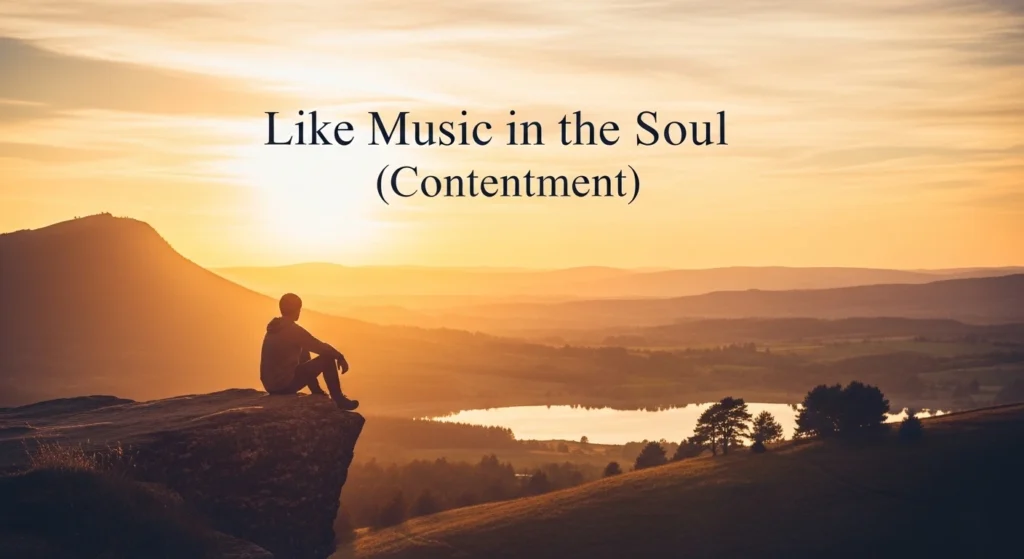
Meaning: This simile describes inner satisfaction and harmony.
Emotional Tone: Warm, fulfilled, peaceful
Best Used In: Reflective writing, poetry
Example Sentences:
- Peace played like music in her soul.
- That moment felt like music in my soul.
- His smile brought music into her soul.
- Contentment flowed like music in the soul.
- Gratitude sounded like music in the soul.
As Sharp as Lightning (Shock)
Meaning: This simile compares shock to sudden, intense lightning.
Emotional Tone: Surprising, intense
Best Used In: Narrative writing, dramatic scenes
Example Sentences:
- The news hit me as sharp as lightning.
- Shock ran through her as sharp as lightning.
- His words struck as sharp as lightning.
- The realization came as sharp as lightning.
- Fear flashed as sharp as lightning.
Like a Warm Blanket (Emotional Comfort)
Meaning: This simile shows comfort as safety and warmth.
Emotional Tone: Reassuring, loving, safe
Best Used In: Personal writing, storytelling
Example Sentences:
- Her words wrapped around me like a warm blanket.
- Home felt like a warm blanket after a long day.
- His hug was like a warm blanket.
- Memories covered her like a warm blanket.
- Kindness felt like a warm blanket.
Texting use: 👉 “Talking to you feels like a warm blanket today.”
Final Thoughts
Using similes and metaphors for emotions transforms ordinary language into something memorable and powerful. They help readers see, feel, and connect with emotions on a deeper level. Whether you’re writing poetry, telling a story, improving academic work, or simply texting a friend, figurative language adds color and meaning to your words.