
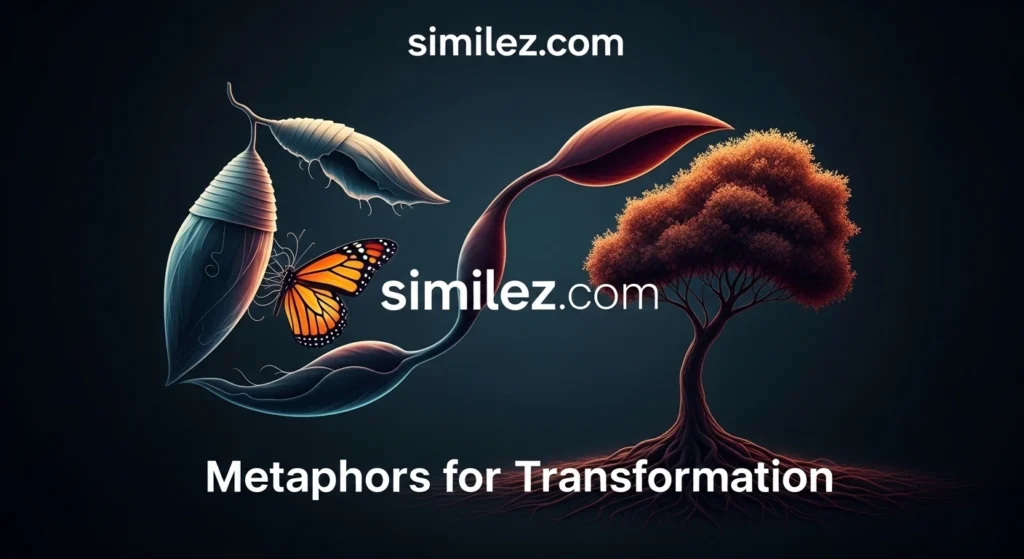
Imagine a caterpillar inching along a leaf, seemingly ordinary, yet carrying the promise of a butterfly. This is the essence of change, the quiet magic of becoming something new. Metaphors for transformation capture this journey in words, giving life to the invisible process of growth and evolution.
Transformation is a universal experience. Whether it’s personal growth, career shifts, or emotional breakthroughs, we all go through moments that redefine us. Understanding and using metaphors for transformation can help express these changes vividly, inspire reflection, and make your writing or speech more engaging.
The Power of Metaphors for Transformation
Metaphors are not just figures of speech; they shape our perception. When we describe change through metaphor, it becomes tangible. For example, saying “she blossomed like a spring flower” paints a picture of growth and renewal that mere literal words cannot.
Metaphors make abstract concepts concrete. They bridge the gap between feeling and expression, helping readers and listeners connect emotionally. This is especially valuable in storytelling, personal development writing, and motivational communication.
Butterfly Metaphor: From Cocoon to Wings
The butterfly is a classic symbol of transformation. The caterpillar’s journey through the cocoon represents patience, struggle, and eventual beauty.
Example: “After months of learning and setbacks, he emerged like a butterfly, confident and vibrant.”
Alternative ways to express this include “breaking out of the shell” or “spreading newfound wings.” The metaphor evokes sensory details—delicate wings, sunlight, and freedom—making the transformation feel real.
Phoenix Rising: Rebirth from Ashes
The phoenix metaphor embodies resilience and renewal. Rising from its ashes, it symbolizes starting over with strength gained from experience.
Example: “Her career failed spectacularly, yet she rose like a phoenix from the ashes, stronger and wiser.”
Other expressions: “rebuilding from ruins” or “emerging from adversity.” This metaphor carries emotional weight and encourages perseverance.
River Metaphor: Flow and Change
A river metaphor represents continuous movement and adaptation. Just as water shapes its path around obstacles, transformation is fluid and ongoing.
Example: “He navigated his challenges like a river carving its way through stone, steady and persistent.”
Alternative phrases: “moving with the tide” or “shaping life’s course.” Sensory elements like water, currents, and reflection enhance relatability.
Metaphors for Personal Growth
Personal growth can be illustrated using metaphors that resonate with readers. Think of seeds, ladders, or stepping stones—each conveys progression and effort.
Tip: Use metaphors to visualize progress: “She planted seeds of knowledge that grew into a forest of wisdom.” This creates vivid imagery for abstract development.
Metaphors for Emotional Transformation
Emotions evolve, and metaphors can capture this journey. For example, storms can symbolize turmoil, while sunshine reflects clarity and peace.
Example: “His anger subsided, melting like morning frost in the sun.” Alternative expressions include “thawing frozen emotions” or “clearing storm clouds.”
These metaphors add sensory and emotional depth.
Metaphors for Career Transformation
Career shifts can be challenging. Metaphors such as “climbing mountains,” “navigating a maze,” or “turning a new page” communicate effort, discovery, and renewal.
Example: “She turned a new page in her career, leaving behind familiar routines for unexplored opportunities.”
The imagery encourages readers to see change as an adventure rather than a setback.
Metaphors for Social Transformation
Social changes, like cultural shifts or community growth, can be expressed through metaphors like “ripples in a pond” or “building bridges.” They suggest influence and connectivity.
Example: “Small acts of kindness spread through the town like ripples on a pond.” Sensory cues like movement and sound make the metaphor vivid.
Using Nature as a Metaphor for Transformation
Nature offers endless inspiration: seasons, trees, rivers, and storms illustrate the rhythm of change.
Example: “Like autumn leaves falling to the ground, she let go of old habits to make way for growth.”
Alternative expressions include “pruning the old to nurture the new” or “weathering life’s seasons.”
Literary and Cultural Metaphors
Literature and myths enrich transformation metaphors.
The journey of Odysseus, the trials of Cinderella, or the metamorphosis in Kafka’s works all illustrate profound change.
Example: “He faced his challenges like Odysseus navigating the unknown seas, each trial shaping him.”
These references create resonance and depth for readers familiar with the stories.
Metaphors for Spiritual Transformation
Spiritual growth can be described as illumination, awakening, or journeying through darkness toward light.
Example: “She emerged from meditation like a lantern in the night, calm and radiant.”
Other expressions include “finding inner light” or “crossing a threshold of understanding.” The imagery evokes clarity and peace.
Metaphors for Creative Transformation
Creativity thrives on transformation. Artists often speak of “molding clay,” “weaving threads,” or “igniting sparks” to describe evolving ideas.
Example: “His sketches transformed into a vibrant mural, each stroke a spark of imagination.”
Alternative ways: “turning ideas into reality” or “shaping thoughts into masterpieces.”
Interactive Exercises to Practice Metaphors
- Visual Mapping: Write a current personal challenge. Then draw a metaphor that represents it (river, seed, storm). Explain why it fits.
- Metaphor Journal: Each day, record one transformation you notice in life using a metaphor.
- Story Exercise: Rewrite a short story or diary entry replacing literal descriptions of change with metaphors.
These exercises strengthen metaphorical thinking and expression.
Bonus Tips for Using Metaphors in Writing and Communication
- Social Media: Use short, impactful metaphors in posts for emotional resonance.
- Daily Conversations: Describe changes metaphorically to make discussions vivid.
- Writing: Mix sensory details with metaphors for deeper reader engagement.
- Public Speaking: Metaphors help audiences visualize abstract concepts quickly.
Common Mistakes to Avoid with Metaphors
- Overcomplicating: Keep metaphors simple and relatable.
- Overusing: One strong metaphor is often better than many weak ones.
- Mixing incompatible images: Ensure consistency to avoid confusion.
The Emotional Impact of Transformation Metaphors
Metaphors evoke empathy. Readers feel the struggle, growth, or renewal themselves. This connection makes communication more effective and memorable.
Example: “He shed his doubts like an old coat, stepping into confidence.”
The tactile imagery triggers emotional response and understanding.
Transforming Your Mindset with Metaphors
Metaphors can shape thinking. Viewing setbacks as stepping stones or obstacles as rivers encourages adaptive and positive perspectives.
Example: “Every failure became a stepping stone toward success.”
These phrases guide mindset and action subtly.
Everyday Metaphors for Transformation
Even routine changes can be expressed metaphorically: cooking, gardening, cleaning, or traveling.
Example: “She pruned her schedule like a garden, removing unnecessary tasks to flourish.”
This approach makes everyday experiences relatable and inspiring.
Metaphors for Transformation in Technology
Tech evolution can be visualized: “software evolving like organisms,” “ideas uploading like seeds,” or “systems blooming with updates.”
Example: “The app transformed like clay in a potter’s hands, shaping to user needs.”
This makes complex concepts accessible.
Metaphors in Leadership and Team Growth
Leadership involves guiding transformation. Metaphors like “shepherding the flock” or “navigating a ship” convey guidance, protection, and vision.
Example: “The manager navigated the team like a captain steering through a storm, keeping morale high.”
These metaphors inspire confidence and unity.
Conclusion
Metaphors for transformation enrich communication by making abstract change tangible and relatable. From butterflies and rivers to phoenixes and lanterns, they give words to growth, renewal, and evolution.
By using metaphors thoughtfully, you can connect emotionally with readers, enhance storytelling, and inspire reflection. Practice creating and applying them in writing, speaking, and daily life. Your words can transform, just like the experiences you describe.
FAQs
What are some simple metaphors for transformation?
Simple metaphors include “growing like a seed,” “breaking out of a shell,” or “rising like a phoenix.” These capture change clearly.
How can I use metaphors for personal growth?
Identify the stage or feeling of growth and compare it to nature, objects, or journeys. For example, “pruning old habits” or “planting new ideas.”
Why are metaphors effective for emotional expression?
Metaphors create vivid imagery and sensory connection, allowing people to feel emotions and experiences more deeply.
Can metaphors be used in professional writing?
Yes, metaphors make presentations, articles, and reports engaging. Use them carefully to clarify rather than confuse.
How do I practice creating transformation metaphors?
Keep a journal, map challenges visually, or rewrite stories using metaphors. Daily practice strengthens creativity and expression.