
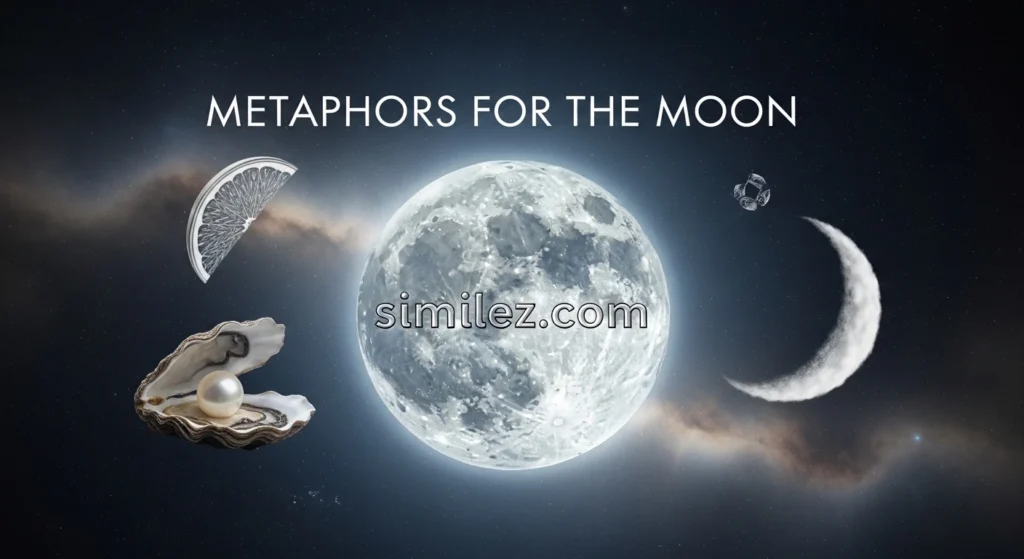
On a quiet night, as the city lights dim and a gentle breeze caresses the trees, the moon rises. Its soft glow paints the streets silver, and suddenly, the world feels alive yet serene. This is the magic of metaphors for the moon. They allow writers, poets, and dreamers to capture the moon’s mystery, beauty, and emotional impact in words. Understanding and using these metaphors can enrich your writing, spark creativity, and deepen your connection with nature.
The moon has long been a symbol of mystery. Its silent presence evokes curiosity and wonder. Writers often describe it as a hidden guardian of secrets. For example, you might say, “The moon watched over the sleeping village like a silent sentinel.” Alternative expressions could include “a celestial enigma” or “a quiet observer in the night.” This metaphor can give your writing a sense of intrigue and depth.
Metaphors for the Moon in Literature
Classic literature often uses the moon to reflect human emotions. From Shakespeare to Emily Dickinson, authors have compared the moon to a lover, a guide, or even a mirror of the soul. For instance, “Her thoughts drifted like the moon across a clouded sky” evokes both movement and emotion. Using literary metaphors can add sophistication to your writing and connect it to timeless themes.
The Moon as a Romantic Symbol
Romance and the moon are inseparable in poetry and storytelling. The moon’s gentle light often mirrors feelings of love or longing. Saying, “The moon hung over them like a silver blessing” immediately conveys intimacy and beauty. Alternatives include “a pale guardian of hearts” or “a lover’s lantern in the sky.” Romantic metaphors make your descriptions emotionally resonant.
Celestial Comparisons: The Moon as a Mirror
Sometimes, the moon is compared to a mirror reflecting human emotions. For example, “Her loneliness shone in the moon’s reflection on the lake” illustrates an internal state projected onto nature. Other variations could be “a silver mirror of the soul” or “nature’s reflective eye.” This technique can add layers to your storytelling.
The Moon as a Timekeeper
The moon has guided calendars and tides for centuries. Metaphors emphasizing its role as a timekeeper are powerful. “The moon marked the passage of nights like a patient clock” demonstrates this beautifully. Alternatives might include “a celestial calendar” or “a luminous chronometer.” Such metaphors can evoke both nature and structure in your writing.
Emotional Metaphors for the Moon
The moon is a canvas for emotions. Writers compare it to feelings like sadness, hope, or serenity. “Her heart was as pale as the moon” suggests fragility or longing. Variations include “a silver sigh in the sky” or “an emblem of quiet hope.” Using emotional metaphors helps readers connect with your characters.
The Moon in Cultural References
Different cultures imbue the moon with unique meanings. In Chinese culture, it represents reunion; in Greek mythology, Artemis is the moon goddess of the hunt. For example, “The moon glowed like Artemis’s bow” mixes cultural and poetic metaphor. Understanding cultural references enriches your writing with depth and context.
The Moon as a Source of Inspiration
Artists and writers often see the moon as a muse. “She painted her dreams under the moon’s silver gaze” captures this idea. Alternatives might be “the moon’s light inspired whispers of creativity” or “a celestial spark for imagination.” Metaphors emphasizing inspiration make your writing lively and evocative.
Metaphors for the Moon in Daily Life
You don’t have to be a poet to use moon metaphors. Everyday writing benefits from them too. For instance, “The moonlight spilled across the breakfast table like soft cream” brings ordinary scenes to life. Alternatives include “a gentle halo on the curtains” or “silver dust on the windowsill.” These metaphors enhance descriptive writing in daily contexts.
The Moon as a Companion
Loneliness is often softened by the moon’s presence. Saying, “The moon was her quiet companion during long walks” conveys solace. Other expressions include “a steadfast friend in the night” or “a silver confidant.” Companion metaphors can be comforting, making your writing more relatable.
Nature and the Moon: Scenic Metaphors
The moon’s interaction with nature inspires vivid metaphors. “The moon draped the mountains in silver silk” evokes texture and visual beauty. Alternatives might be “a silver quilt over the hills” or “a luminous cloak on the forest canopy.” Nature-focused metaphors bring imagery to life in creative writing.
Playful Metaphors for the Moon
Not all metaphors need to be serious. Playful or humorous comparisons can engage readers. For example, “The moon hung in the sky like a giant scoop of vanilla ice cream” adds whimsy. Other playful options include “a nightlight for the stars” or “a cosmic cookie.” Humor in metaphors makes your writing more relatable and memorable.
Metaphors for the Moon in Dreams
The moon often represents dreams or aspirations. “Her ambitions floated like the moon above distant clouds” portrays hope. Alternatives include “a beacon in her night sky” or “a silver thread leading to possibility.” Dream-related metaphors inspire motivation and imagination.
Using Metaphors for the Moon in Social Media
Short, evocative metaphors can enhance posts or captions. For example, “Chasing the moonlit waves tonight” conveys mood and imagery efficiently. Other options include “bathed in lunar whispers” or “dancing with silver shadows.” Social media thrives on concise, emotional language, making moon metaphors ideal.
Creative Exercises with Moon Metaphors
To practice, try these prompts:
- Describe your day as a moonlit night.
- Write a short story where the moon reflects a character’s mood.
- Create a metaphor comparing the moon to an everyday object.
Bonus tips: combine metaphors with sensory details, use in dialogue, or add them to journaling exercises.
These exercises sharpen creativity and writing skills.
Conclusion
Metaphors for the moon offer endless creative possibilities. They connect emotions, nature, and culture into vivid imagery. Whether you’re writing poetry, crafting social media posts, or journaling, using moon metaphors enhances storytelling. Practice with the examples and exercises provided, and soon your writing will shine as brightly as the moon itself.
FAQs
What is a metaphor for the moon?
A metaphor for the moon is a figure of speech comparing the moon to something else to convey emotion, imagery, or meaning.
How can I use moon metaphors in writing?
Use them in descriptions, emotions, or storytelling. Compare the moon to objects, feelings, or natural elements.
Can moon metaphors be humorous?
Yes, playful comparisons like “the moon as a giant cookie” can add humor and whimsy to writing.
Why are moon metaphors effective?
They evoke visual imagery, emotions, and cultural references, making writing more vivid and engaging.
Are there cultural differences in moon metaphors?
Yes. Different cultures assign unique meanings to the moon, such as reunion, guidance, or divine presence.