
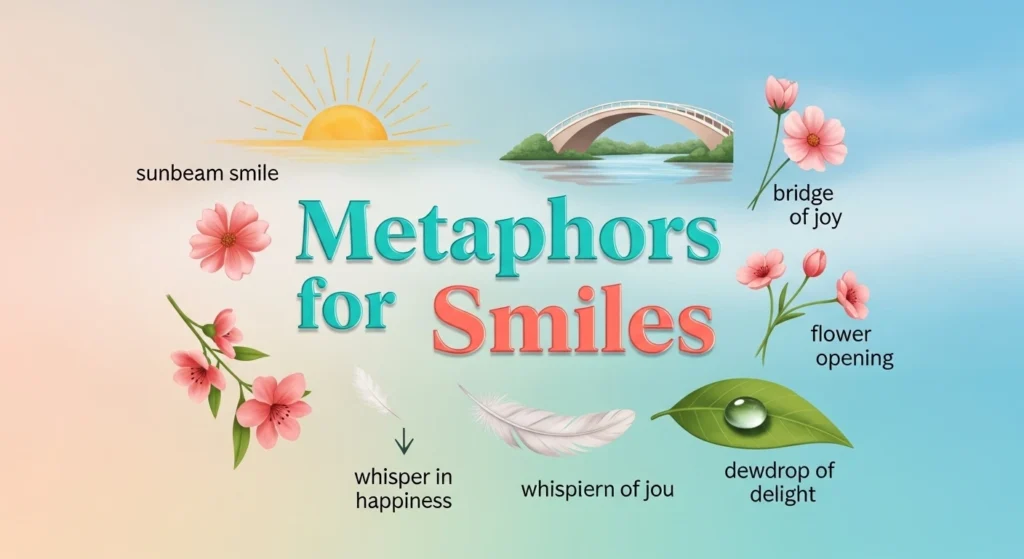
Imagine walking down a sunlit street and spotting someone whose smile lights up the entire sidewalk. That instant warmth and joy is what makes metaphors for smiles so powerful in both writing and daily communication. Using metaphors can turn a simple expression into an emotional experience, helping others visualize feelings and connect on a deeper level.
Smiles are universal, yet their impact can vary. Metaphors give these expressions more color, depth, and resonance. They can convey joy, mischief, comfort, or even hidden emotions in ways plain words cannot. Understanding and using metaphors for smiles is therefore not just a literary tool—it’s a way to communicate humanity.
Understanding the Magic of Metaphors for Smiles
Metaphors are comparisons that describe something by equating it to something else. When we use metaphors for smiles, we translate the intangible effect of a smile into vivid imagery. Instead of simply saying someone smiled, we can say their smile “sparkled like morning dew” or “bloomed like a sunflower in sunlight.” This engages the senses and imagination.
Why Using Metaphors for Smiles Enhances Communication
Words shape perception. A metaphor enriches a description and evokes emotion. By using metaphors for smiles, writers and speakers can make scenes more memorable, convey subtle feelings, and build stronger connections with their audience.
The Emotional Power of Metaphors for Smiles
A smile can reflect happiness, sadness, or mystery. Metaphors allow us to capture these layers. For instance, “Her smile was a quiet whisper in a noisy room” suggests delicacy and subtlety. Such expressions can evoke empathy, nostalgia, or warmth in readers.
Common Metaphors for Smiles
Some metaphors are classic and universally understood. Examples include:
- “A ray of sunshine” for warmth and positivity
- “A sparkling gem” for brilliance and charm
- “A gentle wave” for softness and serenity
These metaphors are easy to visualize and instantly create emotional resonance.
Creative Metaphors for Smiles in Writing
Writers often invent unique metaphors to make their characters unforgettable. For example, “His smile was a secret garden, full of hidden delights” adds mystery and allure. Creating original metaphors for smiles allows for fresh, engaging storytelling.
Using Cultural References as Metaphors for Smiles
Metaphors can draw from literature, folklore, or pop culture. For example, “She smiled like Mona Lisa” invokes mystery and subtle intrigue. Cultural references give readers shared context and deeper appreciation.
Literary Examples of Smiles Through Metaphors
Authors often use metaphorical smiles to convey emotion. In classic literature, a character’s smile may be described as “a flicker of candlelight in a dark room,” symbolizing hope amid despair. These creative touches make narratives richer.
Nature-Inspired Metaphors for Smiles
Nature provides endless inspiration. Smiles can be described as “morning dew glistening on petals” or “sunlight breaking through clouds.” These metaphors not only beautify the description but also connect emotions with natural imagery.
How Metaphors for Smiles Improve Storytelling
Metaphors create imagery, set tone, and build character depth. A simple smile described as “a burst of fireworks” conveys excitement and energy. This technique helps readers feel emotions rather than just read about them.
Interactive Exercises to Practice Smile Metaphors
- Observation Exercise: Watch people in public spaces and write down unique metaphors for their smiles.
- Writing Challenge: Take a common smile and describe it in three different metaphorical ways.
- Emotion Matching: Pair each smile metaphor with an emotion it best represents.
These exercises enhance both creativity and emotional awareness.
Tips for Crafting Original Smile Metaphors
- Focus on sensory details like color, texture, or sound.
- Draw from personal experiences or favorite memories.
- Combine unexpected elements, like “Her smile was winter sunlight on a frozen lake.”
This encourages originality and emotional depth.
Applying Smile Metaphors in Daily Life
Metaphors can enhance conversations, social media posts, and personal writing. Instead of saying “I liked your smile,” you can say, “Your smile is a gentle sunrise, brightening the room.” This small shift makes compliments more memorable and heartfelt.
Using Metaphors for Smiles in Poetry and Songs
Poets and lyricists use metaphor to convey emotion. For example, “His smile was a lighthouse guiding me through storms” creates a vivid image of hope and support. Such metaphors resonate with readers and listeners alike.
Visual Storytelling with Smile Metaphors
Metaphors can enhance visual storytelling in films, comics, or illustrations. A smile described as “a flicker of fireflies in twilight” helps artists and audiences imagine the scene with clarity and emotion.
Common Mistakes to Avoid When Using Smile Metaphors
- Overcomplicating the metaphor: Keep it simple and relatable.
- Mixing too many metaphors in one sentence: This can confuse readers.
- Being cliché: Phrases like “smile like the sun” are overused. Try fresh comparisons.
Bonus Tips for Using Metaphors for Smiles
- Rotate metaphors for variety in writing.
- Observe real-life smiles for inspiration.
- Use metaphors to subtly convey hidden emotions.
- Pair metaphors with gestures or body language for authenticity.
Metaphors can transform ordinary descriptions into captivating, emotional experiences.
Example Metaphors for Smiles with Detailed Scenarios
Sparkling Gem
- Explanation: Suggests brilliance, value, and attractiveness.
- Scenario: A character smiles at a reunion, lighting up the room like a polished diamond.
- Alternatives: “A radiant jewel” or “a twinkling gem.”
- Sensory Details: Emphasizes visual sparkle and emotional warmth.
Gentle Wave
- Explanation: Conveys softness, calmness, and natural flow.
- Scenario: A teacher smiles at a nervous student, easing tension.
- Alternatives: “A soothing ripple” or “a flowing tide.”
- Sensory Details: Evokes motion and tranquility.
Hidden Garden
- Explanation: Symbolizes mystery, allure, and discovery.
- Scenario: A stranger’s smile hints at secrets waiting to be known.
- Alternatives: “A secret orchard” or “an enclosed paradise.”
- Sensory Details: Invites curiosity and emotional engagement.
Creative Prompts to Experiment with Smile Metaphors
- Write a paragraph where every smile is described using a different natural element.
- Describe a character whose smile changes metaphorically with their mood.
- Compare a smile to an object or event from your favorite book or movie.
These prompts encourage inventive thinking and richer descriptions.
Using Smile Metaphors on Social Media
Metaphors can make posts more engaging. For instance, “Her smile was a cup of warm cocoa on a rainy day” evokes comfort and familiarity. This can increase likes, shares, and emotional engagement.
Daily Practices to Observe and Describe Smiles
- Keep a journal of unique smiles you see.
- Note the emotions and contexts associated with each smile.
- Experiment with writing metaphors daily to build a creative habit.
By observing closely, your metaphors become authentic and emotionally powerful.
Conclusion
Metaphors for smiles are more than literary devices—they are bridges to emotion and connection. They allow you to capture subtlety, warmth, and joy in ways plain words cannot.
By practicing and applying these techniques in writing, conversations, and creative work, you enrich your communication and invite others to feel, imagine, and connect. Start observing, start writing, and let smiles inspire your words.
FAQs
What are metaphors for smiles?
Metaphors for smiles are creative comparisons that describe a smile using vivid imagery, emotion, or sensory detail.
Why use metaphors for smiles in writing?
They make descriptions more engaging, convey subtle emotions, and help readers visualize and feel the moment.
Can I use smile metaphors in daily conversation?
Yes, using metaphors in compliments or storytelling can make interactions more memorable and heartfelt.
How do I create original metaphors for smiles?
Focus on sensory details, personal experiences, and unexpected comparisons to craft unique and emotional metaphors.
Are there common mistakes to avoid?
Avoid overcomplicating, mixing too many metaphors, or relying on clichés. Keep metaphors simple, relatable, and fresh.