
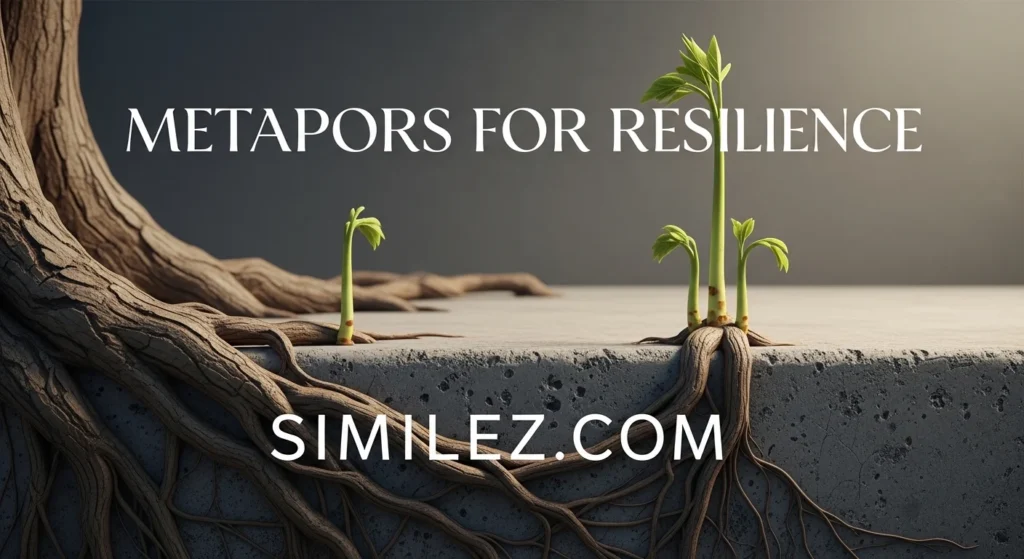
The storm hit without warning. One moment, everything felt calm. The next, life seemed to crack under pressure. Yet somehow, you kept going. That quiet strength you felt? It’s what we call resilience—and exploring metaphors for resilience helps us understand and express that strength in powerful ways.
Resilience is the ability to bounce back from challenges. It’s how people recover, adapt, and grow stronger after hardship. However, resilience can feel abstract. That’s where metaphors come in.
They turn emotions into images. They make strength visible. Therefore, learning these metaphors can help you write better, speak more clearly, and even think more positively.
Metaphors for Resilience: What They Really Mean
Metaphors for resilience compare inner strength to real-world images. These comparisons make complex emotions easier to understand.
For example, instead of saying “she is strong,” you might say “she is a tree bending in the wind.” This creates a vivid image.
Therefore, metaphors help:
- Simplify emotions
- Make writing more engaging
- Add depth to communication
Why Metaphors for Resilience Matter in Daily Life
Life is full of ups and downs. However, words shape how we see those experiences.
When you use metaphors for resilience:
- You reframe struggles as growth
- You feel more hopeful
- You communicate feelings more clearly
For instance, calling a tough time “a storm that will pass” feels lighter than calling it a disaster.
Metaphors for Resilience in Nature
Nature offers powerful images of strength.
Think about:
- A tree surviving strong winds
- A river flowing around obstacles
- A flower growing through cracks
These metaphors remind us that resilience is natural. It is part of life itself.
Metaphors for Resilience in Everyday Situations
You don’t need dramatic events to use these metaphors.
For example:
- Finishing a hard task → “climbing a mountain”
- Recovering from failure → “rising from ashes”
- Staying calm → “being an anchor in the storm”
These simple comparisons make daily struggles feel meaningful.
Emotional Power Behind Metaphors for Resilience
Metaphors don’t just explain. They make you feel.
When you say:
- “I am a rock,” you feel steady
- “I am a wave,” you feel adaptable
Therefore, metaphors influence emotions. They can build confidence and calm fear.
Metaphors for Resilience in Literature and Culture
Writers have used these metaphors for centuries.
For example:
- The phoenix rising symbolizes rebirth
- The oak tree represents strength
- The ocean shows persistence
These cultural symbols connect us to shared human experiences.
Metaphors for Resilience in Personal Growth
Resilience is not just about survival. It’s about growth.
Think of:
- “A seed growing in darkness”
- “Iron forged in fire”
These metaphors show that struggle shapes strength.
Metaphors for Resilience in Difficult Times
During hard moments, metaphors act like emotional tools.
For example:
- “This is just a chapter, not the whole book”
- “I am walking through the storm, not stuck in it”
These ideas shift perspective and reduce stress.
Metaphors for Resilience in Communication
Using metaphors makes your message more relatable.
Instead of saying:
- “Stay strong,” Say:
- “Be the lighthouse in rough seas.”
This feels more powerful and memorable.
Metaphors for Resilience for Writers and Creators
If you write blogs, stories, or social posts, metaphors are essential.
They:
- Grab attention
- Improve readability
- Boost emotional impact
Therefore, they are perfect for SEO content and storytelling.
Metaphors for Resilience for Motivation
Motivational language often uses metaphors.
For example:
- “Fall seven times, stand up eight”
- “Turn wounds into wisdom”
These phrases inspire action and hope.
Metaphors for Resilience in Relationships
Resilience also appears in relationships.
You might say:
- “Our bond is a bridge over troubled water”
- “We are roots holding each other steady”
These metaphors show emotional strength and connection.
Metaphors for Resilience in Mental Strength
Mental resilience is about staying calm and focused.
Metaphors include:
- “A calm lake reflecting clearly”
- “A fortress protecting the mind”
These images help build inner peace.
Metaphors for Resilience in Success and Failure
Failure is part of success.
Metaphors help reframe it:
- “Failure is a stepping stone”
- “Every setback is a setup for a comeback”
Therefore, resilience becomes part of progress.
Metaphors for Resilience in Everyday Language
You already use metaphors without noticing.
Examples:
- “Bounce back”
- “Stay afloat”
- “Hold your ground”
These phrases show how deeply resilience is built into language.
3 Powerful Metaphors for Resilience (With Examples)
The Bamboo in the Wind
Meaning: Flexibility is strength. Explanation: Bamboo bends but doesn’t break. It survives storms by adapting.
Example sentence: “Like bamboo in the wind, she bent under pressure but never broke.”
Alternative ways:
- Flexible like a reed
- Strong through softness
Emotional detail: You can almost hear the wind and feel the quiet strength.
The Phoenix Rising
Meaning: Rebirth after destruction. Explanation: The phoenix burns and rises again, stronger than before.
Example sentence: “After failure, he rose like a phoenix from the ashes.”
Alternative ways:
- Rising anew
- Reborn from struggle
Emotional detail: Fire, heat, and a powerful comeback create a dramatic image.
The Lighthouse in the Storm
Meaning: Stability in chaos. Explanation: A lighthouse stands firm, guiding others through darkness.
Example sentence: “She became a lighthouse during her family’s hardest time.”
Alternative ways:
- A steady guide
- A beacon of hope
Emotional detail: Imagine crashing waves and a steady light cutting through the darkness.
Interactive Exercises to Practice Metaphors for Resilience
Try these simple exercises:
1. Personal Reflection Prompt Think of a tough time in your life. Ask yourself: What object or image represents your strength?
2. Sentence Creation Write 3 sentences using metaphors for resilience. Example: “I am a river finding my way.”
3. Story Challenge Write a short paragraph using at least two metaphors. Focus on a challenge and how it was overcome.
4. Social Media Practice Create a short caption using a metaphor. Example: “Still standing, like a tree after the storm.”
Bonus Tips for Using Metaphors for Resilience
- Keep metaphors simple and clear
- Avoid mixing too many metaphors
- Match the tone to your audience
- Use sensory details for impact
- Practice regularly to improve
For SEO writing:
- Place the keyword naturally
- Use metaphors to increase engagement
- Keep sentences short and readable
Conclusion
Life will always bring challenges. However, how you describe those challenges matters. Metaphors for resilience give you the language to turn pain into power.
They help you see strength in struggle. They make your words more vivid and meaningful. More importantly, they remind you that resilience is already within you.
So next time life feels heavy, remember this: You are not breaking. You are bending, growing, and rising.
FAQs
What are metaphors for resilience?
Metaphors for resilience are comparisons that describe strength and recovery using vivid images, like a tree in a storm or a phoenix rising.
Why should I use metaphors for resilience in writing?
They make your writing more engaging, emotional, and easier to understand. They also help readers connect with your message.
Can metaphors for resilience improve mental strength?
Yes. Positive metaphors can change how you think and feel, helping you stay calm and motivated during challenges.
How do I create my own metaphors for resilience?
Think about a struggle, then compare it to something strong or adaptable in nature or life. Keep it simple and clear.
Where can I use metaphors for resilience?
You can use them in writing, speeches, social media, daily conversations, and even personal journaling.