
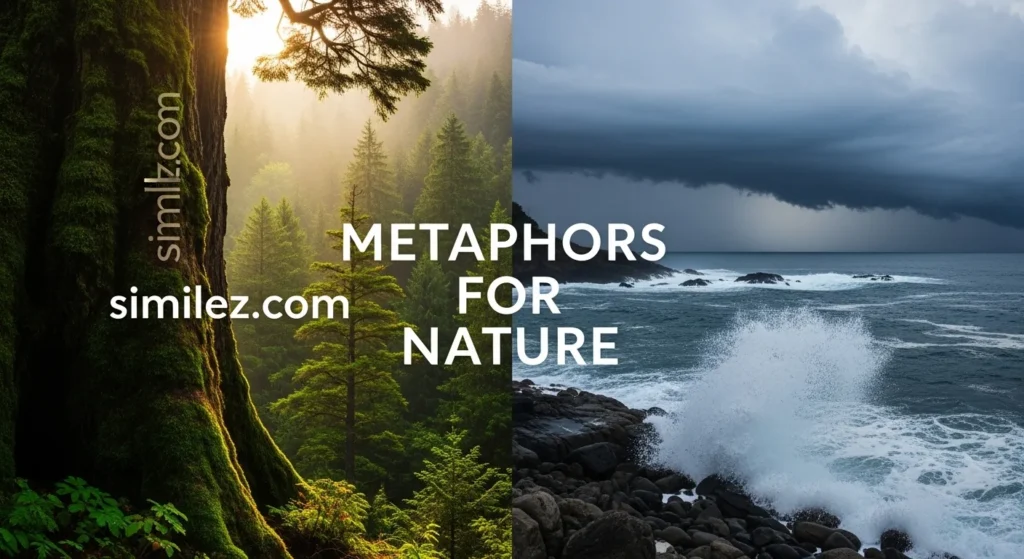
Metaphors for nature are all around us, even when we do not notice them. Imagine walking outside after rain. The air feels fresh. Leaves shine like glass. The earth smells alive.
In moments like this, nature feels like it is speaking. However, it uses symbols instead of words. That is where metaphors for nature come in. They help us describe nature in creative and meaningful ways.
Simply put, metaphors for nature are comparisons that show nature as something else. For example, the sky can be a blanket. A river can be a storyteller. These images make writing more vivid and emotional.
In this article, you will explore how these metaphors work, why they matter, and how you can use them in daily life and writing.
Metaphors for Nature in Everyday Life
Metaphors for nature often appear in daily speech without us noticing. We say things like “storm of emotions” or “sunshine in your smile.”
These expressions make communication richer. Instead of plain words, we use nature to express feelings.
For example, saying someone is “a rock in hard times” shows strength. It is simple but powerful. Therefore, nature becomes a bridge between emotion and expression.
You can start noticing these metaphors in conversations, songs, and even advertisements. They are everywhere.
Metaphors for Nature and Emotional Expression
Nature helps us explain emotions that are hard to describe.
For example, sadness can feel like a “dark sky.” Happiness can feel like “spring blooming inside the heart.”
These metaphors for nature give shape to feelings. However, they also make emotions easier to understand.
When we say “my mind is a storm,” people immediately understand confusion or stress. This is why writers and poets often rely on nature-based imagery.
Metaphors for Nature in Literature and Poetry
Writers have used metaphors for nature for centuries.
Shakespeare often compared life to seasons. Poets describe love as a “flowing river” or “wildfire wind.”
These comparisons make literature more beautiful. They also help readers feel the emotions deeply.
For example, describing life as “a garden that grows with time” creates a peaceful and thoughtful image. Therefore, literature becomes more than words—it becomes experience.
Metaphors for Nature as Storytelling Tools
Stories become stronger when they include natural imagery.
A journey can be described as “climbing a mountain.” A challenge can feel like “walking through a thunderstorm.”
These metaphors for nature help readers visualize events. However, they also add emotional depth.
When storytelling uses nature, readers connect more easily. It feels real, even if it is fictional.
Metaphors for Nature in Creative Writing Techniques
Creative writers often rely on metaphors for nature to build imagination.
Instead of saying “she was calm,” a writer might say “she was a still lake at dawn.”
This creates a stronger picture in the reader’s mind. Therefore, writing becomes more engaging and artistic.
Nature metaphors also help avoid repetition and boring descriptions.
Metaphors for Nature and Human Connection
Humans and nature are deeply connected.
We say “roots of family” or “branches of relationships.” These metaphors for nature show connection and belonging.
For example, a family tree is not just a diagram. It represents life, growth, and connection.
However, these metaphors also remind us that we are part of nature, not separate from it.
Metaphors for Nature in Visual Imagination
Nature helps us create strong mental images.
When we hear “golden sunrise,” we instantly imagine warmth and light.
These metaphors for nature activate imagination. They make simple descriptions powerful.
For example, “the sky was on fire” does not mean real fire. It means a beautiful sunset. Therefore, metaphors turn language into visual art.
Metaphors for Nature in Communication Skills
Good communication is not just about clarity. It is also about impact.
Using metaphors for nature helps make speech more interesting.
For example, saying “ideas bloom in discussion” sounds more engaging than “ideas are shared.”
However, balance is important. Too many metaphors can confuse the listener. Use them wisely for best effect.
Metaphors for Nature for Describing Growth (Example 1)
Growth is often compared to nature because it is slow and steady.
For example, “a child is like a growing tree, strong with time and care.”
Explanation: This metaphor shows that growth needs patience and support.
Alternative expressions:
- “Like branches reaching for the sky”
- “Like seeds becoming forests”
Sensory detail: You can imagine fresh green leaves and strong roots in the soil.
Therefore, this metaphor reminds us that growth is natural and continuous.
Metaphors for Nature for Describing Emotions (Example 2)
Emotions can be unpredictable like weather.
For example, “his anger was a sudden thunderstorm.”
Explanation: This shows anger that appears quickly and strongly.
Alternative expressions:
- “Like wind turning into a storm”
- “Like clouds bursting with rain”
Sensory detail: You can imagine loud thunder and dark skies.
However, this also shows that emotions pass, just like weather changes.
Metaphors for Nature for Describing Change (Example 3)
Change is constant in life, just like seasons.
For example, “her life moved from winter to spring.”
Explanation: This metaphor shows transformation from sadness to hope.
Alternative expressions:
- “Like snow melting into rivers”
- “Like autumn turning into renewal”
Sensory detail: You can feel warmth returning after cold days.
Therefore, nature helps us understand life transitions more deeply.
Metaphors for Nature in Cultural Traditions
Many cultures use nature in symbolic ways.
For example, trees represent wisdom in many traditions. Rivers often symbolize life and continuity.
These metaphors for nature connect beliefs, values, and stories.
However, meanings can differ across cultures. In some places, the sun represents power, while in others it represents life energy.
This shows how deeply nature is woven into human thinking.
Metaphors for Nature in Modern Digital Content
Even in social media, metaphors for nature are widely used.
People write captions like “rising like the sun” or “growing through storms.”
These expressions make posts more relatable and emotional.
Therefore, digital communication becomes more creative and expressive.
Brands also use nature metaphors to connect with audiences in simple and powerful ways.
Metaphors for Nature Writing Exercises and Prompts
You can practice using metaphors for nature with simple exercises.
Try describing:
- Your mood as weather
- Your goals as landscapes
- Your challenges as natural forces
For example, write: “My dreams are mountains waiting to be climbed.”
However, do not overthink. Let imagination flow naturally.
This practice improves creativity and writing confidence.
Metaphors for Nature Bonus Tips for Writers
Here are some helpful tips:
- Use simple words first, then build imagery
- Match emotions with natural elements
- Avoid mixing too many metaphors
- Keep sentences short and clear
For example, instead of saying “life is many things,” say “life is a river that keeps moving.”
Therefore, your writing becomes more powerful and easy to understand.
Conclusion
Metaphors for nature help us see the world in a new and creative way.
They turn simple ideas into vivid images. They connect emotions with natural beauty.
However, their true power lies in simplicity. When used well, they make writing more meaningful and memorable.
Start noticing these metaphors in daily life. Try using them in your writing and speech. You will see how language becomes more colorful and expressive.
FAQs
What are metaphors for nature?
They are comparisons that describe nature or use nature to explain ideas, emotions, or experiences creatively.
Why are metaphors for nature important in writing?
They make writing more vivid, emotional, and easier to imagine for readers.
Can I use metaphors for nature in daily conversation?
Yes, they are common in everyday speech and make communication more expressive.
How do metaphors for nature improve creativity?
They help you think visually and connect emotions with natural elements.
What is a simple example of a metaphor for nature?
“Life is a river” is a simple metaphor showing movement and continuous change.