
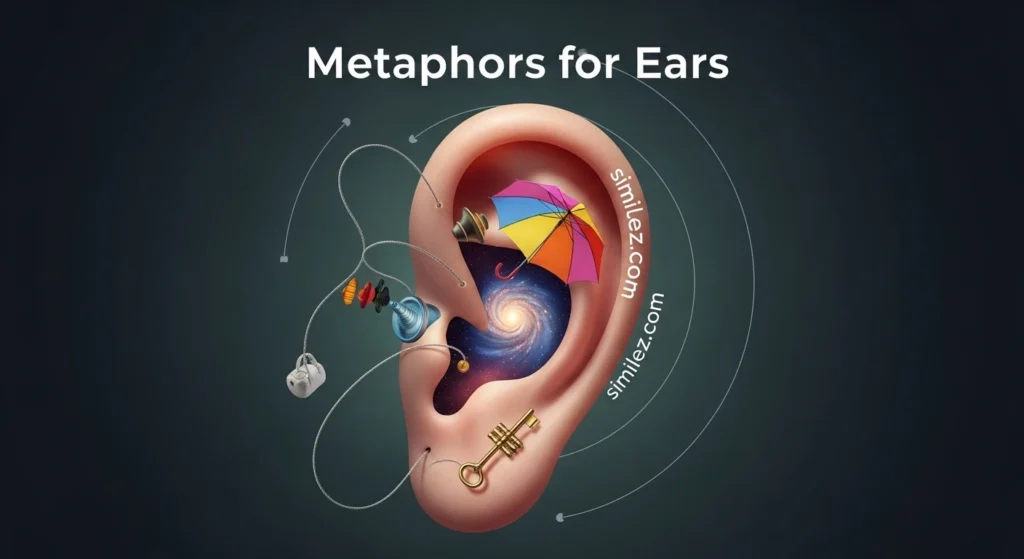
The soft rustle of leaves outside your window, the distant laughter of children playing in the street, the subtle hum of a coffee shop—our ears are the gateways to the world of sound. But ears are not just mechanical organs; in literature, conversation, and daily expression, they often carry layers of meaning. From “prick up your ears” to “turn a deaf ear,” ears are more than anatomy—they are symbols, metaphors, and bridges to understanding the human experience.
In this article, we’ll explore the rich tapestry of metaphors for ears, revealing how they can enhance your writing, sharpen your communication, and deepen your appreciation of language. By the end, you’ll have practical strategies, vivid examples, and creative exercises to make your words resonate—just like the perfect note hitting your eardrum.
The Power of Listening in Everyday Life
Our ears connect us to people, music, nature, and ideas. Using metaphors for ears isn’t just poetic—it’s practical. They help us describe attentiveness, emotional sensitivity, and awareness in ways that are memorable. Imagine saying:
This paints a picture of someone highly perceptive and alert, far more effectively than a plain description. In social interactions, in writing, or even in marketing, ear metaphors can convey subtle traits and emotional nuance.
Ears as Radar: Heightened Perception
Meaning/Explanation: Comparing ears to radar suggests acute sensitivity, the ability to detect sounds or information that others might miss.
Example Sentence: “At the crowded party, Maria’s ears were radar, picking up whispers and hidden tensions before anyone else noticed.”
Sensory/Emotional Details: Imagine the feeling of knowing something before anyone else—the quiet thrill of being attuned to your surroundings. Radar ears evoke anticipation and awareness.
Mini Storytelling: In espionage novels, like those featuring James Bond, the hero’s perception is often described through ear metaphors: he can hear the subtle click of a hidden weapon, alerting him to danger before his eyes even notice.
Interactive Exercise: Write a short paragraph describing a character who overhears a secret in a bustling café. Experiment with metaphors for ears—radar, antennas, funnels, or even mythical comparisons. Which metaphor captures the character’s personality best?
Ears as Funnels: Absorbing Knowledge
Meaning/Explanation: Comparing ears to funnels emphasizes absorption, intake, and the flow of information. It’s perfect for describing someone who eagerly listens or learns.
Example Sentence: “His ears were funnels for every piece of advice, each word slipping down into the reservoir of his memory.”
Sensory/Emotional Details: Funnels channel and direct sound. Imagine the satisfying flow of ideas filling a vessel—ears as instruments of learning.
Real-Life Reference: Teachers and mentors often embody this metaphor when listening to students’ concerns, channeling understanding into guidance.
Exercise Prompt: Record a conversation or podcast, and describe the listener’s experience using a funnel metaphor. How does this change the way the reader perceives the act of listening?
Ears as Hammers: Absorbing Emotional Impact
Meaning/Explanation: This metaphor portrays ears as instruments that receive impact, emphasizing the emotional weight of sounds or words.
Example Sentence: “The criticism struck his ears like hammers, each word reverberating through his confidence.”
Sensory/Emotional Details: Imagine the physical sensation of impact—ears metaphorically as receivers of both pain and intensity, highlighting emotional resonance.
Mini Storytelling: Classic literary moments, such as in Victor Hugo’s Les Misérables, often use auditory impact to convey shock or awakening: a character hears news that forever changes their life.
Interactive Prompt: Think of a news event, a critique, or a personal revelation. Describe the experience using ear metaphors for impact. Compare the emotional nuance between “hammer” and “whisper” metaphors.
Ears as Windows: Emotional Transparency
Meaning/Explanation: Ears can symbolize openness or transparency, reflecting how a person’s listening reveals their emotional or psychological state.
Example Sentence: “Through his attentive ears, one could read his empathy, every sound mirrored in his thoughtful gaze.”
Sensory/Emotional Details: Windows evoke clarity, light, and insight. Ears as windows suggest receptivity and emotional intelligence.
Cultural Reference: In many poetic traditions, like Persian ghazals, listening is tied to the soul’s openness—ears are gateways to understanding love and suffering.
Ears as Gardens: Nurturing Ideas
Meaning/Explanation: This metaphor portrays ears as fertile ground where ideas can take root and grow.
Example Sentence: “Her ears were gardens, where every story planted a seed of inspiration.”
Sensory/Emotional Details: Imagine the tactile richness of soil, the gentle growth of plants, the warmth of sunlight—ears as a nurturing, living landscape.
Exercise: Listen to a poem or song, and write a paragraph describing how your ears “nurture” the words. Which metaphors feel most alive?
Ears as Shields: Protecting from Noise
Meaning/Explanation: This metaphor highlights selective hearing or defense against unwanted sound or harmful words.
Example Sentence: “He raised ears of shield, blocking out the rumors that swirled around the office.”
Sensory/Emotional Details: Shielding conveys both strength and choice, an emotional boundary that protects peace and focus.
Interactive Prompt: Imagine a noisy workplace. Describe a character’s mental “ear shield” as they filter out distractions. How does this metaphor reveal personality?
Ears as Tunnels: Focused Listening
Meaning/Explanation: Ears as tunnels convey depth, concentration, and immersion.
Example Sentence: “He slipped into the tunnel of her story, every word echoing along the walls of his mind.”
Sensory/Emotional Details: Tunnels suggest movement, focus, and an enclosed space where sounds resonate fully.
Mini Storytelling: In mystery novels, detectives “tunnel in” on clues, listening with razor-sharp attention. This metaphor underscores purpose-driven attention.
Ears as Cups: Catching Fleeting Sounds
Meaning/Explanation: Cups evoke capturing, holding, and savoring ephemeral sounds or moments.
Example Sentence: “Her ears cupped the bird’s song, cherishing every delicate note.”
Sensory/Emotional Details: Imagine holding water gently in your hands—the fragility and beauty of sound captured perfectly.
Exercise Prompt: Listen to nature sounds for five minutes. Write a metaphorical paragraph describing your ears as cups or containers.
Ears as Bridges: Connecting People
Meaning/Explanation: This metaphor emphasizes ears as connectors, linking people through understanding.
Example Sentence: “Their ears formed bridges of trust, carrying unspoken emotions between them.”
Sensory/Emotional Details: Bridges evoke stability, continuity, and hope—a powerful way to describe relational listening.
Ears as Lanterns: Illuminating Understanding
Meaning/Explanation: Ears as lanterns symbolize the illumination that attentive listening brings.
Example Sentence: “With ears like lanterns, he lit the hidden corners of the conversation.”
Sensory/Emotional Details: Lanterns provide warmth and focus, evoking curiosity, clarity, and insight.
Ears as Mirrors: Reflecting Emotions
Meaning/Explanation: Ears can metaphorically reflect what they hear, showing understanding or empathy.
Example Sentence: “Her ears mirrored the joy and pain of each tale she encountered.”
Mini Storytelling: Think of classic mentor-mentee scenes, where listening not only absorbs information but also validates the speaker’s emotions.
Ears as Gardens of Secrets
Meaning/Explanation: Ears can store whispers and confidences like hidden treasures.
Example Sentence: “He kept the secrets in the garden of his ears, letting them bloom quietly.”
Sensory/Emotional Details: Gardens of secrets evoke mystery, care, and intimacy.
Ears as Anchors: Grounding in Reality
Meaning/Explanation: Listening can stabilize perception, keeping someone grounded.
Example Sentence: “Through the hum of the city, her ears were anchors, mooring her mind to the present.”
Sensory/Emotional Details: Anchors suggest steadiness, weight, and a calm amidst chaos.
Ears as Funnels of Joy
Meaning/Explanation: This metaphor portrays ears absorbing pleasure, laughter, or music.
Example Sentence: “Children’s giggles poured into her ears like a sweet, unstoppable stream.”
Sensory/Emotional Details: Funnels of joy capture the overflowing delight of sound.
Ears as Swords: Cutting Through Noise
Meaning/Explanation: Ears can metaphorically slice through chaos, focusing on what matters.
Example Sentence: “Her ears were swords, cutting through the babble to the heart of the conversation.”
Sensory/Emotional Details: Imagine the sharp satisfaction of clarity, the control and precision that focused listening provides.
Bonus Tips for Using Ear Metaphors
- In Writing: Use metaphors to show, not tell. “He listened carefully” is flat; “His ears caught every whisper” is evocative.
- On Social Media: Engage readers with interactive ear metaphors—polls or challenges about “what they hear” can spark creativity.
- Daily Life: Mentally practice noticing sounds, imagining your ears in metaphorical form. This enhances mindfulness and emotional awareness.
Interactive Practice Prompts
- Metaphor Mix: Take a single scenario (e.g., someone in a busy café) and describe their listening using three different ear metaphors. Compare the emotional impact.
- Storytelling Exercise: Write a short story where ears metaphorically reveal personality traits or plot twists.
- Sound Journaling: Spend a day noting sounds around you. For each, create a metaphor for the ears that receive it.
Conclusion
Our ears are more than instruments; they are storytellers, bridges, shields, and gardens. When you use metaphors for ears, you invite readers to hear not just words, but worlds. You transform listening into poetry, observation into art, and everyday conversation into symphonies of meaning. Next time you describe someone listening, imagine their ears as radar, funnels, hammers, or lanterns—and watch your words come alive.