
The room was quiet except for the ticking clock. I sat by the window, watching shadows stretch across the wall. In that moment, I realized how powerful metaphors for being alone can be—they give shape to a feeling that is often hard to explain.
Being alone is something everyone experiences. Sometimes it feels peaceful. Other times, it feels heavy. Words can struggle to capture it. That is where metaphors help. They turn emotions into images we can see, hear, and feel.
In this article, you will explore meaningful metaphors, simple explanations, and creative ways to use them. Whether you are a writer, student, or someone exploring emotions, this guide will help you express solitude in a deeper way.
Understanding Metaphors for Being Alone
Metaphors compare one thing to another. They do this without using “like” or “as.”
For example, saying “I am an island” means you feel cut off from others.
Metaphors for being alone help you describe emotions clearly. They also make your writing more vivid. Instead of saying “I feel lonely,” you paint a picture.
Why Metaphors for Being Alone Matter
Words shape how we understand feelings.
When you use metaphors, you do more than explain—you connect. Readers can feel what you feel.
For example, saying “my heart is an empty room” creates a stronger image than simply saying “I feel empty.”
Therefore, metaphors are powerful tools for both writing and emotional expression.
Common Themes in Metaphors for Being Alone
Many metaphors follow similar themes. These include:
- Nature (deserts, oceans, forests)
- Space (stars, darkness, silence)
- Objects (empty rooms, broken chairs)
- Weather (cold winds, fog, storms)
These themes reflect isolation in ways people understand easily.
Metaphors for Being Alone in Nature
Nature offers some of the most beautiful metaphors.
A person alone can be:
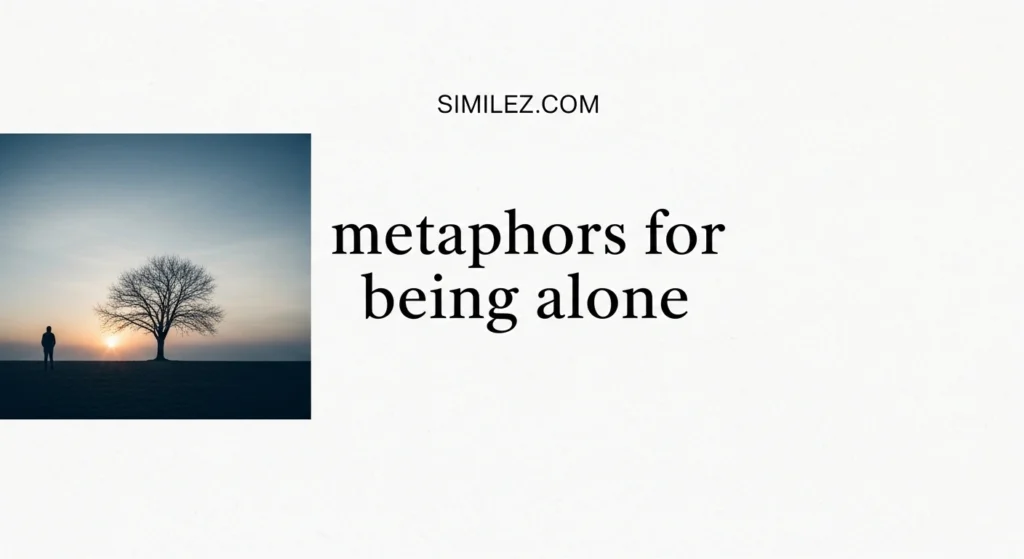
- A tree in a barren field
- A single bird flying across the sky
- A desert stretching endlessly
These images show distance and quietness. They also suggest strength and survival.
Metaphors for Being Alone in Everyday Life
Everyday objects can also express solitude.
For example:
- An empty chair at the table
- A phone that never rings
- A house with lights off
These metaphors feel relatable. They connect directly to daily experiences.
Emotional Depth in Metaphors for Being Alone
Some metaphors go deeper. They express not just solitude, but emotion.
For instance:
- “A heart locked in a silent cage”
- “A song with no one to hear it”
These add emotional weight. They make the reader pause and feel.
Example 1: “An Island in the Ocean”
This is one of the most common metaphors for being alone.
Meaning:
You feel separated from others, surrounded by distance.
Example sentence:
“I felt like an island in the ocean, surrounded by people but still alone.”
Alternative expressions:
- A lone ship at sea
- A star in an empty sky
Emotional detail:
You may feel calm, yet deeply disconnected.
Example 2: “A Candle in the Dark”
This metaphor shows both loneliness and quiet strength.
Meaning:
You are alone, but still shining.
Example sentence:
“She was a candle in the dark, glowing softly in her solitude.”
Alternative expressions:
- A small light in a vast night
- A whisper in silence
Sensory detail:
Think of flickering light, soft warmth, and deep quiet.
Example 3: “A Desert Without Footprints”
This metaphor emphasizes emptiness.
Meaning:
No one has been there. No connection exists.
Example sentence:
“My thoughts felt like a desert without footprints.”
Alternative expressions:
- An untouched field
- A silent road with no travelers
Emotional detail:
It can feel vast, lonely, and endless.
Using Metaphors for Being Alone in Writing
To use metaphors well, keep them simple.
Start with a feeling. Then ask:
“What does this feel like?”
For example:
Loneliness may feel like cold weather or empty space.
Therefore, you can write:
“My loneliness was a cold winter night.”
Keep your sentences short. Avoid overcomplicating ideas.
Metaphors for Being Alone in Poetry
Poetry often uses metaphors to express deep emotions.
A short poetic line might be:
“I am a shadow without a body.”
This creates mystery and depth. It also invites readers to interpret meaning.
Cultural Perspectives on Being Alone
Different cultures view solitude in different ways.
In some traditions, being alone means peace and reflection.
For example, monks often seek solitude for spiritual growth.
However, in modern life, being alone can feel isolating.
Therefore, metaphors can reflect both peace and loneliness.
Positive Metaphors for Being Alone
Not all metaphors for being alone are negative.
Some show strength and independence:
- A mountain standing tall
- A lone wolf walking freely
- A star shining in darkness
These metaphors suggest confidence and self-reliance.
Negative Metaphors for Being Alone
Other metaphors focus on sadness:
- A broken bridge
- A fading echo
- A locked door
These express disconnection and longing.
Use them carefully, depending on your message.
Mini Story Using Metaphors for Being Alone
He walked through the quiet street. The lights flickered above him.
He felt like a forgotten book on a dusty shelf. No one reached for him.
Yet, inside, his thoughts burned like a candle in the dark.
Even in solitude, he carried his own light.
This short story shows how metaphors bring emotions to life.
Interactive Exercises with Metaphors for Being Alone
Try these simple activities:
1. Fill in the blank:
“I feel like a ______ when I am alone.”
2. Describe your mood using nature:
Is it a storm, a desert, or a calm lake?
3. Rewrite a simple sentence:
Instead of “I feel lonely,” write a metaphor.
These exercises help you think creatively.
Bonus Tips for Using Metaphors for Being Alone
Here are some helpful tips:
- Keep metaphors clear and simple
- Avoid mixing too many metaphors
- Use sensory details like sound or light
- Match the tone with your message
You can also use them in:
- Social media captions
- Personal journals
- Stories and poems
Metaphors for Being Alone in Social Media
Short metaphors work well online.
For example:
- “Just a star in a quiet sky.”
- “A lone wave in the ocean.”
These are simple but meaningful.
They also attract attention quickly.
Building Your Own Metaphors for Being Alone
Creating your own metaphors is easy.
Follow these steps:
- Identify your feeling
- Think of an image
- Connect them clearly
For example:
Feeling: Isolation
Image: Empty room
Metaphor: “I am an empty room with no echoes.”
Practice makes this easier over time.
Conclusion
Metaphors for being alone give voice to silent feelings. They turn abstract emotions into clear images.
Throughout this article, you explored different types, examples, and creative uses. You also learned how to create your own metaphors with ease.
Being alone is not always negative. Sometimes it brings clarity and strength.
So, start using metaphors in your writing or daily life. Express what you feel in a way others can truly understand.
FAQs
What are metaphors for being alone?
Metaphors for being alone are creative comparisons that describe loneliness or solitude using vivid images, such as “an island in the ocean.”
Why should I use metaphors for being alone?
They help express emotions clearly and make your writing more engaging and relatable.
Can metaphors for being alone be positive?
Yes, some metaphors show strength and independence, like “a mountain standing tall.”
How can I create my own metaphors?
Think about your feeling, choose an image, and connect them in a simple sentence.
Where can I use these metaphors?
You can use them in writing, poetry, social media, journaling, or everyday conversations.