
The first gray hair that appears in your reflection can feel like a whisper of time passing. Life seems to fold in on itself, memories becoming layers in the story of who we are. Using metaphors for aging allows us to capture these subtle yet profound shifts in life with beauty and clarity. They help us express the passage of time, the wisdom gained, and the bittersweet nature of growing older in a way words alone often cannot.
Metaphors make abstract experiences tangible. They allow writers, speakers, and thinkers to communicate aging not as a loss, but as a transformation, a journey full of depth and meaning. Whether for literature, social media, or personal reflection, understanding and using metaphors for aging can enrich both writing and life itself.
Understanding Metaphors for Aging
Metaphors are comparisons that describe one thing in terms of another, often to evoke vivid images or emotions. When applied to aging, they help translate time, experience, and change into language we can feel. For example, saying someone’s hair is “silver threads woven by the years” paints a more evocative picture than simply stating they are old.
By using metaphors for aging, we can highlight wisdom, resilience, and beauty instead of only decay or decline. This approach shifts perspectives and creates a richer understanding of life’s journey.
Why Using Metaphors for Aging Matters
Metaphors for aging make communication more expressive. They are especially useful for writers, teachers, and speakers who want to connect emotionally with an audience. Metaphors can:
- Illustrate abstract concepts with clarity.
- Evoke empathy and shared experiences.
- Transform negative associations with aging into something positive.
For instance, describing wrinkles as “maps of lived stories” encourages appreciation rather than avoidance.
Nature-Inspired Metaphors for Aging
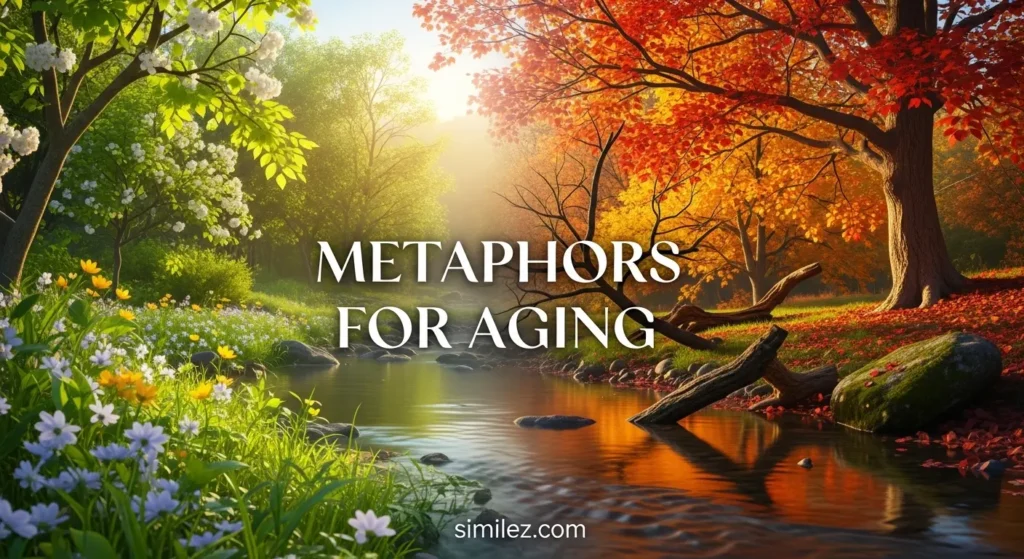
Nature provides abundant inspiration for aging metaphors. Trees, rivers, and seasons often represent the cycles of life.
- Example: “Her life was like an oak tree, strong in storms but marked by the rings of time.”
- Alternative expression: “He carried the seasons in his eyes.”
- Scenario: A grandparent reflecting on life’s highs and lows while walking through a forest.
Nature metaphors connect readers to universal patterns and bring a poetic resonance to the concept of aging.
Aging as a Journey
Another powerful metaphor is seeing aging as a journey. Life unfolds like a winding road, sometimes smooth, sometimes rocky.
- Example: “Each year added a mile to his journey, leaving footprints of lessons learned.”
- Alternative expression: “Her path through time was paved with both sunlit moments and shadowed turns.”
- Scenario: A retiree reminiscing about career milestones and family memories, comparing life to a long, adventurous trek.
This metaphor emphasizes growth, movement, and purpose rather than stagnation.
Time as a Sculptor
Time shapes people just as a sculptor shapes stone. This metaphor emphasizes change, refinement, and artistry.
- Example: “Time sculpted his face like clay, softening rough edges into character.”
- Alternative expression: “The years carved stories into her hands.”
- Scenario: Looking at an elderly artist’s hands and realizing each line is evidence of creative labor and experience.
Using this metaphor brings attention to the beauty of aging rather than loss.
Aging Like Wine
Aging wine is a classic metaphor, associating age with depth, richness, and improvement.
- Example: “He aged like fine wine, gaining richness with every passing year.”
- Alternative expression: “She matured like a vintage blend, complex and unforgettable.”
- Scenario: Celebrating a milestone birthday and reflecting on personal growth and achievements.
This metaphor is universally understood and carries a sense of elegance and celebration.
Cultural References in Aging Metaphors
Different cultures offer unique metaphors for aging. In Japan, for instance, the concept of wabi-sabi finds beauty in imperfection and impermanence.
- Example: “Her silver hair shimmered with wabi-sabi grace.”
- Alternative expression: “The wrinkles on his face were like the delicate cracks in a tea cup, each telling a story.”
- Scenario: Admiring the aesthetic of an elderly loved one in a traditional setting.
Cultural metaphors add depth, context, and richness to writing and speech.
Metaphors for Emotional Aging
Aging isn’t just physical; it affects emotions and outlook. Metaphors can capture these subtleties.
- Example: “His heart had weathered storms, each scar a testament to endurance.”
- Alternative expression: “She carried the sunsets of joy and the twilight of sorrow within her soul.”
- Scenario: Reflecting on life experiences during quiet moments at home.
Emotional metaphors help readers connect with the inner journey of aging.
Humor and Aging Metaphors
Humor softens the fear of growing older and makes writing more engaging.
- Example: “She collected birthdays like Pokémon cards, each one more rare than the last.”
- Alternative expression: “His memory was like a vintage phone, sometimes dialed wrong but full of charm.”
- Scenario: Light-heartedly sharing stories of family gatherings or personal quirks.
Using humor keeps the topic approachable and relatable.
Physical Changes and Creative Imagery
Metaphors can describe changes in the body in poetic ways.
- Example: “His hair was a snowfall in spring, unexpected and beautiful.”
- Alternative expression: “Wrinkles danced across her smile like waves on a gentle shore.”
- Scenario: Noticing physical changes in oneself or a loved one during quiet reflection.
Creative imagery transforms ordinary observations into meaningful insight.
Aging in Literature and Poetry
Many writers use metaphors for aging to create resonance in storytelling.
Shakespeare often described time as a thief, while modern poets see it as a gardener.
- Example: “Time, the silent gardener, pruned her life with care.”
- Alternative expression: “Years ripened him like a secret garden.”
- Scenario: Analyzing a poem or story where the protagonist grows wiser with age.
Literary metaphors inspire creative writing and enhance reader engagement.
Metaphors for Wisdom and Experience
Aging often brings wisdom, a metaphorical treasure gained over time.
- Example: “His mind was a library of lived experiences.”
- Alternative expression: “She carried the lantern of knowledge through the corridors of life.”
- Scenario: Mentors reflecting on lessons learned through decades of personal and professional challenges.
These metaphors celebrate the intangible richness of aging.
Interactive Exercises: Using Aging Metaphors
To practice, try these exercises:
- Write Your Own Metaphor: Compare your life to a natural element like a river or tree.
- Story Prompt: Describe an elderly character using only three metaphors.
- Visual Exercise: Draw or collage images that represent stages of life, then describe them metaphorically.
Bonus Tip: Use these exercises for social media captions or journaling. They make reflections visually and emotionally engaging.
Metaphors for Social Media and Writing
Incorporate metaphors for aging in captions, posts, or essays:
- Instead of “I’m turning 50,” try: “I’m stepping into the golden chapter of my story.”
- Share life lessons with metaphorical imagery: “The years have stitched wisdom into the fabric of my soul.”
Metaphors add elegance, relatability, and depth to digital storytelling.
Common Mistakes to Avoid
- Avoid clichés like “old as dirt” that may feel harsh.
- Ensure metaphors are relevant and not forced.
- Balance poetic language with clarity for readability.
Simple, vivid, and emotionally resonant metaphors work best.
How to Discover Personal Metaphors
- Reflect on your life experiences and emotions.
- Observe nature, culture, art, and literature.
- Experiment with blending humor, elegance, and emotion.
Personal metaphors make writing authentic and memorable.
Tips for Teaching or Sharing Metaphors
- Encourage creative writing exercises.
- Use visual aids to inspire imagery.
- Share cultural and literary examples to expand understanding.
This approach fosters appreciation for aging while improving expressive skills.
Conclusion
Metaphors for aging transform the abstract passage of time into something beautiful, meaningful, and relatable. They allow us to reflect on life, share wisdom, and connect emotionally with others.
By exploring nature, journeys, humor, literature, and personal experience, metaphors enrich writing, social media, and daily conversations. Embrace metaphors to celebrate growth, resilience, and the art of aging gracefully. Life, after all, is a story best told with vivid, heartfelt words.
FAQs
What are metaphors for aging?
Metaphors for aging are creative comparisons that describe the passage of time, wisdom, and life experiences.
Why use metaphors for aging in writing?
They make abstract ideas tangible, evoke emotions, and create relatable imagery for readers.
Can metaphors for aging be humorous?
Yes, humor softens fears of growing older and makes writing approachable and engaging.
How do I create my own aging metaphors?
Reflect on experiences, observe nature or art, and experiment with comparisons that evoke emotion.
Where can I use metaphors for aging?
They can be used in literature, social media, speeches, journaling, or personal reflections.