
Similes are one of the most powerful tools in figurative language. They compare one thing to another using “like” or “as”, helping readers see, feel, and understand ideas more vividly. Writers, poets, students, and even everyday speakers rely on similes because they turn abstract traits—such as laziness—into clear mental images.
Among the many types of similes, lazy similes are especially popular. They capture inactivity, sluggishness, or lack of motivation in a creative and often humorous way. Whether you’re writing a story, chatting with friends, or improving your descriptive writing skills, lazy similes make your language more expressive and memorable.
Below are 18 in-depth lazy similes, each explained clearly with tone, best usage context, and at least five original example sentences to help you use them naturally and confidently.
Lazy as a Sloth
Meaning: Extremely slow-moving and unmotivated Emotional Tone: Playful, humorous Best Usage: Storytelling, daily speech, casual writing
Sloths are famous for their slow pace, making this one of the most recognizable lazy similes.
Examples:
- He moved through the morning like he was lazy as a sloth.
- After the holidays, I felt as lazy as a sloth on a warm branch.
- The character was lazy as a sloth, avoiding every task.
- I’ve been lazy as a sloth since the weekend started.
- “Sorry for the late reply—I’m lazy as a sloth today,” she texted.
Lazy as a Couch Potato
Meaning: Someone who avoids activity and prefers resting Emotional Tone: Light-hearted, slightly teasing Best Usage: Daily conversation, informal writing
Examples:
- He spent the entire Sunday lazy as a couch potato.
- Exams ended, and we all turned lazy as couch potatoes.
- She laughed and said she was lazy as a couch potato today.
- The kids became lazy as couch potatoes during summer break.
- “Netflix day—feeling lazy as a couch potato,” he messaged.
Lazy as a Sleeping Cat
Meaning: Calm, relaxed laziness rather than negative inactivity Emotional Tone: Gentle, peaceful Best Usage: Poetry, descriptive storytelling
Examples:
- He stretched on the sofa, lazy as a sleeping cat.
- The afternoon felt lazy as a sleeping cat in the sun.
- Her movements were lazy as a sleeping cat, slow and soft.
- The village rested lazy as a sleeping cat at noon.
- Sunday mornings always feel lazy as a sleeping cat.
Lazy as a Snail
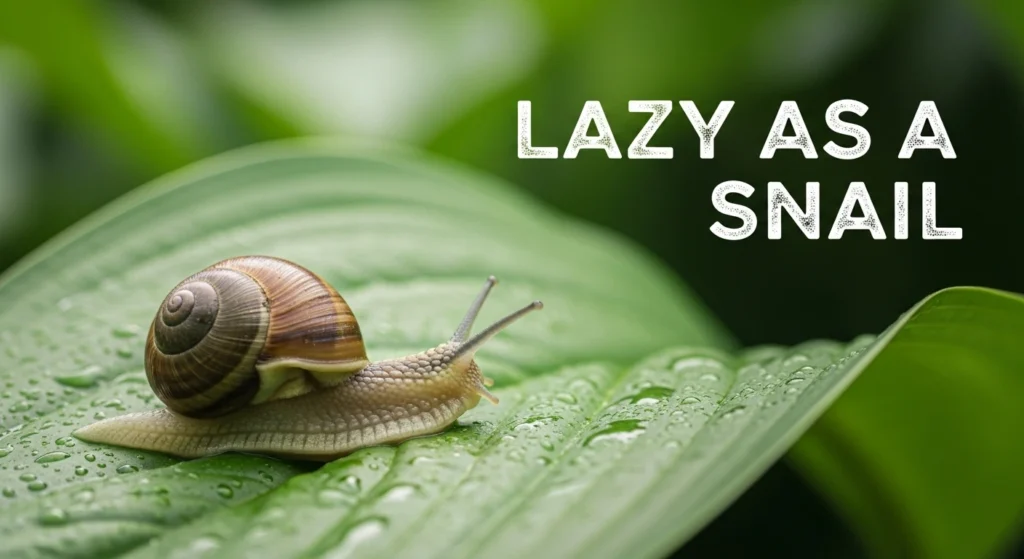
Meaning: Extremely slow and unproductive Emotional Tone: Neutral to mildly critical Best Usage: Academic writing, narratives
Examples:
- Progress was lazy as a snail during the project.
- The line moved lazy as a snail.
- His response time was lazy as a snail.
- The economy recovered lazy as a snail.
- I’m moving lazy as a snail today—need coffee.
Lazy as a Bear in Winter
Meaning: Deep inactivity due to comfort or rest Emotional Tone: Warm, understanding Best Usage: Storytelling, descriptive essays
Examples:
- He stayed indoors lazy as a bear in winter.
- After exams, we felt lazy as bears in winter.
- The town was lazy as a bear in winter after snowfall.
- She curled up lazy as a bear in winter.
- Cold weather makes me lazy as a bear in winter.
Lazy as a Rock
Meaning: Completely motionless or inactive Emotional Tone: Strong, blunt Best Usage: Dramatic writing, metaphors in prose
Examples:
- He lay there lazy as a rock.
- The office felt lazy as a rock after lunch.
- Time passed lazy as a rock.
- My motivation is lazy as a rock today.
- The afternoon dragged lazy as a rock.
Lazy as a Sunday Afternoon
Meaning: Peaceful, slow, and relaxed Emotional Tone: Positive, cozy Best Usage: Lifestyle writing, poetry
Examples:
- The day felt lazy as a Sunday afternoon.
- Her smile was lazy as a Sunday afternoon.
- Summer evenings are lazy as Sunday afternoons.
- He spoke in a voice lazy as a Sunday afternoon.
- Today’s vibe is lazy as a Sunday afternoon.
Lazy as a Dozing Dog
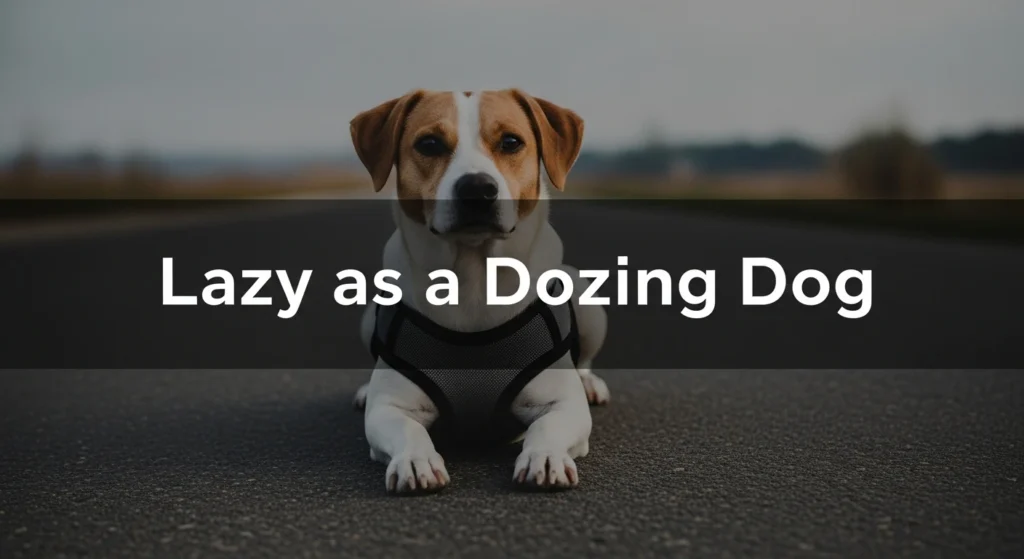
Meaning: Content laziness with brief bursts of energy Emotional Tone: Affectionate Best Usage: Creative writing
Examples:
- He waited lazy as a dozing dog.
- The afternoon passed lazy as a dozing dog.
- She lounged lazy as a dozing dog by the fire.
- The town felt lazy as a dozing dog.
- Exams over—I’m lazy as a dozing dog.
Lazy as a Hammock Swinging in the Breeze
Meaning: Slow, gentle, relaxed motion Emotional Tone: Calm, soothing Best Usage: Descriptive prose, poetry
Examples:
- Time moved lazy as a hammock swinging in the breeze.
- His thoughts drifted lazy as a hammock.
- The evening felt lazy as a hammock.
- She smiled lazy as a hammock in the breeze.
- Vacations feel lazy as hammocks.
Lazy as a Melting Candle
Meaning: Gradual loss of energy Emotional Tone: Subtle, reflective Best Usage: Literary writing
Examples:
- His motivation faded lazy as a melting candle.
- The day ended lazy as a melting candle.
- She spoke lazy as a melting candle.
- Summer afternoons feel lazy as melting candles.
- I’m running lazy as a melting candle tonight.
Lazy as a Warm Blanket
Meaning: Comfort-driven laziness Emotional Tone: Cozy, positive Best Usage: Lifestyle writing
Examples:
- The morning wrapped around me lazy as a warm blanket.
- His voice sounded lazy as a warm blanket.
- Rainy days feel lazy as warm blankets.
- She stayed in bed lazy as a warm blanket.
- This weather makes me lazy as a warm blanket.
Lazy as a Park Bench at Noon
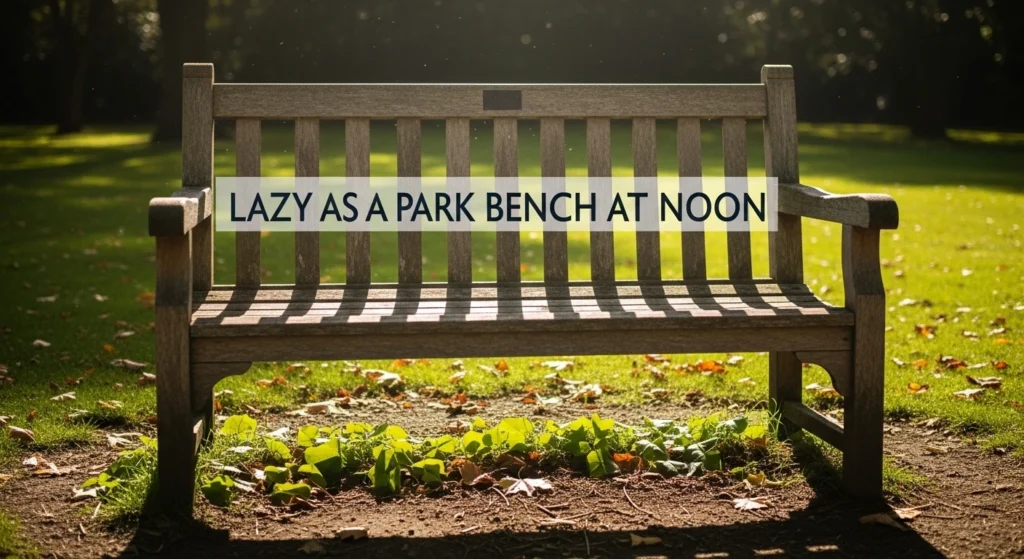
Meaning: Stillness and inactivity Emotional Tone: Observational Best Usage: Descriptive essays
Examples:
- The street sat lazy as a park bench at noon.
- His afternoon passed lazy as a park bench.
- The town felt lazy as a park bench.
- Time paused lazy as a park bench.
- Today’s pace is lazy as a park bench.
Lazy as a Cloud Drifting by
Meaning: Slow, effortless movement Emotional Tone: Dreamy Best Usage: Poetry
Examples:
- Thoughts floated lazy as a drifting cloud.
- The afternoon moved lazy as a cloud.
- Her gaze wandered lazy as a cloud.
- Summer days feel lazy as drifting clouds.
- My mood today is lazy as a cloud.
Lazy as a Sun-Drenched Porch
Meaning: Relaxed stillness Emotional Tone: Warm, nostalgic Best Usage: Creative storytelling
Examples:
- The town felt lazy as a sun-drenched porch.
- His afternoon passed lazy as a porch in summer.
- The air hung lazy as a sunlit porch.
- She rested lazy as a sun-drenched porch.
- Vacations feel lazy as sun-drenched porches.
Lazy as a Clock with Dead Batteries
Meaning: Complete lack of progress Emotional Tone: Humorous, critical Best Usage: Casual writing
Examples:
- The project stalled lazy as a clock with dead batteries.
- My brain feels lazy as a dead clock.
- The meeting dragged lazy as a dead clock.
- Productivity today is lazy as dead batteries.
- Mondays feel lazy as broken clocks.
Lazy as a Puddle in the Sun

Meaning: Slowly fading energy Emotional Tone: Visual, calm Best Usage: Descriptive writing
Examples:
- His focus evaporated lazy as a puddle in the sun.
- The afternoon passed lazy as a warming puddle.
- Summer days melt lazy as puddles.
- Motivation faded lazy as a puddle.
- I’m feeling lazy as a puddle today.
Lazy as a Retired Alarm Clock
Meaning: No urgency or pressure Emotional Tone: Playful Best Usage: Informal writing
Examples:
- He lived lazy as a retired alarm clock.
- After graduation, mornings felt lazy as retired alarm clocks.
- Today’s schedule is lazy as a retired alarm clock.
- She smiled lazy as a retired alarm clock.
- Weekend mode: lazy as a retired alarm clock.
Lazy as a Still Lake at Dawn
Meaning: Peaceful, motionless calm Emotional Tone: Serene, poetic Best Usage: Poetry, reflective essays
Examples:
- His mind was lazy as a still lake at dawn.
- The village rested lazy as a dawn lake.
- Morning silence felt lazy as a still lake.
- Her thoughts drifted lazy as a calm lake.
- Early hours feel lazy as a still lake.
Final Thoughts
Lazy similes do far more than describe inactivity—they create mood, emotion, and imagery. Whether you’re crafting poetry, enhancing storytelling, or simply adding color to everyday speech, these similes help language feel alive and relatable.
By mastering similes like these, you unlock a richer, more expressive writing style—one that keeps readers engaged, improves clarity, and makes your words memorable. Keep experimenting, stay creative, and let your language flow naturally, even when it’s lazy in the best way possible.