
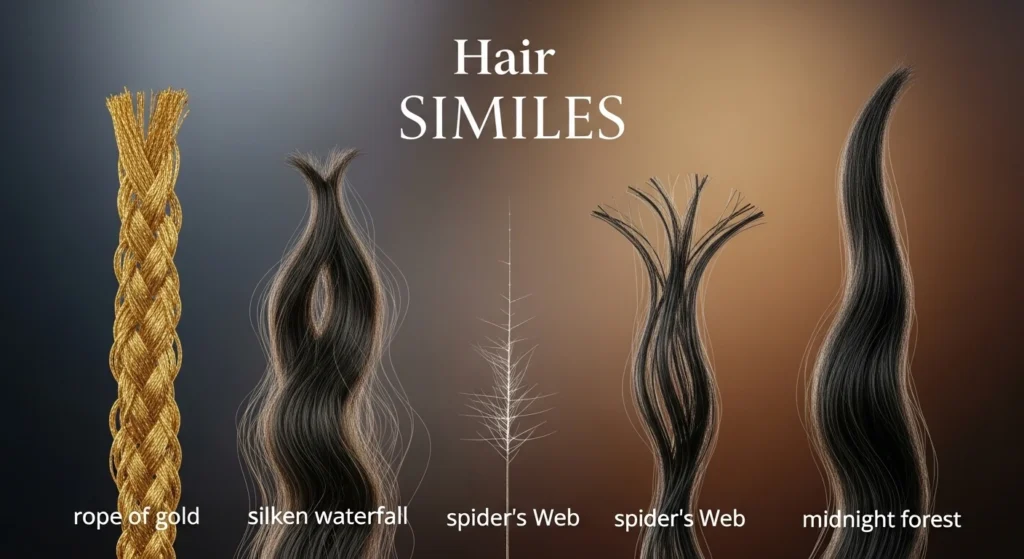
Hair is one of the most visually expressive features in writing. When described well, it can instantly reveal beauty, age, mood, culture, or personality. This is where hair similies become incredibly powerful.
A simile is a figure of speech that compares two different things using the words “like” or “as.” Writers use similes to make descriptions clearer, more imaginative, and easier to visualize. Instead of plainly saying “She had shiny hair,” a simile allows you to say “Her hair shone like polished silk.”
In this in-depth guide, you’ll explore hair similies that work beautifully in poetry, storytelling, daily conversation, and even academic or descriptive writing.
Hair Like Silk
Meaning: This simile compares hair to silk, suggesting extreme smoothness, softness, and shine.
Emotional Tone: Elegant, luxurious, gentle
Best Used In: Poetry, romantic writing, beauty descriptions
Example Sentences:
- Her hair flowed like silk down her shoulders.
- He ran his fingers through hair as smooth as silk.
- The child’s hair felt like silk against my palm.
- In the sunlight, her hair gleamed like silk fabric.
- She brushed her hair, which fell like silk ribbons.
Daily Use: “Your hair today is like silk—what shampoo are you using?”
Hair Like a Golden Crown
Meaning: Compares hair to a crown, symbolizing pride, beauty, and confidence.
Emotional Tone: Regal, proud, empowering
Best Used In: Storytelling, character descriptions, inspirational writing
Example Sentences:
- Her curls sat like a golden crown on her head.
- He wore his hair like a crown of confidence.
- The queen’s hair shone like a golden crown.
- Her thick hair rested like a royal crown.
- She carried her hair like a crown, fearless and bold.
Hair Like a River of Night
Meaning: Describes dark, flowing hair, often long and smooth.
Emotional Tone: Mysterious, poetic, calm
Best Used In: Poetry, romantic prose, fantasy writing
Example Sentences:
- Her black hair flowed like a river of night.
- His hair spilled like a dark river down his back.
- She brushed her hair, smooth as a river at dusk.
- The moonlight danced on her river-like hair.
- Her hair moved like a silent river in the wind.
Hair Like Sunlight
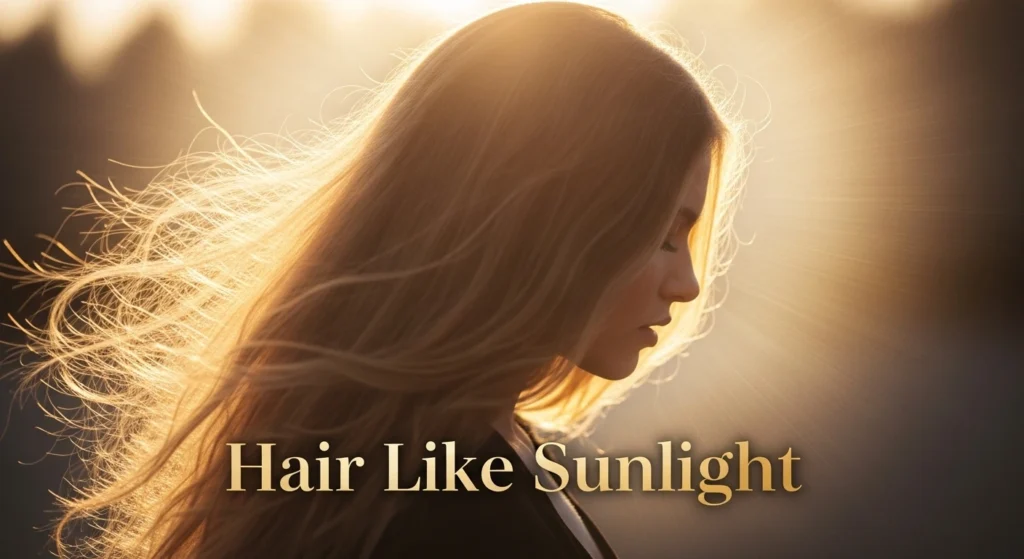
Meaning: Used for light-colored or glowing hair, especially blonde or golden tones.
Emotional Tone: Warm, cheerful, hopeful
Best Used In: Children’s stories, descriptive prose, poetry
Example Sentences:
- Her hair glowed like sunlight in the morning.
- The child’s hair shimmered like soft sunlight.
- His hair caught the light like sunlight on water.
- She smiled, her hair bright like sunlight.
- Golden strands fell like sunlight around her face.
Hair Like a Lion’s Mane
Meaning: Suggests thick, wild, powerful hair.
Emotional Tone: Strong, bold, fierce
Best Used In: Character building, dramatic descriptions
Example Sentences:
- His hair spread like a lion’s mane.
- She shook her hair like a lion claiming space.
- His mane-like hair framed his face boldly.
- Her curls rose like a lion’s mane in the wind.
- The warrior’s hair fell like a lion’s mane.
Hair Like Cotton
Meaning: Refers to very soft, fluffy, or fine hair.
Emotional Tone: Gentle, innocent, comforting
Best Used In: Children’s writing, affectionate descriptions
Example Sentences:
- The baby’s hair felt like cotton.
- Her hair rested like soft cotton clouds.
- He touched her cotton-like hair gently.
- The child’s curls were like cotton puffs.
- Her hair floated like cotton in the breeze.
Hair Like a Dark Curtain
Meaning: Describes hair that frames or hides the face.
Emotional Tone: Dramatic, mysterious
Best Used In: Gothic writing, suspense, emotional scenes
Example Sentences:
- Her hair fell like a dark curtain over her face.
- He hid behind hair like a heavy curtain.
- The strands dropped like a dark curtain.
- Her eyes peeked through hair like curtains.
- His hair closed around him like a curtain.
Hair Like Fire
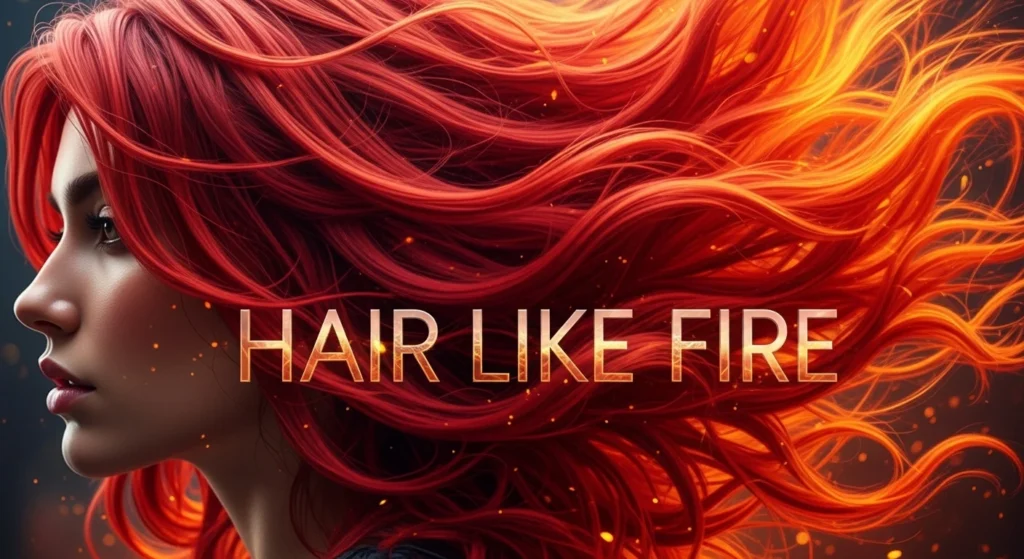
Meaning: Often used for red or fiery hair, symbolizing passion.
Emotional Tone: Energetic, bold, intense
Best Used In: Poetry, fantasy, dramatic prose
Example Sentences:
- Her red hair burned like fire.
- His hair flared like fire in the sun.
- She moved, her hair like dancing fire.
- The flames matched her fire-like hair.
- Her temper matched hair like fire.
Hair Like a Soft Cloud
Meaning: Describes fluffy, voluminous, light hair.
Emotional Tone: Dreamy, light, peaceful
Best Used In: Romantic writing, gentle imagery
Example Sentences:
- Her hair floated like a soft cloud.
- He rested his head on cloud-like hair.
- The curls puffed like a white cloud.
- Her hair framed her face like a cloud.
- It felt like touching a cloud.
Hair Like Threads of Gold
Meaning: Used for fine, shiny blonde hair.
Emotional Tone: Delicate, precious
Best Used In: Poetry, fairy tales
Example Sentences:
- Threads of gold fell from her head.
- Her hair shone like golden threads.
- The sun caught her gold-thread hair.
- Each strand looked like spun gold.
- Her hair glittered like golden thread.
Hair Like a Bird’s Nest
Meaning: Messy, tangled, uncombed hair.
Emotional Tone: Humorous, casual
Best Used In: Daily speech, light storytelling
Example Sentences:
- I woke up with hair like a bird’s nest.
- His hair looked like a nest after sleep.
- She laughed at her bird-nest hair.
- My hair turns into a nest overnight.
- The wind made his hair nest-like.
Texting Example: “Just woke up—hair like a bird’s nest 😂”
Hair Like Flowing Water
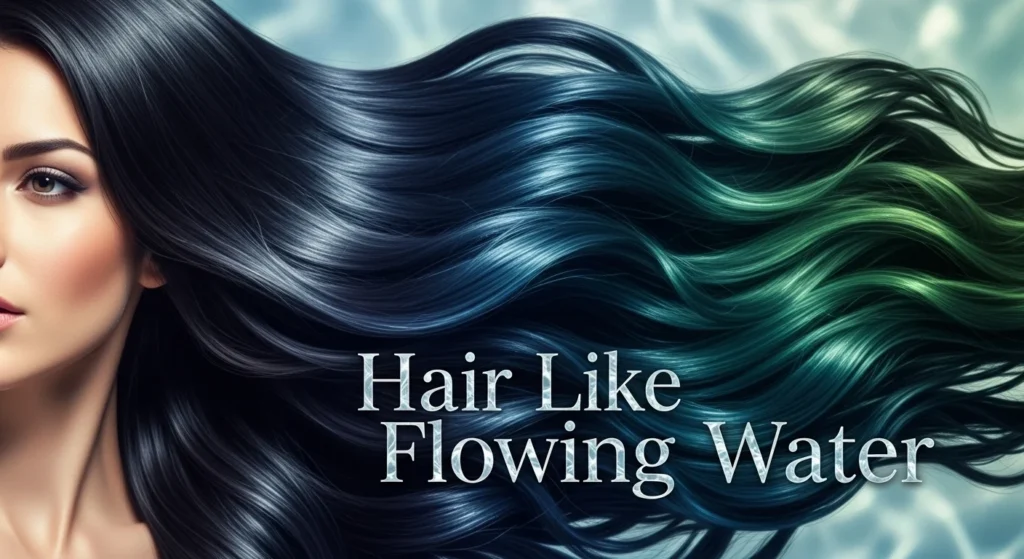
Meaning: Smooth, continuous movement of hair.
Emotional Tone: Calm, graceful
Best Used In: Poetry, descriptive prose
Example Sentences:
- Her hair moved like flowing water.
- The breeze carried her water-like hair.
- His hair streamed like water.
- She turned, hair flowing like water.
- The strands followed her like water.
Hair Like Velvet
Meaning: Soft, rich texture, often dark hair.
Emotional Tone: Luxurious, intimate
Best Used In: Romantic writing, sensory description
Example Sentences:
- Her hair felt like velvet.
- He stroked her velvet-like hair.
- The darkness made it look like velvet.
- Her hair rested like velvet fabric.
- The touch was warm like velvet.
Hair Like Silver Threads
Meaning: Refers to gray or aging hair with grace.
Emotional Tone: Wise, respectful, gentle
Best Used In: Literary writing, reflective prose
Example Sentences:
- Silver threads ran through his hair.
- Her hair shone like silver threads.
- Age added silver threads to his head.
- Wisdom showed in silver-thread hair.
- The moon lit his silver hair.
Hair Like a Wild Storm
Meaning: Untamed, energetic, uncontrollable hair.
Emotional Tone: Chaotic, powerful
Best Used In: Character-driven stories
Example Sentences:
- Her hair raged like a wild storm.
- The wind turned his hair storm-like.
- Curls crashed like a storm.
- Her stormy hair matched her mood.
- His hair refused to be tamed.
Hair Like a Soft Blanket
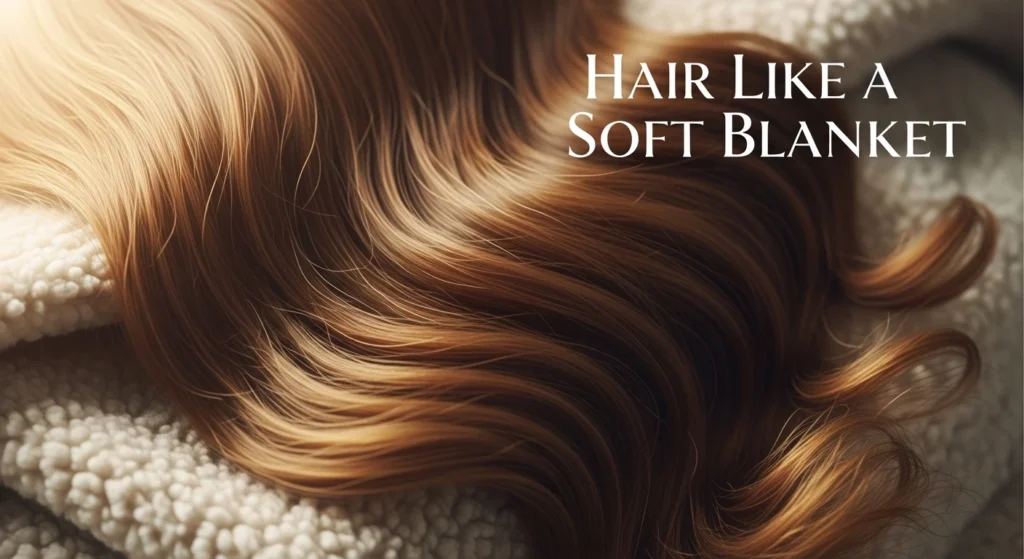
Meaning: Warm, comforting, thick hair.
Emotional Tone: Safe, affectionate
Best Used In: Emotional scenes, family writing
Example Sentences:
- Her hair wrapped him like a blanket.
- The child hid in blanket-like hair.
- It felt warm like a blanket.
- Her hair covered her like a blanket.
- Comfort lay in her soft hair.
Hair Like Shimmering Threads
Meaning: Highlights shine and fine texture.
Emotional Tone: Delicate, beautiful
Best Used In: Poetry, beauty writing
Example Sentences:
- Shimmering threads framed her face.
- Her hair glistened like threads.
- The light caught shimmering strands.
- Each thread sparkled softly.
- Her hair moved like shining thread.
Hair Like a Shadow
Meaning: Hair that closely follows movement or presence.
Emotional Tone: Quiet, subtle, mysterious
Best Used In: Symbolic writing, introspective prose
Example Sentences:
- Her hair followed her like a shadow.
- Dark hair clung like a shadow.
- His hair moved with him like a shadow.
- It rested quietly like a shadow.
- The strands lingered like shadows.
Conclusion
Mastering hair similies allows writers to transform simple descriptions into vivid, emotional imagery. Whether you’re crafting poetry, storytelling, essays, or even casual messages, similes help readers see, feel, and connect more deeply with your words.
By choosing the right comparison and matching it with the right context, your writing becomes more expressive, memorable, and alive. Keep experimenting, keep observing, and let your creativity flow—because great writing often begins with a single, powerful image.