
Emotions are often hard to explain with plain words. That’s where similes come in. A simile is a figure of speech that compares two different things using words like “as” or “like.” In figurative language, similes help readers see, feel, and imagine emotions more clearly. Instead of simply saying “I’m sad,” a simile paints a picture that makes the feeling real and vivid.
In this in-depth guide to feelings similes, you’ll explore how emotional comparisons work, what tone they convey, and how to use them effectively in poetry, storytelling, everyday speech, and even academic writing. Each section includes clear explanations and original examples to help you master expressive writing naturally.
Happy as a Child on Eid Morning
Meaning: Extreme joy and excitement Emotional Tone:
Cheerful, innocent, uplifting Best Used In: Storytelling, daily conversation, descriptive writing
This simile captures pure happiness mixed with anticipation and innocence.
Examples:
- She smiled, happy as a child on Eid morning.
- He felt happy as a child on Eid morning when he got the job offer.
- I was happy as a child on Eid morning seeing my family together.
- The kids ran outside, happy as children on Eid morning.
- Her laugh sounded happy as a child on Eid morning.
Sad Like a Cloudy Winter Day
Meaning: Deep, quiet sadness Emotional Tone:
Melancholic, heavy Best Used In: Poetry, reflective writing
This simile shows sadness that lingers without drama.
Examples:
- His heart felt sad like a cloudy winter day.
- The room seemed sad like a cloudy winter day after she left.
- Her voice sounded sad like a cloudy winter day.
- I felt sad like a cloudy winter day all afternoon.
- The letter made me sad like a cloudy winter day.
Angry Like a Storm About to Break
Meaning: Intense, building anger Emotional Tone:
Explosive, tense Best Used In: Fiction, dramatic scenes
It suggests anger that is powerful and dangerous.
Examples:
- He stood silent, angry like a storm about to break.
- Her eyes flashed, angry like a storm about to break.
- The crowd grew angry like a storm about to break.
- His voice shook, angry like a storm about to break.
- I felt angry like a storm about to break inside me.
Calm as Still Water
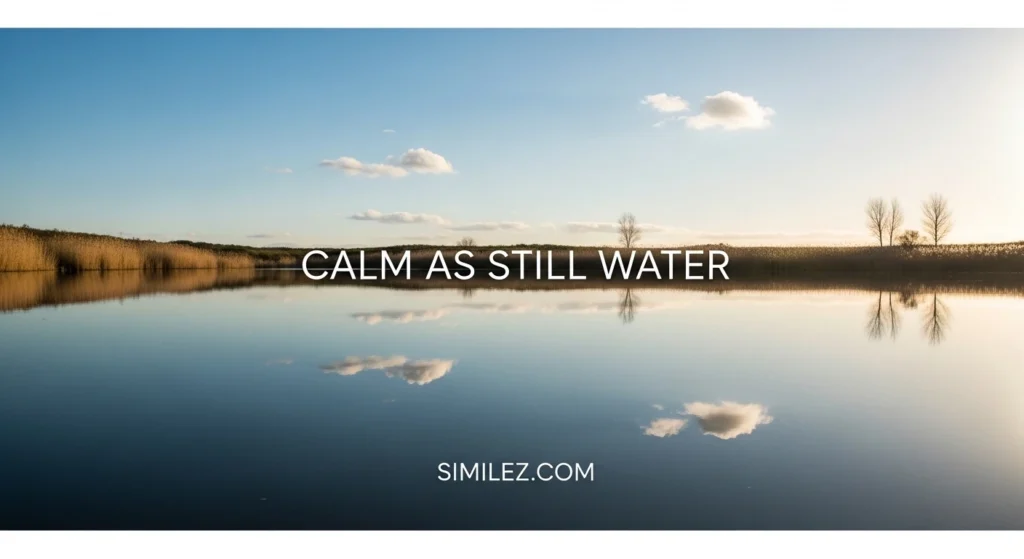
Meaning: Complete peace and emotional control Emotional Tone:
Relaxing, balanced Best Used In: Meditation writing, character description
Examples:
- She remained calm as still water during the crisis.
- His face looked calm as still water.
- I felt calm as still water after the prayer.
- Her words were calm as still water.
- He stayed calm as still water under pressure.
Nervous Like a Cat in a New Room
Meaning: Anxiety and unease Emotional Tone:
Tense, cautious Best Used In: Daily speech, storytelling
Examples:
- I felt nervous like a cat in a new room.
- She looked nervous like a cat in a new room.
- He waited nervously, like a cat in a new room.
- The child stood nervous like a cat in a new room.
- My hands shook, nervous like a cat in a new room.
Lonely Like a Single Star in the Sky
Meaning: Emotional isolation Emotional Tone:
Quiet, poetic sadness Best Used In: Poetry, emotional narratives
Examples:
- He felt lonely like a single star in the sky.
- The room felt lonely like a single star in the sky.
- She walked home lonely like a single star in the sky.
- His words sounded lonely like a single star in the sky.
- I sat there lonely like a single star in the sky.
Excited Like Fireworks on a Festival Night
Meaning: Bursting excitement Emotional Tone:
Energetic, joyful Best Used In: Stories, celebrations
Examples:
- She was excited like fireworks on a festival night.
- I felt excited like fireworks on a festival night.
- The crowd grew excited like fireworks on a festival night.
- His heart raced, excited like fireworks on a festival night.
- The kids screamed excited like fireworks on a festival night.
Scared Like a Deer in Headlights

Meaning: Sudden fear and shock Emotional Tone:
Panicked, frozen Best Used In: Fiction, suspense writing
Examples:
- He stood scared like a deer in headlights.
- She froze, scared like a deer in headlights.
- I felt scared like a deer in headlights.
- The child looked scared like a deer in headlights.
- His eyes widened, scared like a deer in headlights.
Proud as a Peacock
Meaning: Strong pride and confidence Emotional Tone:
Bold, self-assured Best Used In: Descriptions, speeches
Examples:
- He walked in proud as a peacock.
- She felt proud as a peacock after winning.
- His parents stood proud as peacocks.
- I felt proud as a peacock today.
- She smiled, proud as a peacock.
Confused Like a Lost Traveler
Meaning: Mental uncertainty Emotional Tone:
Disoriented Best Used In: Academic explanations, narratives
Examples:
- I felt confused like a lost traveler.
- He looked confused like a lost traveler.
- Her thoughts wandered, confused like a lost traveler.
- The students were confused like lost travelers.
- He spoke confused like a lost traveler.
Loved Like Warm Sunlight
Meaning: Safe and deeply cared for Emotional Tone:
Comforting, affectionate Best Used In: Romantic or emotional writing
Examples:
- She felt loved like warm sunlight.
- His words wrapped around her like warm sunlight.
- I felt loved like warm sunlight at home.
- The hug felt loved like warm sunlight.
- His smile made me feel loved like warm sunlight.
Hopeful Like a Bud in Spring
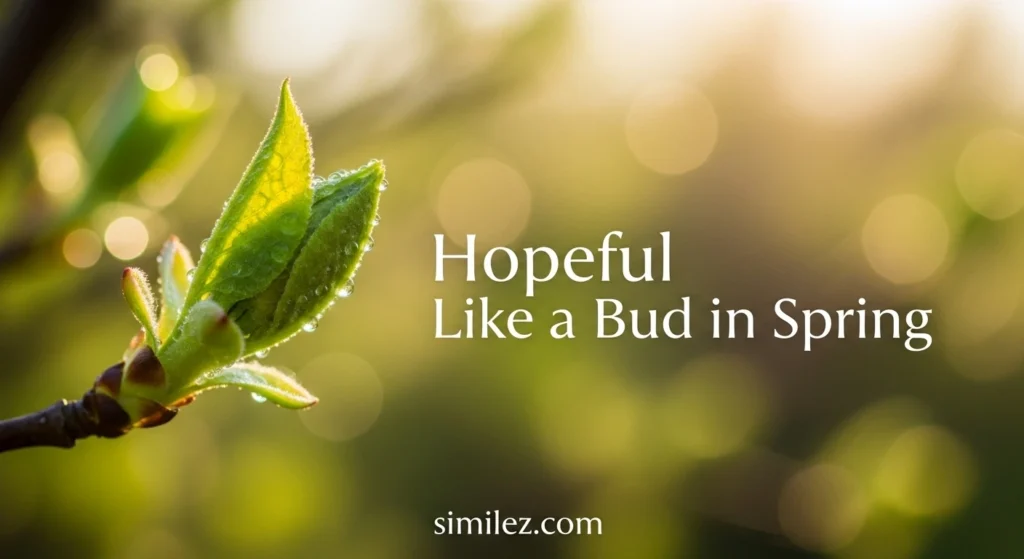
Meaning: New hope and optimism Emotional Tone:
Fresh, positive Best Used In: Motivational writing
Examples:
- She felt hopeful like a bud in spring.
- His plans grew hopeful like a bud in spring.
- I stayed hopeful like a bud in spring.
- Their future looked hopeful like a bud in spring.
- He smiled hopeful like a bud in spring.
Guilty Like a Thief in Daylight
Meaning: Strong sense of guilt Emotional Tone:
Shame, tension Best Used In: Fiction, moral writing
Examples:
- He felt guilty like a thief in daylight.
- Her face turned red, guilty like a thief in daylight.
- I walked away guilty like a thief in daylight.
- His silence felt guilty like a thief in daylight.
- She stood guilty like a thief in daylight.
Relieved Like a Deep Breath After Panic
Meaning: Stress released Emotional Tone:
Light, thankful Best Used In: Narratives, daily speech
Examples:
- I felt relieved like a deep breath after panic.
- She smiled relieved like a deep breath after panic.
- His body relaxed, relieved like a deep breath after panic.
- We laughed, relieved like a deep breath after panic.
- The news left me relieved like a deep breath after panic.
Jealous Like a Green-Eyed Shadow
Meaning: Envy and insecurity Emotional Tone:
Bitter, tense Best Used In: Literature, psychology writing
Examples:
- He felt jealous like a green-eyed shadow.
- Her words sounded jealous like a green-eyed shadow.
- I grew jealous like a green-eyed shadow.
- His silence felt jealous like a green-eyed shadow.
- She watched, jealous like a green-eyed shadow.
Peaceful Like a Quiet Mosque at Dawn

Meaning: Spiritual calm Emotional Tone:
Serene, spiritual Best Used In: Reflective writing
Examples:
- I felt peaceful like a quiet mosque at dawn.
- Her heart rested peaceful like a quiet mosque at dawn.
- The morning felt peaceful like a quiet mosque at dawn.
- His soul felt peaceful like a quiet mosque at dawn.
- She smiled peaceful like a quiet mosque at dawn.
Overwhelmed Like a Flooded Street
Meaning: Emotional overload Emotional Tone:
Heavy, stressed Best Used In: Modern writing, blogs
Examples:
- I felt overwhelmed like a flooded street.
- Her mind was overwhelmed like a flooded street.
- He stood overwhelmed like a flooded street.
- The work left me overwhelmed like a flooded street.
- She sighed overwhelmed like a flooded street.
Broken Like a Cracked Mirror
Meaning: Emotional damage Emotional Tone:
Painful, fragile Best Used In: Poetry, emotional prose
Examples:
- He felt broken like a cracked mirror.
- Her trust shattered, broken like a cracked mirror.
- I stood broken like a cracked mirror.
- His smile looked broken like a cracked mirror.
- She whispered, broken like a cracked mirror.
Conclusion
Using feelings similes allows you to express emotions with clarity, beauty, and depth. They turn abstract feelings into vivid images that readers can instantly understand and feel. Whether you’re writing poetry, telling stories, sending casual texts, or improving academic expression, similes help your words stay memorable and human.