
Confusion similes are powerful figurative tools that compare a state of confusion to something familiar, helping readers see and feel mental uncertainty more clearly. A simile is a figure of speech that uses “like” or “as” to compare two different things, often to make abstract ideas easier to understand.
Writers, speakers, and even texters use similes because they turn vague emotions into clear mental pictures. Confusion, in particular, can be hard to explain—but with the right simile, it becomes instantly relatable. In this article, you’ll explore 18 expressive confusion similes, each explained in depth with emotional tone, best usage contexts, and multiple natural examples you can use in writing, speech, or everyday conversation.
Confused Like a Deer in Headlights
Meaning: Sudden confusion caused by shock or surprise Emotional Tone: Startled, frozen, overwhelmed Best Used In: Storytelling, casual speech, character description
Example Sentences:
- He stood there, confused like a deer in headlights, when his name was called.
- I felt confused like a deer in headlights during my first job interview.
- She looked at the exam paper, confused like a deer in headlights.
- He froze mid-sentence, confused like a deer in headlights.
- I opened the message and just stared, confused like a deer in headlights.
Daily-use text: “They asked me to explain it and my mind went blank—deer in headlights moment 😅”
Confused Like a Lost Child in a Crowd
Meaning: Feeling overwhelmed and directionless Emotional Tone: Vulnerable, anxious Best Used In: Emotional writing, narratives
Example Sentences:
- He wandered through the new office confused like a lost child in a crowd.
- I felt confused like a lost child in a crowd at my first university lecture.
- She looked around the airport, confused like a lost child in a crowd.
- The instructions left me confused like a lost child in a crowd.
- Without guidance, he felt confused like a lost child in a crowd.
Confused Like a Puzzle Missing Pieces
Meaning: Partial understanding that doesn’t fully make sense Emotional Tone: Frustrated, incomplete Best Used In: Academic writing, explanations
Example Sentences:
- The lecture felt confusing, like a puzzle missing pieces.
- His explanation was like a puzzle missing pieces.
- The story seemed confused like a puzzle missing pieces.
- My thoughts were confused like a puzzle missing pieces.
- The evidence felt incomplete, like a puzzle missing pieces.
Confused Like a Foggy Morning
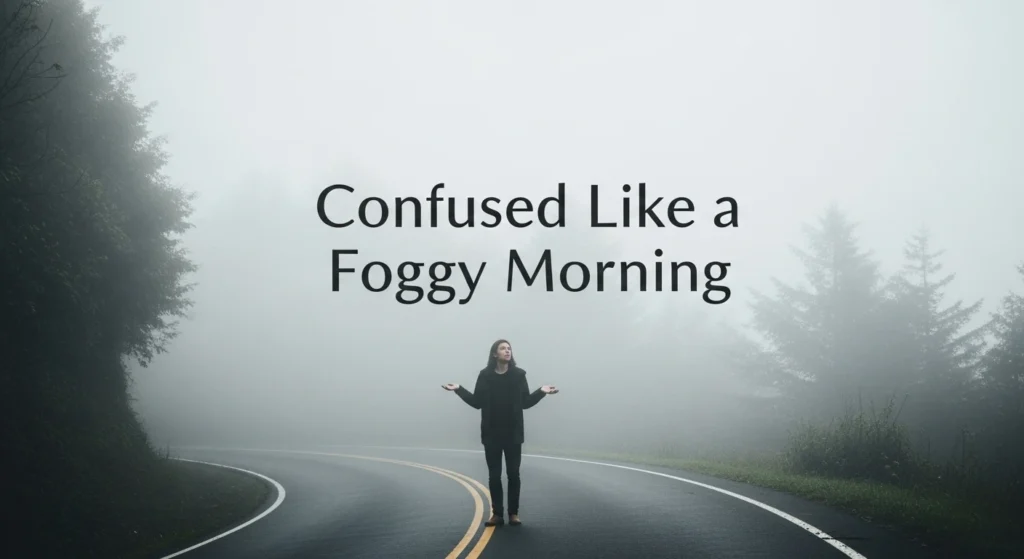
Meaning: Mental haze and lack of clarity Emotional Tone: Slow, unclear, dull Best Used In: Descriptive writing, poetry
Example Sentences:
- My mind felt confused like a foggy morning.
- She woke up confused like a foggy morning.
- His thoughts rolled in confused like a foggy morning.
- The explanation left me confused like a foggy morning.
- After the long night, I felt confused like a foggy morning.
Confused Like a Spinning Compass
Meaning: No sense of direction or decision Emotional Tone: Disoriented Best Used In: Metaphorical or reflective writing
Example Sentences:
- My thoughts were confused like a spinning compass.
- He felt confused like a spinning compass in his career.
- Without guidance, she was confused like a spinning compass.
- The argument left everyone confused like a spinning compass.
- I felt confused like a spinning compass after the meeting.
Confused Like a Cat in a New House
Meaning: Discomfort in unfamiliar surroundings Emotional Tone: Curious but uneasy Best Used In: Lighthearted storytelling
Example Sentences:
- He looked confused like a cat in a new house.
- I felt confused like a cat in a new house on my first day.
- She wandered around confused like a cat in a new house.
- The new system left him confused like a cat in a new house.
- I was confused like a cat in a new house at the party.
Confused Like a Maze with No Exit
Meaning: Deep mental entrapment Emotional Tone: Stressful, hopeless Best Used In: Emotional or dramatic writing
Example Sentences:
- His thoughts felt confused like a maze with no exit.
- I was confused like a maze with no exit during the exam.
- The problem grew confused like a maze with no exit.
- She felt stuck, confused like a maze with no exit.
- The situation left us confused like a maze with no exit.
Confused Like Jumbled Wires
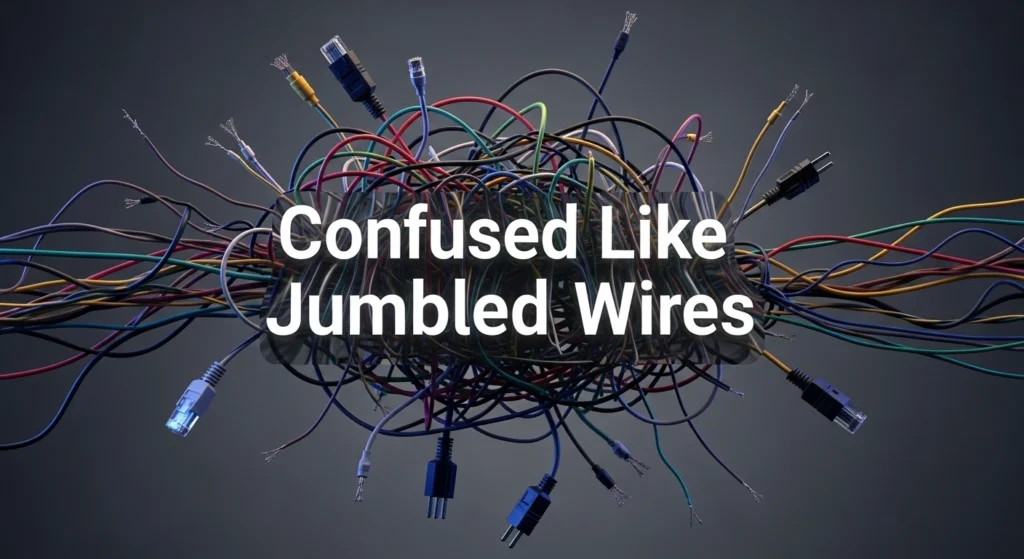
Meaning: Overloaded thoughts Emotional Tone: Chaotic Best Used In: Modern, tech-based descriptions
Example Sentences:
- My brain felt confused like jumbled wires.
- After multitasking all day, I felt confused like jumbled wires.
- His explanation tangled my thoughts like jumbled wires.
- The stress left me confused like jumbled wires.
- I was confused like jumbled wires after the call.
Confused Like a Broken Map
Meaning: Misinformation or misleading guidance Emotional Tone: Distrustful, lost Best Used In: Analytical or narrative writing
Example Sentences:
- The advice left me confused like a broken map.
- His directions felt confused like a broken map.
- I followed the plan but felt confused like a broken map.
- The theory seemed confused like a broken map.
- We were confused like a broken map in that city.
Confused Like a Whirlwind of Thoughts
Meaning: Too many ideas at once Emotional Tone: Overstimulated Best Used In: Introspective writing
Example Sentences:
- My mind was confused like a whirlwind of thoughts.
- She felt confused like a whirlwind of thoughts before speaking.
- Anxiety made him confused like a whirlwind of thoughts.
- I was confused like a whirlwind of thoughts after the news.
- The deadline left me confused like a whirlwind of thoughts.
Confused Like a Student Without Notes
Meaning: Unprepared and unsure Emotional Tone: Nervous Best Used In: Academic or relatable writing
Example Sentences:
- I felt confused like a student without notes.
- He entered the meeting confused like a student without notes.
- She stood there confused like a student without notes.
- The question left me confused like a student without notes.
- I was confused like a student without notes during the quiz.
Confused Like a Radio Full of Static
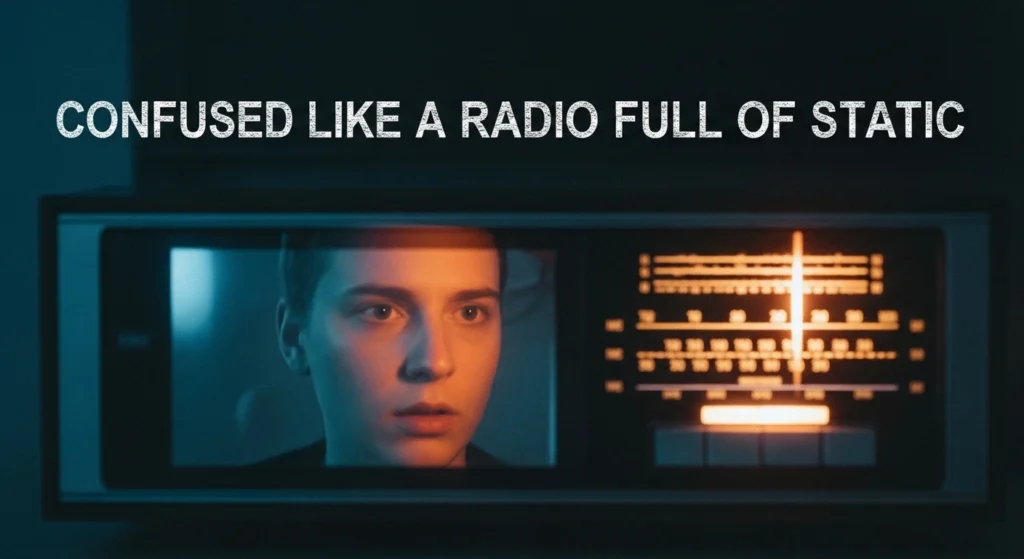
Meaning: Thoughts blocked by mental noise Emotional Tone: Irritated Best Used In: Creative or descriptive writing
Example Sentences:
- My mind sounded confused like a radio full of static.
- Stress made everything confused like a radio full of static.
- His explanation felt confused like a radio full of static.
- I was confused like a radio full of static.
- The pressure left me confused like a radio full of static.
Confused Like a Torn Page
Meaning: Missing key information Emotional Tone: Incomplete, uneasy Best Used In: Literary or reflective writing
Example Sentences:
- My understanding felt confused like a torn page.
- The story seemed confused like a torn page.
- He felt confused like a torn page in the plan.
- The lesson left me confused like a torn page.
- I was confused like a torn page in the book.
Confused Like a Sleepwalker
Meaning: Acting without awareness Emotional Tone: Detached Best Used In: Psychological or narrative writing
Example Sentences:
- I moved through the day confused like a sleepwalker.
- He answered questions confused like a sleepwalker.
- She felt confused like a sleepwalker at work.
- The shock left him confused like a sleepwalker.
- I was confused like a sleepwalker after the news.
Confused Like a Clouded Mirror
Meaning: Inability to see truth clearly Emotional Tone: Doubtful Best Used In: Reflective or poetic writing
Example Sentences:
- My thoughts were confused like a clouded mirror.
- Fear left her confused like a clouded mirror.
- His memory felt confused like a clouded mirror.
- The explanation made things confused like a clouded mirror.
- I felt confused like a clouded mirror that day.
Confused Like a Boat Without a Rudder

Meaning: No control or direction Emotional Tone: Helpless Best Used In: Metaphorical writing
Example Sentences:
- I felt confused like a boat without a rudder.
- He drifted through life confused like a boat without a rudder.
- The team was confused like a boat without a rudder.
- Without leadership, we were confused like a boat without a rudder.
- I felt confused like a boat without a rudder after quitting.
Confused Like a Brain in Overdrive
Meaning: Thinking too much Emotional Tone: Overwhelmed Best Used In: Modern, conversational writing
Example Sentences:
- My mind was confused like a brain in overdrive.
- Stress left me confused like a brain in overdrive.
- She felt confused like a brain in overdrive before exams.
- I was confused like a brain in overdrive.
- He sounded confused like a brain in overdrive.
Confused Like a Question Without an Answer
Meaning: Lingering uncertainty Emotional Tone: Thoughtful, unresolved Best Used In: Philosophy, reflective writing
Example Sentences:
- His expression was confused like a question without an answer.
- I felt confused like a question without an answer.
- The ending left readers confused like a question without an answer.
- She walked away confused like a question without an answer.
- Life sometimes feels confused like a question without an answer.
Final Thoughts
Confusion similes breathe life into language by turning mental uncertainty into vivid imagery. Whether you’re writing poetry, crafting a story, explaining a feeling, or sending a quick text, the right simile can instantly connect your words to human experience. Keep experimenting, stay expressive, and remember—creative language isn’t about perfection, but clarity and connection