William James

Metaphors for Balance

Metaphors for Balance

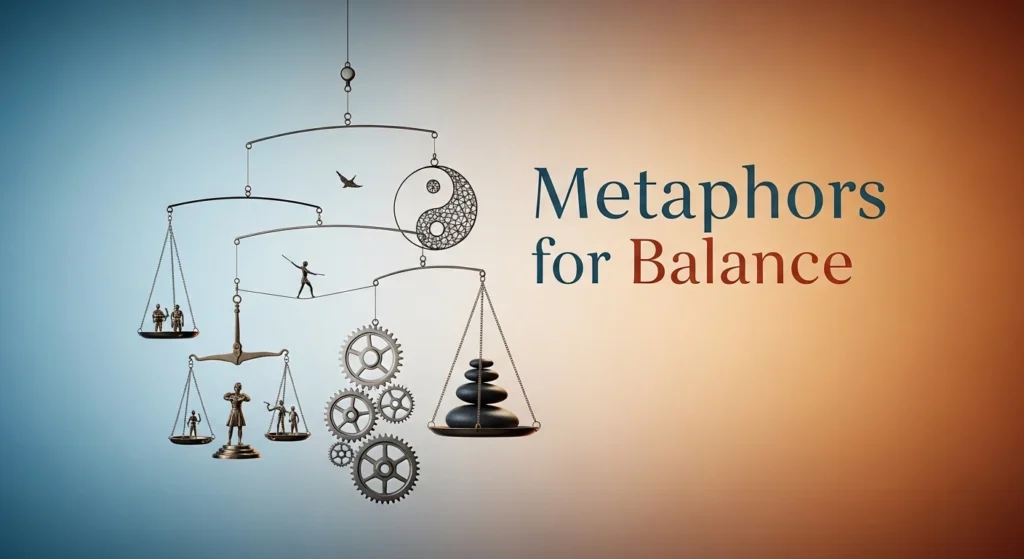
Walking a tightrope above a bustling city street, every careful step a dance between gravity and grace, perfectly captures the essence of life’s delicate equilibrium. This image mirrors our daily need to maintain balance, both emotionally and practically. Understanding metaphors for balance can help us express this concept creatively, offering insight into harmony, stability, and

Metaphors for Balance Read More »

Metaphors for Big

Metaphors for Big

The first time I tried to describe something truly massive, words felt too small. I remember standing in front of a towering mountain, searching for a way to explain its size. That is where metaphors for big come in. They turn ordinary language into something vivid and unforgettable. In simple terms, metaphors for big help

Metaphors for Big Read More »

Feelings Similes

Feelings Similes

Emotions are often hard to explain with plain words. That’s where similes come in. A simile is a figure of speech that compares two different things using words like “as” or “like.” In figurative language, similes help readers see, feel, and imagine emotions more clearly. Instead of simply saying “I’m sad,” a simile paints a

Feelings Similes Read More »

Similes for Long

Similes for Long

Similes are a powerful part of figurative language. They compare one thing to another using words like“as” or“like” to make ideas clearer, stronger, and more vivid. Writers, poets, students, and even everyday speakers use similes because they help readers see, feel, and understand abstract ideas more easily. When we talk about something being long—whether it’s

Similes for Long Read More »