
William James

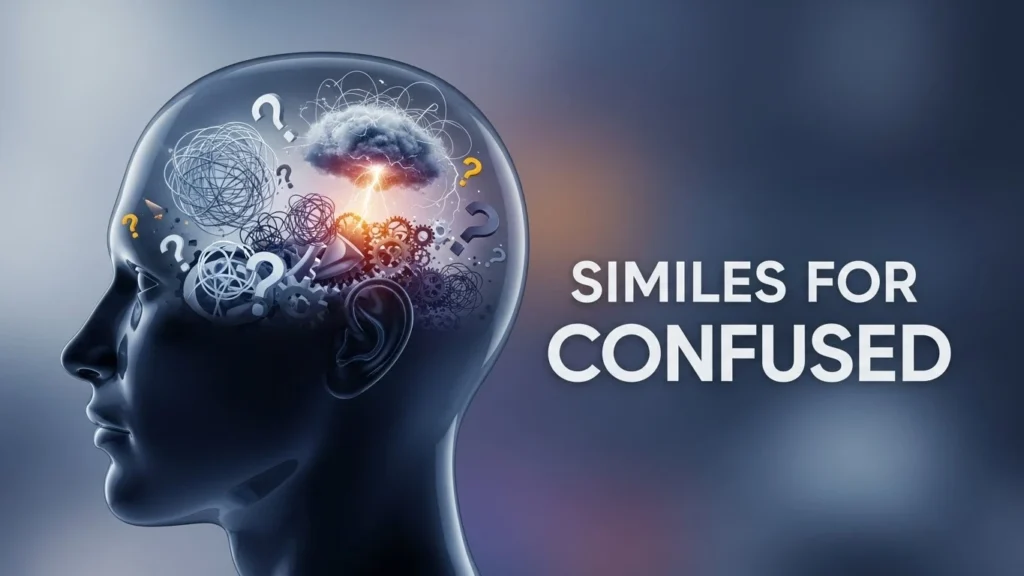
Similes for Confused

Similes for Confused

Confusion is a feeling everyone experiences, yet it can be surprisingly hard to describe. That’s where similes come in. A simile is a figure of speech that compares two unlike things using words like “as” or “like.” Writers use similes to turn abstract emotions—such as confusion—into clear, visual images readers instantly understand. In everyday conversation,

Similes for Confused Read More »

Similes for Nice

Similes for Nice: Powerful Lines That Show True Kindness

Language becomes more powerful when it helps readers see and feel an idea instead of just understanding it. That is where similes come in. A simile is a type of figurative language that compares two different things using words like “as” or “like.” Writers and speakers use similes to make descriptions clearer, more engaging, and

Similes for Nice: Powerful Lines That Show True Kindness Read More »

Similes for Fear

Similes for Fear: Unique Comparisons Writers Will Love

Fear is one of the strongest human emotions—and one of the hardest to describe. That’s where similes for fear come in. A simile is a figure of speech that compares two different things using “like” or “as.” Writers use similes to paint clearer pictures, stir emotions, and help readers feel what’s happening rather than just

Similes for Fear: Unique Comparisons Writers Will Love Read More »