
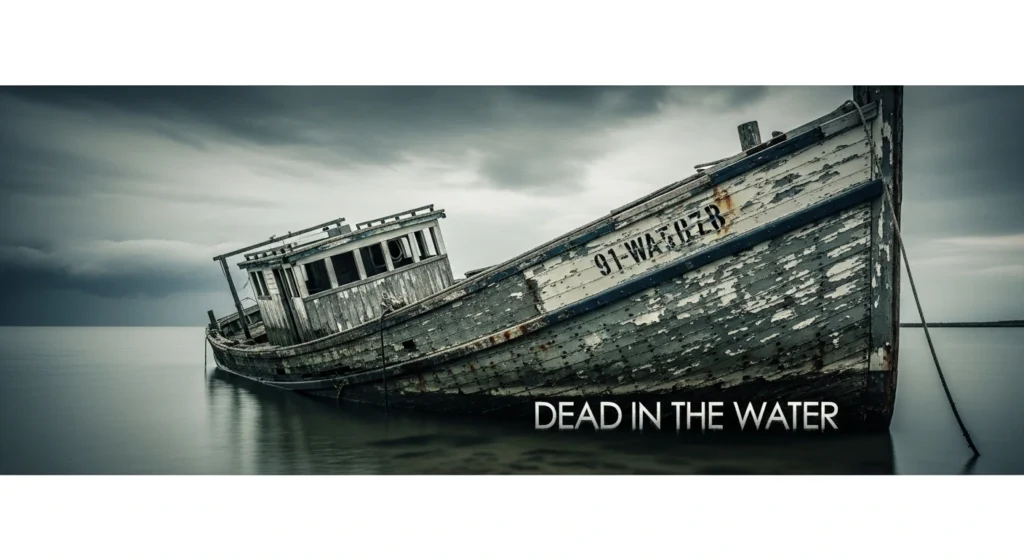
Everyday language is filled with colorful expressions that describe failure, stagnation, and difficult circumstances. One of the most widely used phrases in business, politics, relationships, and modern conversation is dead in the water.
Although it originally came from maritime language, today it is commonly used to describe anything that has stopped moving forward or lost all momentum.
From failed projects and collapsing startups to broken negotiations and abandoned plans, this expression captures the idea of complete standstill better than almost any other idiom in English.
This guide explains the meaning, history, practical usage, real world examples, and related concepts behind the phrase.
Whether you are a student, writer, English learner, content creator, or professional communicator, understanding this expression can improve both comprehension and communication skills.
What Does the Phrase Mean?
The expression refers to something that has completely stopped functioning, progressing, or succeeding. It describes a situation where movement, growth, or recovery seems impossible.
Simple Definition
A person, project, idea, or process is considered “dead in the water” when:
- Progress has stopped entirely
- Success is no longer likely
- Momentum has disappeared
- Recovery appears difficult or impossible
- The situation cannot move forward without major change
Everyday Interpretation
People often use the phrase when discussing:
- Failed businesses
- Political campaigns
- Delayed projects
- Broken relationships
- Financial collapse
- Stalled negotiations
- Creative burnout
Example Sentences
- The company’s expansion plan became impossible after funding disappeared.
- Without customer trust, the brand’s recovery effort stalled completely.
- The peace talks stopped after both sides refused compromise.
- The film project lost investors and never moved forward again.
The phrase usually carries a negative tone and implies serious difficulty rather than a temporary delay.
The Maritime Origin of the Expression
The phrase originated in naval and maritime terminology.
In the age of sailing ships, a vessel without wind or propulsion would become motionless in the water. It could not steer, escape danger, or continue its journey. Such a ship was vulnerable, ineffective, and essentially powerless.
Historical Meaning
A ship became “dead in the water” when:
- Wind disappeared
- Engines failed
- Steering stopped functioning
- Propulsion systems broke down
- Navigation became impossible
Because ships relied heavily on movement for safety and direction, a motionless vessel represented danger and helplessness.
Over time, the phrase evolved from nautical terminology into a common metaphor used in everyday speech.
Why the Phrase Became Popular in Modern English
The expression remains popular because it instantly communicates failure and stagnation in a vivid, visual way.
People can easily imagine:
- A ship stranded at sea
- No movement
- No control
- No progress
- Increasing vulnerability
This imagery makes the phrase memorable and emotionally powerful.
Reasons for Its Popularity
ReasonExplanationStrong imageryCreates a vivid mental pictureEasy to understandSimple metaphor for failureFlexible usageWorks in business, politics, relationships, and mediaEmotional impactCommunicates seriousness quicklyConversational toneCommon in both formal and informal language
Because of these qualities, the phrase appears frequently in journalism, movies, television, literature, and online discussions.
Common Situations Where the Phrase Is Used
The expression appears in many different contexts. Here are the most common categories.
Business and Corporate Failures
In business communication, the phrase often describes projects, companies, or strategies that have stopped progressing.
Examples
- A startup loses investor funding
- Product development stalls
- Sales collapse unexpectedly
- Partnerships fail
- Market demand disappears
Example Scenario
A technology company launches an app but receives poor reviews. Investors pull out, downloads decline, and updates stop completely. Industry analysts may describe the project as having no future momentum.
Business Warning Signs
- Lack of innovation
- Financial losses
- Poor leadership
- Weak customer demand
- Operational breakdowns
- Employee turnover
Many executives use the phrase during crisis discussions because it clearly communicates urgency.
Politics and Government
Political commentators frequently use this expression to describe campaigns, legislation, or negotiations that have lost support.
Common Political Uses
- Election campaigns losing momentum
- Failed policy proposals
- Stalled diplomatic talks
- Government shutdown negotiations
- International agreements collapsing
Example
If lawmakers refuse compromise and legislation cannot advance, news outlets may describe the proposal as politically stalled.
Political usage became especially common in television journalism because the phrase is concise and dramatic.
Relationships and Personal Life
The expression also appears in emotional and interpersonal situations.
Relationship Examples
- Communication completely stops
- Trust disappears
- Reconciliation efforts fail
- Emotional connection weakens
- Long-term plans collapse
Example
A couple may continue arguing without resolution until the relationship no longer progresses in a healthy direction.
In personal situations, the phrase often implies emotional exhaustion and lack of direction.
Creative Projects and Entertainment
Writers, filmmakers, musicians, and creators frequently encounter stalled progress.
Creative Situations
- Film productions losing funding
- Books remaining unfinished
- Music projects canceled
- Content creators experiencing burnout
- Artistic collaborations ending
Example
A movie announced with excitement may never enter production due to legal disputes or budget issues.
Entertainment media commonly uses the phrase because audiences quickly understand the implication of failure or stagnation.
Economic and Financial Contexts
Financial analysts often describe economies, markets, or investments using this metaphor.
Financial Examples
- Stock growth stopping suddenly
- Housing markets slowing
- Investment plans collapsing
- Economic recovery weakening
- Businesses entering bankruptcy
Example
If consumer spending drops sharply and growth disappears, economists may describe recovery efforts as stalled.
This usage reflects uncertainty, risk, and lack of momentum.
Signs That a Situation Has Stalled Completely
Not every delay means total failure. Sometimes projects recover successfully.
However, certain signs indicate serious trouble.
Major Indicators
- No measurable progress
- Repeated delays
- Loss of leadership support
- Financial problems
- Declining morale
- Communication breakdowns
- Lack of strategic direction
- Public criticism increasing
Emotional Indicators
People involved may experience:
- Frustration
- Confusion
- Burnout
- Anxiety
- Hopelessness
- Loss of confidence
Recognizing these warning signs early can help prevent complete collapse.
How Stalled Situations Can Recover
Even when progress stops entirely, recovery is sometimes possible.
Many organizations and individuals successfully restart struggling situations through strategic changes.
Recovery Strategies
1. Identify the Root Problem
Understanding why progress stopped is essential.
Possible causes include:
- Poor planning
- Lack of resources
- Weak communication
- Market changes
- Leadership issues
2. Create a New Strategy
Old methods may no longer work. Fresh direction often helps restore momentum.
3. Improve Communication
Clear communication reduces confusion and rebuilds trust.
4. Secure New Resources
Funding, staffing, or partnerships may be necessary for recovery.
5. Set Smaller Goals
Breaking large challenges into smaller milestones can rebuild confidence.
Real-Life Recovery Example
Some companies survive major setbacks by:
- Rebranding
- Changing leadership
- Launching new products
- Adapting to customer needs
History shows that stalled situations are not always permanent.
Similar Expressions and Related Idioms
English contains many expressions related to failure, stagnation, or lack of progress.
Common Related Idioms
ExpressionMeaningAt a standstillCompletely stoppedGoing nowhereNo progress occurringOut of steamLosing energy or momentumBack to square oneStarting over againHit a wallEncountering a major obstacleFalling apartBreaking down completelyRunning agroundExperiencing serious troubleSinking fastRapid decline or failure
These expressions often appear in similar contexts but carry slightly different emotional tones.
The Psychological Impact of Stagnation
When people feel trapped in situations without progress, emotional stress often increases.
Common Psychological Effects
- Reduced motivation
- Fear of failure
- Low productivity
- Emotional exhaustion
- Decreased confidence
- Decision paralysis
Why Momentum Matters
Human beings naturally seek progress and achievement. When goals become blocked, frustration grows quickly.
In workplaces, stalled environments can damage:
- Team morale
- Creativity
- Productivity
- Employee retention
In personal life, stagnation may affect mental health and relationships.
This is why recognizing and addressing problems early is extremely important.
How Media and Pop Culture Use the Phrase
Journalists, movie writers, and commentators frequently use the expression because it creates dramatic impact.
Common Media Examples
- Sports teams losing momentum
- Political campaigns collapsing
- Celebrity careers fading
- Business failures
- International conflicts
Why Media Loves the Phrase
The expression is:
- Short
- Emotional
- Visual
- Easy to understand
- Attention-grabbing
Headlines often use vivid language to increase reader engagement, making this phrase especially popular in modern media.
Difference Between Temporary Delays and Total Failure
A temporary setback is not always permanent collapse.
Understanding the difference helps people respond more effectively.
Temporary Delay
Characteristics include:
- Progress slows but continues
- Problems remain solvable
- Motivation still exists
- Resources are available
- Recovery plans are active
Complete Stagnation
Characteristics include:
- No forward movement
- Leadership uncertainty
- Loss of confidence
- Financial collapse
- No clear recovery strategy
Recognizing the difference helps individuals and organizations avoid panic while still addressing serious risks.
Lessons We Can Learn From Stalled Situations
Although failure is difficult, stalled situations often teach valuable lessons.
Important Lessons
Adaptability Matters
Rigid strategies often fail in changing environments.
Communication Is Essential
Miscommunication causes many breakdowns.
Momentum Requires Maintenance
Success requires continuous effort.
Early Action Prevents Collapse
Ignoring small problems can create larger crises.
Innovation Encourages Survival
Organizations that evolve are more likely to recover.
These lessons apply to businesses, relationships, education, careers, and personal growth.
Practical Tips to Avoid Losing Momentum
People and organizations can reduce the risk of stagnation by taking proactive steps.
Useful Strategies
- Set realistic goals
- Monitor progress regularly
- Encourage honest communication
- Stay flexible during change
- Invest in problem-solving
- Adapt to new information
- Build strong leadership
- Celebrate small wins
Consistency and adaptability are often the key to long-term success.
FAQs
1. What does the phrase originally refer to?
It originally described a ship that could no longer move because it lost propulsion or wind power.
2. Is the expression formal or informal?
It is commonly used in both informal conversation and professional communication, especially journalism and business discussions.
3. Can stalled situations recover successfully?
Yes. Many businesses, relationships, and projects recover through strategic changes and renewed effort.
4. Is the phrase always negative?
Usually yes, because it implies serious difficulty or failure, though recovery may still be possible.
5. Why is the phrase so common in business news?
It quickly communicates lack of progress and declining momentum in a memorable way.
6. Are there similar idioms in English?
Yes. Related expressions include “at a standstill,” “going nowhere,” and “out of steam.”
7. Can people use the phrase in personal situations?
Absolutely. It is often used for relationships, careers, or personal goals that stop progressing.
8. What causes projects to lose momentum?
Common causes include poor leadership, lack of funding, communication problems, weak planning, and changing market conditions.
Conclusion
The phrase “dead in the water” remains one of the most powerful expressions for describing complete stagnation, failure, or loss of momentum.
Originally rooted in maritime history, it has evolved into a widely recognized metaphor used across business, politics, relationships, media, and everyday life.
Its popularity comes from its vivid imagery and emotional clarity. A motionless ship stranded at sea perfectly represents situations where progress stops and uncertainty grows.
However, stalled situations do not always mean permanent defeat. Many organizations, individuals, and projects recover by identifying problems early, adapting strategies, improving communication, and rebuilding momentum step by step.
Understanding this expression also teaches a broader lesson about resilience. Progress is rarely guaranteed, and setbacks are part of growth. The key is recognizing when momentum disappears and taking action before challenges become impossible to overcome.