
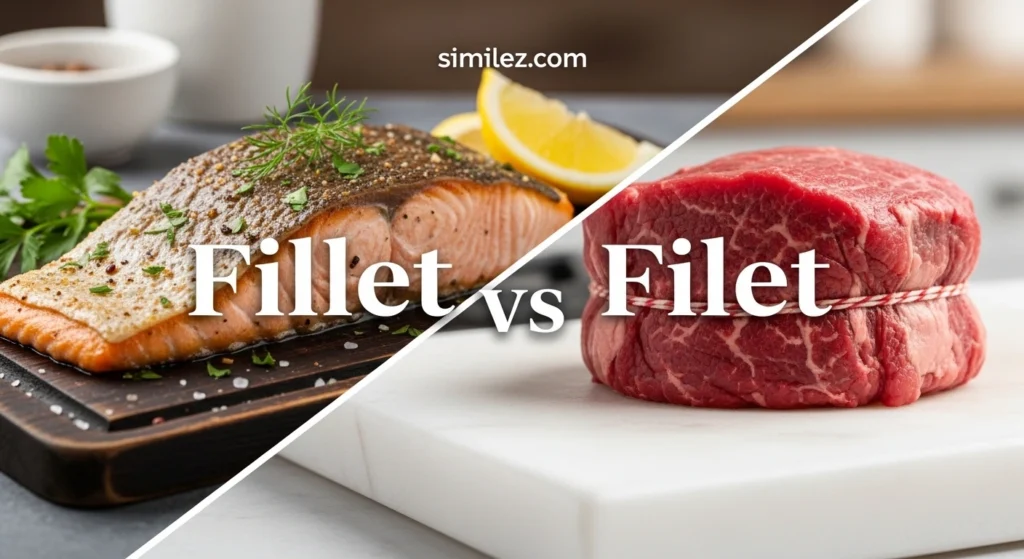
You’re scanning a restaurant menu, perhaps a little hungry, maybe even a bit indecisive. Your eyes land on two similar looking words: fillet and filet. Same pronunciation. Same context.
Yet something about them feels different. One seems casual, maybe even familiar. The other carries a quiet sophistication, like it belongs in a fine dining setting. So which one is correct? Or are they both right?
This seemingly small distinction turns out to be more than just a spelling variation. It reflects culture, language evolution, culinary tradition, and even perception.
Whether you’re ordering food, writing a menu, or simply trying to sound informed, understanding the difference between fillet and filet matters more than you might think.
It shapes how you communicate, how you’re perceived, and how accurately you express ideas in both everyday and professional contexts.
Let’s break it down not just technically, but practically so you walk away with clarity, confidence, and a deeper appreciation of how language subtly influences experience.
What Do “Fillet” and “Filet” Actually Mean?
At their core, fillet and filet refer to the same thing: a boneless cut of meat or fish. The word originates from French, where filet means “a thread or strip.” Over time, English adopted the term but modified its spelling in certain contexts.
In practical terms, whether you say “fish fillet” or “fish filet,” you’re talking about a slice of fish that has been carefully cut away from the bone. The meaning doesn’t change—but the presentation does.
What’s interesting is how such a minor difference in spelling can create a shift in tone. “Fillet” feels straightforward and functional, often used in everyday language. “Filet,” on the other hand, carries a more refined, almost elegant connotation.
This duality exists because English often absorbs words from other languages but adapts them over time. In this case, both versions coexist, each serving a slightly different stylistic purpose.
The Origin: French Roots and English Adaptation
The distinction between fillet and filet becomes clearer when you trace their linguistic roots. The original French word is filet, pronounced “fee-lay.” When English borrowed the term, it anglicized the spelling to fillet while retaining the pronunciation.
Why Two Versions Survived
English is known for preserving multiple versions of the same word when borrowed from other languages. Instead of replacing the original, it often keeps both.
- Filet remains closer to the French original
- Fillet reflects English spelling conventions
This dual presence allows speakers and writers to choose based on context rather than correctness.
A Subtle Cultural Influence
Using filet often signals a connection to culinary tradition or a refined dining experience. Meanwhile, fillet feels more accessible and commonly used in general English contexts.
It’s not just language—it’s cultural layering.
Culinary Context: Where the Difference Shows Most
The kitchen is where this distinction truly comes alive. While chefs understand that both words refer to the same cut, the choice of spelling can shape perception.
In professional kitchens and high-end menus, filet is often preferred. It aligns with the French culinary heritage that influences fine dining. Think of dishes like “filet mignon”—the term itself feels elevated.
In contrast, everyday cooking—recipes, grocery labels, casual menus—tends to use fillet. It’s simpler, more familiar, and easier for the average reader to recognize.
Practical Example
- A luxury restaurant menu: “Grilled salmon filet with lemon butter sauce”
- A home recipe blog: “Pan-fried salmon fillet with garlic and herbs”
Same dish. Different tone.
Filet Mignon: Why This One Stays French
One of the most common places people encounter “filet” is in filet mignon. Interestingly, this phrase almost never appears as “fillet mignon.”
That’s because it’s a direct French term, and changing the spelling would strip it of its authenticity.
Why It Matters
- It preserves culinary tradition
- It signals premium quality
- It aligns with global dining standards
If you wrote “fillet mignon,” it would technically be understandable—but it would feel off, almost like a translation that missed the nuance.
This is one of the clearest examples where filet is not just preferred—it’s expected.
Fish vs. Meat: Does Usage Differ?
There’s a subtle tendency in English usage when it comes to fish and meat.
Fish
For fish, fillet is more commonly used in everyday English. You’ll see it in supermarkets, recipes, and casual dining.
Meat
For meat—especially premium cuts like beef—filet appears more often, particularly in formal or upscale contexts.
Why This Happens
It’s less about rules and more about convention. Fish is often associated with everyday cooking, while certain meat cuts carry a more luxurious connotation. The spelling follows that perception.
Regional Differences: American vs. British Usage
Geography plays a role in language preferences.
American English
In the United States, both fillet and filet are used, but filet is more common in restaurant settings and marketing.
British English
In the UK, fillet is the dominant spelling across most contexts, including menus and recipes.
What This Means for You
If your audience is international, choosing the right spelling can improve clarity and relatability. It’s not about right or wrong—it’s about matching expectations.
Perception and Branding: Words Shape Experience
Language doesn’t just communicate—it influences perception.
Imagine two identical dishes:
- “Chicken fillet with herbs”
- “Herb-crusted chicken filet”
The second feels more upscale, even if the food is the same.
Why This Happens
- Filet carries a French, gourmet association
- Fillet feels practical and straightforward
Businesses use this intentionally. The choice of spelling becomes part of branding, shaping how customers perceive quality and value.
Everyday Communication: Which Should You Use?
For most people, the safest choice is fillet. It’s widely accepted, easy to understand, and works in almost all contexts.
However, there are moments when filet makes more sense:
- When referring to filet mignon
- When writing for a fine-dining audience
- When emphasizing a premium or gourmet tone
Simple Rule of Thumb
- Use fillet for general writing
- Use filet for culinary elegance or specific French terms
This approach keeps your communication both accurate and context-appropriate.
Common Mistakes and Misunderstandings
Many people assume one spelling is correct and the other is wrong. That’s not the case.
Frequent Errors
- Thinking filet is always more “correct”
- Using filet in casual contexts where it feels forced
- Misspelling fillet as filet without understanding why
The Reality
Both are correct. The difference lies in tone, context, and audience—not accuracy.
Understanding this eliminates confusion and helps you use each term with intention.
Language Evolution: Why Both Forms Persist
English is not a rigid language. It evolves by absorbing influences from other cultures, especially French.
The coexistence of fillet and filet reflects this adaptability. Instead of choosing one over the other, English allows both to exist, each serving a purpose.
A Broader Pattern
You’ll see similar cases in words like:
- Color vs. colour
- Theater vs. theatre
These variations aren’t mistakes—they’re reflections of history and usage patterns.
Writing for Different Audiences
If you’re creating content—whether it’s a blog, menu, or marketing copy—the choice between fillet and filet should be strategic.
Casual Audience
Use fillet. It’s clear, familiar, and approachable.
Professional or Culinary Audience
Use filet when appropriate, especially for French dishes or upscale contexts.
Mixed Audience
Stick with fillet unless there’s a strong reason to switch.
This ensures clarity while maintaining the right tone.
Real-Life Scenarios: How the Choice Plays Out
Scenario 1: Writing a Recipe
You’re sharing a home-cooked salmon recipe. “Fillet” feels natural and relatable.
Scenario 2: Designing a Restaurant Menu
If it’s a high-end restaurant, “filet” adds a touch of sophistication.
Scenario 3: Ordering Food
Most people won’t notice which spelling is used—but subconsciously, it can influence how they perceive the dish.
These small choices quietly shape experiences.
Practical Takeaways You Can Apply Today
Understanding the difference isn’t just academic—it’s useful.
- Match your spelling to your audience
- Use filet for elegance, fillet for clarity
- Be consistent within a single piece of writing
- Don’t overthink it—context matters more than rules
Once you internalize this, you’ll make the right choice instinctively.
Conclusion
The difference between fillet and filet isn’t about correctness it’s about context, tone, and intention. Both words refer to the same thing, yet each carries its own subtle nuance shaped by history, culture, and usage.
By understanding when and why to use each form, you gain more than just spelling accuracy. You gain control over how your words are perceived whether you’re writing a simple recipe, crafting a menu, or communicating professionally.
In the end, it’s a reminder that even the smallest details in language can influence meaning and experience. And once you notice it, you’ll never look at a menu the same way again.