
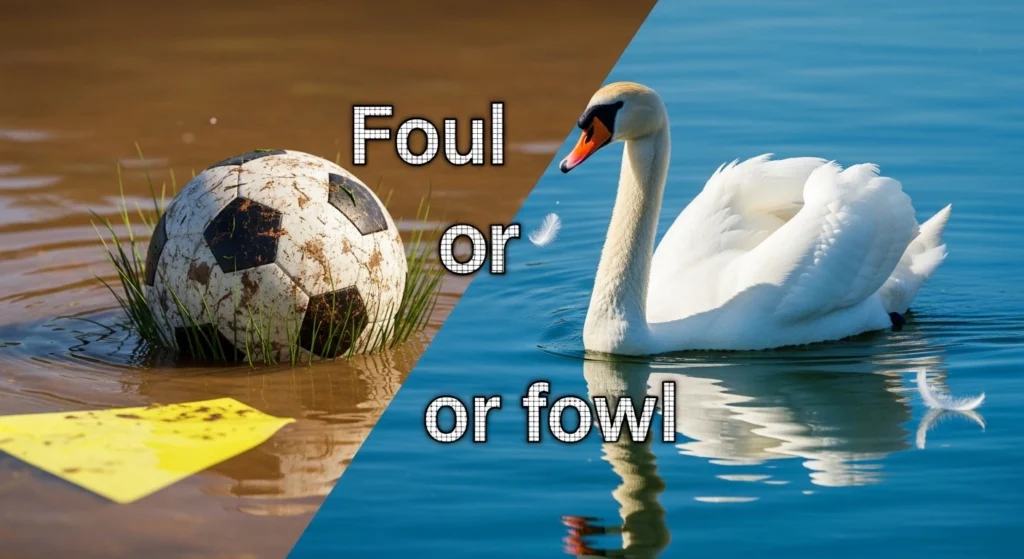
English language is full of words that look or sound similar but carry completely different meanings. One such classic confusion happens when people mix up two commonly mistaken terms in writing, speech, and even exams.
One refers to something negative like misconduct or wrongdoing, while the other belongs to the world of birds and poultry.
Because of their similar spelling and pronunciation, learners often struggle to distinguish them correctly, leading to communication errors and sometimes even humorous misunderstandings.
This topic is especially important for students, competitive exam aspirants, writers, and professionals who want accuracy in language use.
A small spelling mistake can completely change meaning and tone, which is why understanding these terms clearly improves both written and spoken English.
H2: Core Meaning and Fundamental Difference
At the most basic level, these two words belong to entirely different semantic domains:
- One is used to describe something improper, illegal, or against rules
- The other refers to birds, especially domestic poultry like chickens and ducks
Despite their similar structure, they are not interchangeable in any context.
In simple terms:
- One belongs to behavior, sports, and law-related language
- The other belongs to biology, food industry, and farming
Understanding this separation is the foundation of correct usage.
H2: Etymology and Pronunciation Insight
Both words come from different linguistic roots.
- The term related to wrongdoing comes from Old French “fouler” meaning to trample or violate.
- The bird-related term comes from Old English “fugol”, meaning bird.
Pronunciation:
- The first is pronounced like “fohl” (rhymes with coal in some accents)
- The second is pronounced like “fool” or “fowl” depending on accent
This phonetic closeness is the primary reason for confusion among English learners.
H2: Understanding “Foul” in English Usage
This word has multiple meanings depending on context:
1. Sports context
Used in games like football, cricket, and basketball:
- Breaking rules is called a foul
- Example: A player committed a foul in the penalty area
2. Adjective meaning
It describes something unpleasant or offensive:
- foul smell (bad odor)
- foul language (abusive speech)
- foul weather (stormy conditions)
3. Legal and moral context
It can refer to unethical or unlawful actions:
- foul play in investigations
- foul intentions in crime cases
Key idea:
It always carries a negative or undesirable meaning.
H2: Understanding “Fowl” in Biology and Daily Life
This term belongs to the animal kingdom and is widely used in agriculture and food industries.
Types of fowl include:
- Chicken
- Duck
- Turkey
- Goose
Common uses:
- Poultry farming
- Meat production
- Culinary recipes
Example usage:
- Roast chicken is a popular fowl dish
- Duck farming is a profitable business
In Urdu context, it is often referred to as “murghi ya parindon ki qisam”.
H2: Why People Confuse These Words
The confusion happens due to:
- Similar spelling structure
- Nearly identical pronunciation in fast speech
- Lack of contextual understanding
- Weak vocabulary foundation
- Autocorrect or typing errors
In exams and professional writing, this mistake can reduce credibility significantly.
H2: Real-Life Examples for Clear Understanding
Correct usage examples:
- The referee stopped the match due to a foul.
- The kitchen had a foul smell after the gas leak.
- Farmers raise fowl for meat and eggs.
- Wild fowl migrate during winter seasons.
Incorrect usage examples:
- He committed a fowl in the match ❌
- Chicken smell was foul in the farm ❌ (context mixing issue)
H2: Comparison Table for Quick Clarity
FeatureWord related to wrongdoingWord related to birdsMeaningRule violation, bad smell, offensiveDomestic or wild birdsCategorySports, law, behaviorBiology, farming, foodToneNegativeNeutralExamplesfoul play, foul languagechicken, duck, turkeyUsage arealegal, social, sportsagriculture, cuisineEmotional senseunpleasant, negativeneutral, natural
H2: Contextual Usage in Different Fields
1. Sports
Used frequently in cricket, football, hockey:
- Handball foul
- Technical foul
2. Law and Investigation
- foul play in murder cases
- suspicion of wrongdoing
3. Agriculture
- poultry farming
- egg production systems
4. Culinary industry
- roasted poultry dishes
- grilled chicken meals
5. Environmental studies
- migratory bird species
- wild bird conservation
H2: Practical Tips to Avoid Confusion
To avoid mistakes in writing:
- Focus on meaning before spelling
- Learn through context-based sentences
- Practice homophones regularly
- Use vocabulary flashcards
- Read newspapers and articles
- Double-check spelling in formal writing
Urdu tip: “lafz ko uske ma’ni ke sath yaad karein, sirf spelling par depend na karein.”
H2: Importance in Communication and Learning
Correct usage is important because:
- It improves academic writing quality
- Enhances professional credibility
- Reduces miscommunication
- Strengthens vocabulary skills
- Helps in competitive exams like IELTS, CSS, TOEFL
Language precision is not just grammar—it reflects clarity of thought.
H2: Related Words and Semantic Connections
Related to foul:
- misconduct
- violation
- offensive
- dirty
- improper
- injustice
Related to fowl:
- poultry
- bird
- chicken
- duck
- goose
- turkey
These LSI keywords help build better understanding and SEO relevance.
FAQs
1. What is the main difference between these two words?
One refers to wrongdoing or something unpleasant, while the other refers to birds used in farming and food.
2. Are they pronounced the same?
They sound similar in casual speech but are not identical in pronunciation.
3. Can they be used interchangeably?
No, their meanings are completely different.
4. Is one used in sports?
Yes, the term related to wrongdoing is commonly used in sports rules.
5. Which word is related to food?
The bird-related term is used in cooking and poultry dishes.
6. Why do students confuse them?
Because of similar spelling and pronunciation.
7. Is this a grammar issue or vocabulary issue?
It is mainly a vocabulary and spelling confusion issue.
8. How can I remember the difference easily?
Think: wrongdoing = rules; birds = food/farm animals.
Conclusion
Understanding similar-looking English words is essential for clear and effective communication. One term represents violations, errors, or unpleasant conditions, while the other belongs entirely to birds and poultry farming. Though they appear similar, their meanings are worlds apart.
Mastering such distinctions improves writing accuracy, spoken fluency, and overall language confidence. Whether you are a student, professional, or language learner, paying attention to context is the key to avoiding mistakes and communicating with precision.