
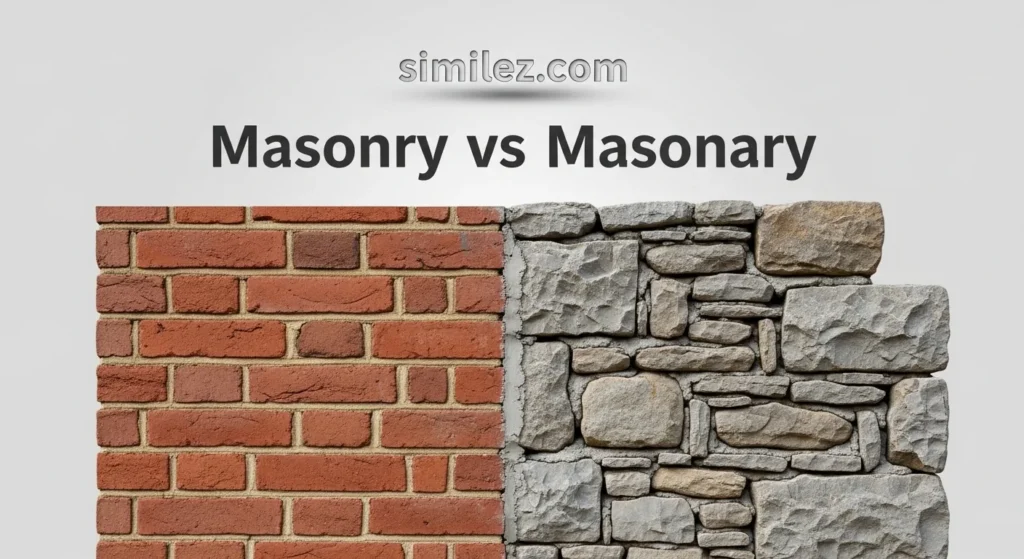
Stand at the edge of a construction site early in the morning and you will hear it before you see it the rhythmic clink of tools, the scrape of stone being adjusted, and the quiet concentration of workers shaping raw material into structure.
Walls slowly rise from nothing, forming homes, offices, and entire cities. Yet, while the physical craft is ancient, even the word used to describe it is often misunderstood.
Many people search for “masonary” instead of the correct term “masonry,” unaware that a simple spelling error can distort meaning, affect learning, and even impact professional communication.
This topic may look minor at first glance, but it sits at the intersection of language precision, construction knowledge, and digital search behavior.
Understanding the difference is not just about spelling it’s about clarity in communication, especially in academic writing, professional documentation, and online content.
In this article, we break down what masonry actually means, why “masonary” is incorrect, how the confusion arises, and what this reveals about language and technical accuracy in real life.
What Does “Masonry” Actually Mean?
Masonry refers to the construction technique of building structures using individual units like bricks, stones, or concrete blocks, typically bound together with mortar. It is one of the oldest construction methods in human history, used in everything from ancient pyramids to modern residential buildings.
At its core, masonry is not just physical work it is structural intelligence. Each brick or stone is placed with intention, alignment, and load-bearing logic. The strength of a masonry structure depends on precision, material quality, and craftsmanship.
Key Concept Breakdown
- Materials used: Brick, stone, concrete blocks
- Binding agent: Mortar (cement mixture)
- Purpose: Strength, durability, and architectural design
In real life, when you see a beautifully built wall, arches, or even decorative facades, you are witnessing masonry in action. It is both functional and artistic. The word itself is deeply tied to the profession of a mason, the skilled worker who performs this craft. Understanding this meaning makes it easier to see why spelling accuracy matters—because it represents a specialized technical field, not just a casual word.
Why “Masonary” Is Incorrect
“Masonary” is a common misspelling of the word masonry. The mistake usually happens due to pronunciation habits or unfamiliarity with technical spelling.
People often assume the word follows a simple phonetic structure: mason + ary = masonary. However, English does not always work that way, especially with technical or historical terms.
The correct spelling—masonry—drops the extra “a” and follows the proper linguistic formation derived from “mason.”
Why the Error Happens
- Phonetic spelling confusion (writing what is heard)
- Lack of exposure to technical construction vocabulary
- Informal digital writing habits
- Auto-correction errors not being noticed
This mistake may seem harmless, but in professional environments it can reduce credibility. For example, a contractor submitting a proposal or a student writing an engineering report using “masonary” may appear careless or under-informed.
Language precision is especially important in technical fields. One extra letter can signal a lack of attention to detail, which ironically is the opposite of what masonry as a craft demands.
Origins of the Word “Masonry”
The word “masonry” has deep historical roots. It originates from the Old French word “maçonnerie,” which itself comes from “maçon,” meaning stoneworker or builder. Over time, the term entered English and evolved into its current form.
This evolution reflects how language adapts alongside human development. As construction techniques advanced, the vocabulary used to describe them became more standardized.
Historical Insight
Masonry was not just construction—it was a respected craft guild system in medieval Europe. Masons were highly skilled workers responsible for cathedrals, castles, and monumental architecture. Their work required geometry, physics, and artistry long before modern engineering existed.
This historical depth is why the word carries technical weight today. It is not slang or casual terminology; it is a professional discipline with centuries of tradition behind it.
Understanding its origin helps explain why spelling matters. The word is tied to identity, profession, and historical craftsmanship—not just bricks and mortar.
Types of Masonry in Construction
Masonry is not a single method but a category of construction techniques. Each type serves different structural and aesthetic purposes.
Brick Masonry
Brick masonry is the most common form, using fired clay bricks. It is widely used in residential buildings due to its affordability and durability.
Stone Masonry
Stone masonry uses natural stones and is often seen in historical monuments or high-end architecture. It is strong, durable, and visually impressive.
Concrete Block Masonry
This modern form uses large concrete blocks, making construction faster and more cost-effective for commercial buildings.
Each type reflects a balance between strength, cost, and design preference. In modern construction, engineers choose the type based on load requirements and environmental conditions.
Masonry, in all its forms, remains essential because it combines structural integrity with long-term durability. Even with modern steel and glass buildings, masonry still plays a foundational role in global construction.
Masonry vs Masonary in Digital Search Behavior
Interestingly, “masonary” is often searched more frequently online than “masonry” in some regions. This highlights how spelling errors can become embedded in digital behavior.
Search engines are smart enough to correct these mistakes, but the pattern reveals something important: many users learn terms through hearing rather than reading.
SEO Implications
- “Masonary” is a high-volume misspelling keyword
- “Masonry” is the correct technical keyword
- Content creators often target both for visibility
From a digital marketing perspective, ignoring misspellings means losing traffic. However, overusing incorrect spelling in professional content can harm authority.
The balance is strategic: educate users while capturing search intent. This is why high-quality content often explains both terms rather than ignoring the incorrect version.
The Role of a Mason: Skill Behind the Structure
A mason is not just a laborer; they are skilled craftsmen responsible for precision construction work. Their job involves measurement, alignment, cutting materials, and ensuring structural stability.
Skills Required
- Reading architectural drawings
- Understanding load distribution
- Precision in measurement
- Material handling and finishing
A skilled mason can turn raw bricks into aesthetically pleasing and structurally sound walls. This requires experience, patience, and physical accuracy.
In many cultures, masonry is passed down through apprenticeship. It is a profession built on hands-on learning rather than theory alone. This makes it both traditional and highly practical.
Without masons, the concept of masonry would remain theoretical. They are the human foundation of every structure we see.
Tools and Techniques in Masonry Work
Masonry work relies on a combination of simple and advanced tools. Despite technological advancements, many traditional tools remain in use today.
Common Tools
- Trowel
- Spirit level
- Hammer
- Chisel
- Plumb line
Techniques Used
- Proper mortar mixing
- Layer alignment (bonding patterns)
- Curing for strength
- Structural reinforcement
Each tool and technique contributes to the final strength of the structure. Even a minor error in alignment can affect the integrity of an entire wall.
Modern construction may include machinery, but the core principles of masonry remain unchanged: precision, patience, and planning.
Masonry in Architecture and Design
Masonry is not only functional—it is also aesthetic. Architects use it to create texture, depth, and visual identity in buildings.
From ancient temples to modern facades, masonry has shaped architectural identity across cultures.
Design Applications
- Decorative walls
- Arches and columns
- Retaining structures
- Heritage restoration
Masonry adds a sense of permanence. Unlike glass or steel, it communicates stability and tradition. That is why it is often used in government buildings, religious structures, and cultural monuments.
It bridges the gap between engineering and art, making it one of the most versatile construction methods.
Common Misunderstandings About Masonry
Many people misunderstand masonry as outdated or purely manual labor. In reality, it is a highly technical field.
Misconception 1: “It is just brick laying”
In truth, masonry requires engineering knowledge, especially in load-bearing structures.
Misconception 2: “Modern buildings don’t use masonry”
Even modern skyscrapers use masonry for walls, facades, and reinforcement systems.
Misconception 3: “It is easy work”
Masonry demands precision, physical strength, and technical understanding.
These misconceptions reduce appreciation for the craft. In reality, masonry is a blend of science and skill that remains essential in construction industries worldwide.
Real-Life Scenario: A Construction Site Story
Imagine a residential building under construction. The architect has designed a complex structure with curved walls and reinforced sections. The mason arrives early, studies the layout, and begins laying the first row of bricks.
A small misalignment at the base could affect the entire structure above. The mason carefully adjusts each brick, checks the level repeatedly, and ensures consistency.
Weeks later, the structure stands complete. To an outsider, it looks like a simple building. But to those who understand, it is the result of precision masonry work.
Now imagine if documentation or communication had the wrong term—“masonary”—it might seem minor, but it reflects a lack of technical awareness in the same field that demands perfection.
Importance of Language Accuracy in Technical Fields
In technical disciplines like construction, engineering, and law, language precision is critical. A spelling mistake is not just a typo—it can signal misunderstanding.
“Masonry” is a defined professional term. Using “masonary” may not change the physical work, but it affects communication clarity in contracts, reports, and academic writing.
Why it matters
- Professional credibility
- Clear documentation
- Accurate knowledge transfer
- Avoiding confusion in technical communication
Precision in language mirrors precision in work. Just as a mason ensures every brick is aligned, professionals must ensure every term is correctly used.
Practical Lessons from the Concept
The difference between masonry and masonary teaches more than spelling—it highlights discipline in detail.
Key Lessons
- Small errors can change perception
- Technical fields require accuracy in language
- Understanding origin improves retention
- Professional communication reflects knowledge depth
Whether you are a student, writer, engineer, or contractor, attention to detail builds credibility. In both construction and communication, precision is not optional—it is foundational.
Final Reflection
The difference between “masonry” and “masonary” may appear minor, but it represents a larger truth: accuracy defines professionalism. Masonry itself is a discipline built on exact placement, structural logic, and craftsmanship. The same expectation applies to language used to describe it.
When people understand the correct term, they are not just correcting spelling—they are aligning with a field that values precision in every form. From ancient stone structures to modern buildings, masonry has always depended on careful execution. Language should reflect that same care.