
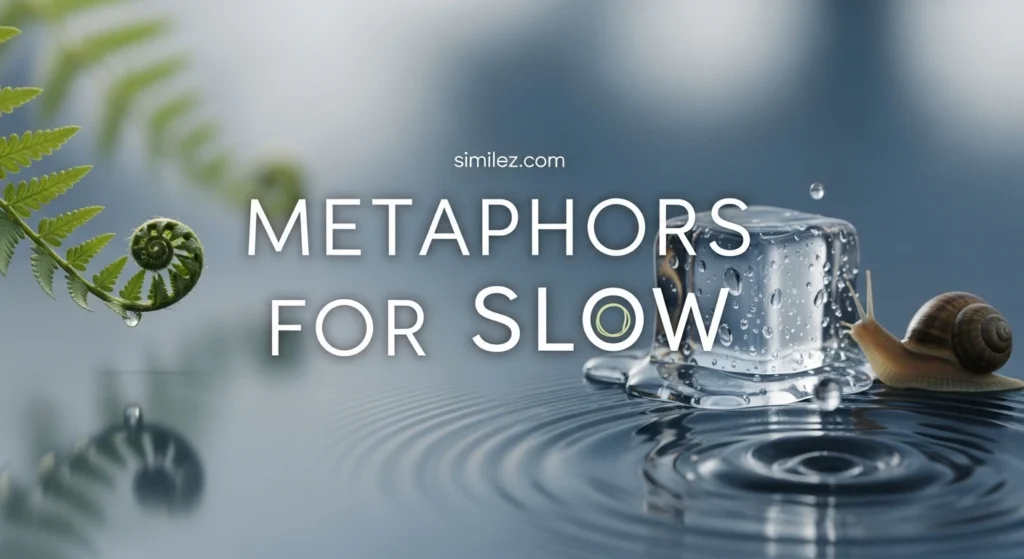
The old clock on the wall ticked like a tired traveler, each second dragging its feet. In that quiet moment, Metaphors for Slow come alive, helping us describe time, movement, and emotion in a deeper way. We often struggle to express slowness without sounding dull, but metaphors turn it into something vivid, poetic, and meaningful.
In simple terms, metaphors for slow compare slowness to something familiar. This makes your writing more engaging and easier to imagine. Whether you are writing stories, captions, or essays, these metaphors can add color and emotion.
Let’s explore how to use them effectively.
Metaphors for Slow in Everyday Language
We use slow-related expressions daily without thinking. Phrases like “moving like a snail” are common. However, metaphors go beyond clichés.
For example, saying “time crawled like a shadow at dusk” feels more emotional. It paints a picture in the reader’s mind.
Therefore, metaphors help turn simple descriptions into memorable moments.
Why Metaphors for Slow Make Writing Powerful
Metaphors create imagery. They make readers feel the pace instead of just understanding it.
For instance, instead of saying “the day was slow,” you could say, “the day stretched like melted wax.” This gives a sensory experience.
As a result, your writing becomes more immersive and expressive.
Metaphors for Slow That Describe Time
Time often feels slow in certain situations. Metaphors can capture that feeling beautifully.
- Time crept like a cautious cat
- The hours dragged like heavy chains
- Minutes dripped like a leaking tap
Each example adds emotion. It shows frustration, boredom, or even peace.
Metaphors for Slow in Nature
Nature offers rich inspiration for slow metaphors.
Think about how slowly seasons change or how glaciers move. For example:
- The river moved like a lazy whisper
- Clouds drifted like forgotten thoughts
- The sun sank like a tired sigh
These metaphors feel calm and poetic.
Metaphors for Slow in Human Behavior
People often move or react slowly. Metaphors can describe this in a creative way.
- He walked like a shadow in no hurry
- She spoke like her words were made of stone
- He worked like a clock running out of energy
Such comparisons add personality to characters.
Metaphors for Slow in Emotions
Emotions can also feel slow. Sadness, for example, often lingers.
- Grief settled like dust in an empty room
- Joy arrived like a shy sunrise
- Anger cooled like fading embers
These metaphors help express inner feelings clearly.
Metaphors for Slow in Storytelling
In storytelling, pacing matters. Slow moments can build tension or emotion.
For example, a suspense scene may feel slower to increase drama. You might write:
“The silence stretched like a tight rope.”
This keeps readers engaged.
Metaphors for Slow in Poetry
Poetry thrives on metaphors. Slow imagery often creates calm or sadness.
A poetic line could be:
“The night unfolded like a slow breath.”
This adds rhythm and depth to the writing.
Metaphors for Slow in Daily Conversations
You can use metaphors in casual speech too.
Instead of saying “I’m tired,” try:
“I’m moving like a drained battery.”
It sounds more expressive and relatable.
Metaphors for Slow in Social Media Writing
Short content also benefits from metaphors.
For example:
“Monday is moving like frozen time.”
This kind of line grabs attention quickly.
Therefore, metaphors improve engagement even in short posts.
Metaphors for Slow in Creative Writing Practice
Practicing metaphors helps improve creativity.
Try observing everyday things. Notice how slowly something moves. Then compare it creatively.
For instance, watching traffic could inspire:
“Cars crawled like ants carrying invisible burdens.”
Practice builds skill.
Detailed Examples of Metaphors for Slow
Example 1: “Slow as melting ice”
Meaning: Something is gradually progressing, almost unnoticeably.
Example sentence: The meeting moved as slow as melting ice.
Alternative expressions: Like dripping wax, like fading daylight
Sensory detail: You can almost feel the cold stillness and patience.
Example 2: “Slow like a sleepy river”
Meaning: Calm, gentle, and unhurried movement.
Example sentence: The afternoon passed like a sleepy river.
Alternative expressions: Like drifting clouds, like soft wind
Emotional tone: Peaceful and soothing.
Example 3: “Slow as a rusted machine”
Meaning: Struggling and inefficient slowness.
Example sentence: The system worked like a rusted machine.
Alternative expressions: Like a broken clock, like heavy gears
Emotional detail: Frustration and impatience.
Metaphors for Slow vs Similes: What’s the Difference?
Metaphors say something is something else. Similes use “like” or “as.”
For example:
- Metaphor: “Time is a crawling shadow.”
- Simile: “Time moves like a crawling shadow.”
Both work well. However, metaphors feel stronger and more direct.
Interactive Exercises for Metaphors for Slow
Try these fun exercises to improve your skills:
1. Observation Exercise
Look around you. Find something slow. Write a metaphor for it.
2. Emotion Exercise
Think about a slow moment in your life. Describe it using a metaphor.
3. Rewrite Exercise
Take a simple sentence like “The line was slow.”
Rewrite it using a metaphor.
For example: “The line stretched like an endless road.”
Bonus Tips for Using Metaphors for Slow
- Keep it simple. Avoid confusing comparisons.
- Match the tone. Calm metaphors suit peaceful scenes.
- Use sensory details. Think about sight, sound, and feeling.
- Avoid overuse. Too many metaphors can overwhelm readers.
- Be original. Try new and creative ideas.
These tips help your writing stay clear and engaging.
Common Mistakes When Using Metaphors for Slow
Some writers make metaphors too complex.
For example, mixing too many ideas can confuse readers. Also, using clichés reduces impact.
Instead, aim for fresh and clear comparisons.
Cultural and Literary Touches in Metaphors for Slow
Many cultures use slow imagery in storytelling.
For example, old tales often describe time as flowing rivers or turning wheels. These ideas connect deeply with readers.
You can use similar inspirations in your writing.
Conclusion
Metaphors for slow are more than just writing tools. They help you express time, emotion, and movement in a vivid way. By using simple comparisons, you can turn ordinary sentences into powerful imagery.
Remember to keep your metaphors clear, creative, and meaningful. Practice often and observe the world around you. Slowness is everywhere, from drifting clouds to quiet moments in life.
FAQs
What are metaphors for slow?
Metaphors for slow are creative comparisons that describe slowness using vivid imagery. They make writing more engaging and expressive.
Why should I use metaphors for slow in writing?
They add depth and emotion. They also help readers visualize and feel the pace instead of just reading about it.
Can I use metaphors for slow in daily conversation?
Yes, you can. They make your speech more interesting and relatable.
How can I create my own metaphors for slow?
Observe slow movements or moments. Then compare them to something familiar in a creative way.
Are metaphors better than similes for describing slow?
Both work well. However, metaphors often feel stronger because they make direct comparisons.