
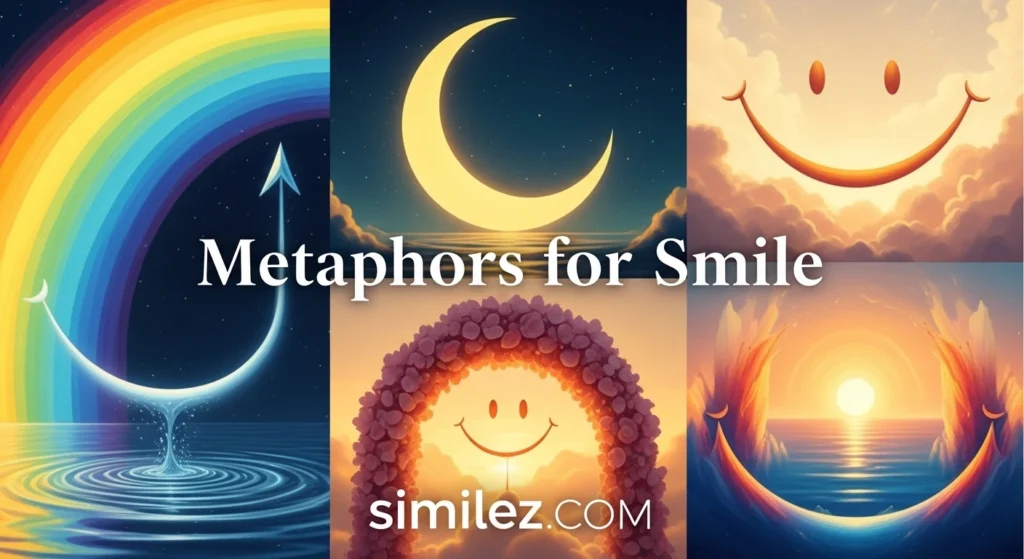
Imagine walking into a room filled with laughter. A friend’s bright grin catches your eye, and suddenly, the world feels lighter. That’s the magic of a smile.Metaphors for smile capture more than just the curve of lips—they reveal emotions, moods, and connections that words alone cannot express.Using these metaphors can enrich your writing, enhance communication, and help convey feelings vividly.
A metaphor is a figure of speech where one thing is described as if it were another. In the case of smiles, metaphors help us illustrate emotions, intentions, and beauty. For example, calling a smile “sunlight breaking through clouds” conveys warmth, joy, and hope without directly stating it. Understanding these metaphors allows writers and speakers to paint vivid emotional pictures.
The Power of a Smile in Communication
Smiles speak universally. A warm smile can break barriers, ease tension, and build trust. Metaphors for smile enhance this impact by giving words life. When you describe a smile metaphorically, you don’t just show someone’s emotion—you let readers feel it.
Metaphors for Smile in Literature
Authors often use metaphors for smile to reveal character emotions or set a scene. Jane Austen’s novels, for example, describe smiles as windows into the soul, showing subtle emotions. Literary metaphors create depth and invite readers to interpret feelings.
Smiles as Sunshine: A Common Metaphor
A smile compared to sunshine is one of the most popular metaphors. It conveys warmth, happiness, and illumination. Example: “Her smile was sunshine after a stormy day.” Alternative expressions: “a ray of light” or “morning sun on a cold day.” This metaphor evokes sensory warmth and emotional comfort.
Smiles as Flowers: Beauty and Freshness
Comparing a smile to a flower highlights beauty and freshness. Example: “His smile bloomed like a daisy in spring.” Alternatives: “a budding rose” or “a delicate lily.” This metaphor emphasizes delicate charm and natural grace.
Smiles as Stars: Magic and Mystery
Smiles can also be likened to stars. They sparkle, guide, and captivate. Example: “Her smile was a cluster of stars on a dark night.” Alternatives: “twinkling lights” or “glimmers of hope.” This metaphor adds a poetic and mystical quality.
Smiles as Music: Harmony and Joy
Music metaphors suggest rhythm and harmony. Example: “His smile played a gentle tune in her heart.” Alternatives: “melody of laughter” or “soft harmonies.” This metaphor emphasizes emotional resonance and delight.
Smiles as Fire: Passion and Energy
Fire metaphors convey warmth and intensity. Example: “Her smile ignited the room like a spark in the dark.” Alternatives: “flames of excitement” or “glow of desire.” This metaphor captures energy and emotional intensity.
Smiles as Water: Calm and Refreshing
Water metaphors highlight calmness and renewal. Example: “His smile was a clear stream, soothing and gentle.” Alternatives: “a refreshing waterfall” or “tranquil lake.” This metaphor evokes serenity and rejuvenation.
Smiles as Windows: Insight and Connection
Describing a smile as a window gives readers insight into personality or emotion. Example: “Her smile was a window into her hopeful heart.” Alternatives: “a door to her soul” or “a mirror of her happiness.” This metaphor conveys transparency and openness.
Smiles as Currency: Value and Influence
Smiles as currency emphasize social power and influence. Example: “His smile bought trust like gold in the market.” Alternatives: “a priceless coin” or “riches of charm.” This metaphor highlights how smiles can create connections.
Smiles as Gifts: Thoughtfulness and Kindness
Comparing a smile to a gift emphasizes generosity and thoughtfulness. Example: “Her smile was a gift I never expected.” Alternatives: “a present of warmth” or “a token of care.” This metaphor reinforces emotional value.
Smiles as Bridges: Connection and Unity
Smiles can bridge divides and foster understanding. Example: “His smile built a bridge over the tension.” Alternatives: “a connecting beam” or “a handshake of the heart.” This metaphor illustrates relational impact.
Smiles as Candles: Light in Darkness
Candles symbolize hope and guidance. Example: “Her smile was a candle in my dark day.” Alternatives: “a flickering flame” or “tiny beacon.” This metaphor evokes comfort and illumination.
Smiles as Music Notes: Playfulness and Rhythm
Short, playful smiles can be likened to musical notes. Example: “Her small smile was like a gentle piano note.” Alternatives: “soft chime” or “light rhythm.” This metaphor captures subtleties and charm.
Interactive Exercises to Explore Smile Metaphors
- Write Your Own Metaphors: Take a friend’s smile and describe it using at least three different metaphors. Focus on senses and emotions.
- Story Integration: Incorporate one smile metaphor in a short story. Observe how it affects the scene and character relationships.
- Social Media Practice: Use a metaphor for smile in a caption or post. Monitor engagement and reader response.
Bonus Tips: Experiment with combining metaphors, like “Her smile was sunshine that danced like music.” This adds richness to writing. In daily communication, notice metaphoric qualities in smiles to describe emotions more vividly.
Using Metaphors for Smile in Writing
Metaphors for smile can enhance poetry, fiction, and personal essays. For example, “His smile was a warm quilt on a winter morning” creates comfort imagery. Transition words like however, for example, and therefore help integrate metaphors naturally into your writing.
Cultural Significance of Smiles
Different cultures interpret smiles uniquely. In Japan, a small, polite smile conveys respect, while in Brazil, broad smiles show warmth. Using metaphors can translate these cultural nuances, helping global readers connect emotionally.
Tips for Choosing the Right Smile Metaphor
- Consider Emotion: Match the metaphor to the underlying feeling. Joyful, shy, or mischievous smiles need different imagery.
- Use Sensory Details: Think of sight, touch, sound, and temperature.
- Keep Context in Mind: Ensure the metaphor aligns with the scene or narrative.
Common Mistakes to Avoid
- Overcomplicating Metaphors: Keep them simple and relatable.
- Overuse: Too many metaphors can confuse readers.
- Ignoring Tone: Match metaphors to the overall mood.
Real-Life Examples of Smile Metaphors
- Romantic Context: “Her smile was a lighthouse guiding him through stormy emotions.” Shows guidance and attraction.
- Friendship: “His smile was a warm blanket on a chilly evening.” Evokes comfort and trust.
- Humor: “Her mischievous grin was a sparkler on New Year’s Eve.” Conveys excitement and playfulness.
Exercises for Daily Practice
- Observe people’s smiles in public spaces and describe them metaphorically.
- Rewrite your journal entries adding metaphors for any smiles mentioned.
- Practice blending metaphors to enhance creativity.
Conclusion
Metaphors for smile enrich our understanding of human emotions, enhance communication, and elevate writing. By exploring various comparisons—sunshine, flowers, stars, music, or bridges—you can convey depth, warmth, and emotion effortlessly.
Practice creating your own metaphors and using them in writing, storytelling, or daily interactions. A single well-crafted metaphor can turn a simple smile into a vivid, memorable image. Let your words illuminate like the smiles they describe.
FAQs
What is a metaphor for a smile?
A metaphor for a smile describes it using imagery or comparisons, like “sunshine” or “a blooming flower,” to express emotion vividly.
How can I create my own smile metaphors?
Observe the smile, consider emotions, and compare it to familiar objects, sensations, or natural phenomena.
Why are smile metaphors useful in writing?
They help convey emotions vividly, create memorable imagery, and connect readers to characters or scenes emotionally.
Can metaphors for smile be used in daily conversation?
Yes, describing someone’s smile metaphorically can enhance storytelling, compliments, or emotional expression.
What are some examples of smile metaphors?
Examples include: “Her smile was sunshine,” “His grin bloomed like a rose,” and “A mischievous sparkle like fireworks in her smile.”