
The salty breeze, the rhythmic crash of waves, and the golden sand underfoot—these sensations perfectly capture the magic of the coast. Using metaphors for the beach can transform simple descriptions into vivid, memorable imagery. Metaphors breathe life into writing, helping readers feel the sun, hear the surf, and smell the ocean, all through words.
Understanding and using metaphors for the beach is more than a literary exercise. They can enrich storytelling, social media captions, poetry, and even everyday conversations. This article explores the concept in depth, offers practical examples, and provides exercises to help you master the art of beach metaphors.
Understanding Metaphors for the Beach
Metaphors describe one thing by comparing it to another, without using “like” or “as.” For instance, saying “the beach is a golden quilt” immediately conveys texture, color, and warmth. Such comparisons create a sensory experience that sticks with the reader.
Beach metaphors are particularly effective because the coast evokes strong emotions. Whether it represents freedom, escape, nostalgia, or adventure, a well-chosen metaphor can capture these feelings instantly.
Why Using Metaphors for the Beach Matters
Metaphors make writing more engaging. Instead of simply stating facts, they paint pictures in readers’ minds. For example, “waves whispered secrets to the shore” is more evocative than “the waves hit the shore.” Metaphors spark imagination and emotional connection, which is key for storytelling, marketing, and personal expression.
Sensory Metaphors for the Beach
One powerful way to use metaphors is to appeal to the senses. Describe the sight, sound, touch, taste, and smell of the beach in creative ways. For example, the sea could be “a shimmering mirror reflecting the sun’s joy,” while sand might be “a warm blanket under your toes.”
Emotional Metaphors for the Beach
The beach often evokes strong emotions—peace, excitement, or melancholy. Metaphors can capture these feelings succinctly.
Saying “the shore cradled our memories like a mother’s arms” instantly conveys comfort and nostalgia.
Metaphors for Waves and Water
Waves are endlessly dynamic, making them perfect for metaphorical expression.
You might describe them as “silver dancers pirouetting across the horizon” or “liquid ribbons weaving tales of the deep.” Such metaphors give life and personality to the ocean.
Sand as a Metaphorical Canvas
Sand is versatile in writing. It can symbolize impermanence, warmth, or creativity. Phrases like “the beach is a painter’s blank canvas” or “the grains of sand are time’s tiny footprints” evoke reflection and wonder.
The Sun and Sky in Beach Metaphors
The sun and sky offer endless metaphorical possibilities. The sun could be “a golden guardian watching over the waves,” while the sky might be “an endless canvas streaked with dreams.” These metaphors evoke awe and inspiration.
Shells and Natural Treasures as Metaphors
Beachcombing often yields shells, driftwood, or sea glass. These items can symbolize memories, discoveries, or hidden beauty. For example, “each shell is a whispered secret from the ocean” or “sea glass gleams like shattered dreams turned to jewels.”
Metaphors for Beach Adventures
Beaches are synonymous with exploration and freedom. Phrases like “our footsteps wrote stories in the sand” or “the tide invited us to dance with destiny” convey a sense of adventure. These metaphors encourage imagination and emotional engagement.
Metaphors for Serenity at the Beach
Calm moments on the beach are ideal for metaphors of peace. You could say, “the waves hummed lullabies to the soul” or “the shore was a quiet sanctuary for wandering minds.” Such imagery conveys tranquility and introspection.
Literary and Cultural References in Beach Metaphors
Incorporating cultural or literary references enriches metaphors. Shakespeare’s sea imagery, Hemingway’s coastal scenes, or references to tropical paradises can add depth.
For instance, “the ocean’s call was as haunting as Odysseus’ longing for Ithaca” combines narrative resonance with visual imagery.
Mini Storytelling with Beach Metaphors
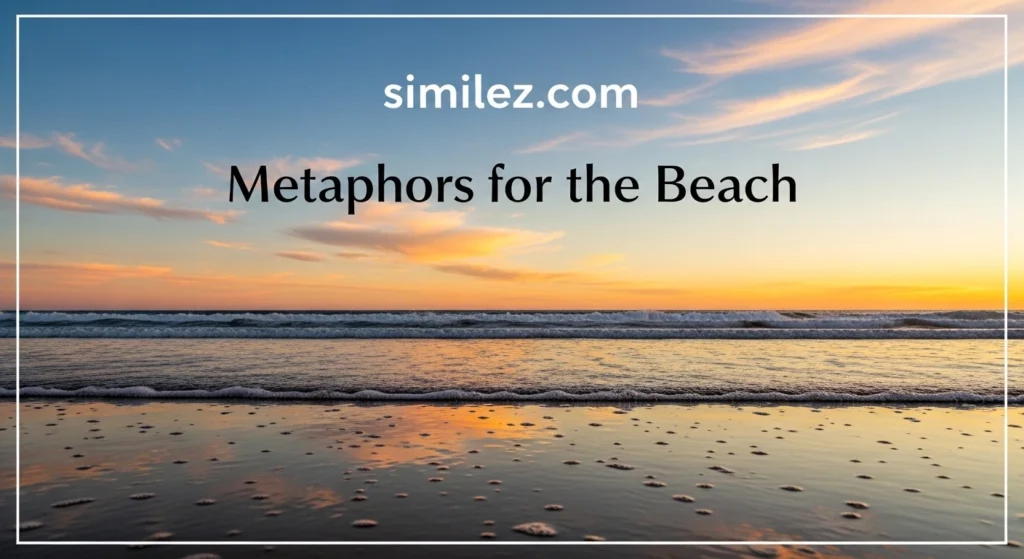
Imagine walking along a deserted beach at sunset. The sky blazes with orange and pink, and the tide laps gently at your feet. You might describe it as, “The horizon swallowed the sun like a hungry poet devouring inspiration.” This small story shows how metaphors make experiences vivid.
Practical Examples of Beach Metaphors
Example 1: Waves as Life’s Challenges
Metaphor: Waves are hurdles we must navigate. Scenario:
A young adult overcoming obstacles. Alternative Expression: “
The tide pulled at her resolve, yet she danced upon each crest.” Sensory Details:
Include the salt spray and the rhythm of crashing waves to enhance imagery.
Example 2: Sand as Time
Metaphor: Each grain represents fleeting moments. Scenario: Reflecting on memories. Alternative Expression: “Moments slipped through her fingers like sun-warmed sand.” Emotional Details: Evokes nostalgia and gentle melancholy.
Example 3: Shells as Hidden Treasures
Metaphor: Shells symbolize small joys or discoveries. Scenario: Collecting shells during a seaside walk. Alternative Expression: “Each shell held a whisper of joy, tucked away by the ocean.” Sensory Details: The textures, colors, and the sound of shells clicking enhance realism.
Exercises to Practice Beach Metaphors
- Visual Exercise: Observe a real beach or watch a video. Write five metaphors for the sand, waves, and sky.
- Emotional Exercise: Reflect on a memory tied to the beach. Turn it into a single metaphorical sentence.
- Story Exercise: Create a short story where the beach acts as a metaphor for a personal journey.
Bonus Tips for Using Beach Metaphors
- Writing: Use them to set mood and tone.
- Social Media: Capture attention with vivid imagery in captions.
- Daily Communication: Make your messages more poetic and memorable.
Inspiring Quotes as Metaphor Models
Many authors have beautifully used beach imagery. For example:
- Virginia Woolf: “The sea is a continual miracle.”
- Jack Kerouac: “The ocean is a canvas of freedom.”
- Pablo Neruda: “You can cut all the flowers but you cannot keep spring from coming.”
These quotes serve as templates for creating your own metaphors.
Combining Metaphors for Depth
Sometimes, layering metaphors enhances impact. For example, “The beach was a golden quilt, and the waves were silver dancers performing upon it.” Combining visuals and movement adds richness.
Avoiding Clichés in Beach Metaphors
Originality matters. Instead of “waves crash like thunder,” try “waves whispered secrets, each crest a verse of ancient tales.” Specificity and sensory detail make metaphors memorable.
Applying Beach Metaphors in Different Genres
- Poetry: Emphasize rhythm and emotion.
- Short Stories: Use as scene setting or internal reflection.
- Marketing Content: Evoke a lifestyle or experience.
Enhancing Creativity Through Metaphors
Regularly practicing metaphors sharpens observation and imagination. Try describing daily objects as if they were elements of the beach. This expands creativity and expression.
Conclusion
Metaphors for the beach enrich writing, storytelling, and everyday language. They transform ordinary descriptions into sensory experiences, evoke emotion, and spark imagination.
By practicing observation, exploring emotion, and experimenting with language, anyone can master beach metaphors. So grab a notebook, watch the waves, and start turning sand, sea, and sky into unforgettable imagery.
FAQs
What are some simple metaphors for the beach?
Simple examples include “the beach is a golden blanket” or “waves are liquid dancers.” These evoke sensory experiences quickly.
How can I create unique beach metaphors?
Focus on specific sensory details, emotions, or personal experiences. Avoid clichés and combine imagery for depth.
Can beach metaphors be used in everyday conversation?
Yes! Phrases like “this day feels like waves calming the mind” make casual language more expressive.
How do I practice writing beach metaphors?
Observe the beach, reflect on emotions, and write short sentences using comparisons. Exercises and journaling help.
Why are beach metaphors effective in storytelling?
They evoke strong emotions, create vivid imagery, and connect readers to experiences, making narratives more immersive.