
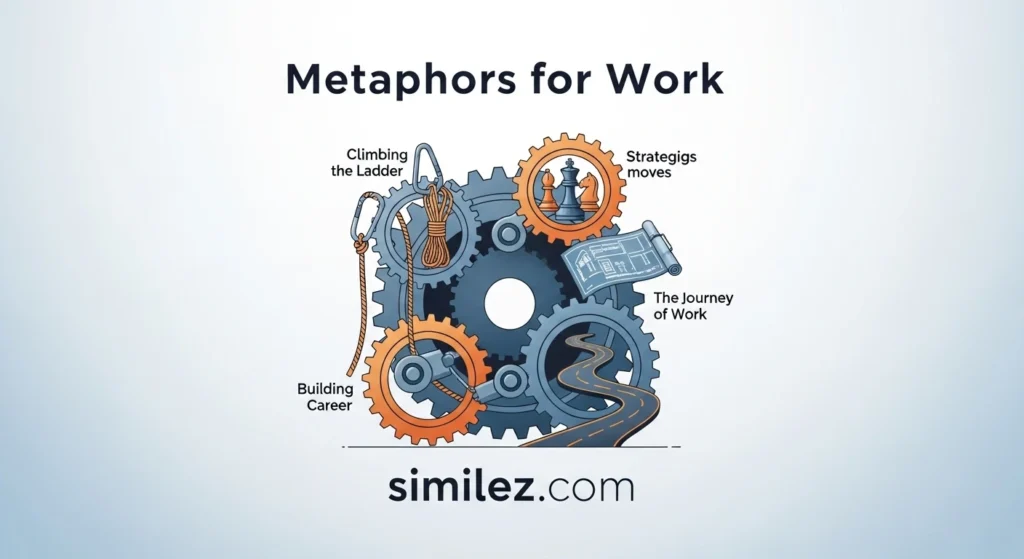
Imagine walking into an office buzzing with energy. The clatter of keyboards, the hum of conversation, and the steady rhythm of tasks create a symphony of productivity. This is where metaphors for work come alive.
They help us understand complex feelings, processes, and dynamics by turning them into vivid, relatable images. Whether you’re a manager trying to explain a strategy, a writer aiming to craft relatable content, or simply reflecting on your own job, metaphors make abstract ideas concrete and memorable.
A metaphor is a figure of speech that describes one thing in terms of another. In the context of work, metaphors can capture the essence of experiences, challenges, or successes. For example, describing a busy office as “a beehive of activity” instantly conveys the energy and coordination of the workplace. Using metaphors for work helps communicate ideas clearly, adds emotional depth, and makes your writing or speech more engaging.
Why Using Metaphors for Work Matters
Metaphors can simplify complicated concepts and make them accessible to a wide audience. They help us explain team dynamics, describe workloads, and capture the feeling of achievement or frustration. For example, saying “we’re climbing a mountain with this project” evokes struggle, teamwork, and eventual triumph. Metaphors also stimulate imagination, making your message more memorable.
Common Metaphors for Work Environments
Workplaces are often compared to living organisms, machines, or ecosystems. Describing an office as “a well-oiled machine” suggests efficiency and coordination. Calling a creative studio “a garden of ideas” conveys growth, experimentation, and nurturing. Recognizing common metaphors for work helps you choose the right one for your context.
Metaphors for Stressful Work
Stress at work can feel overwhelming. Metaphors like “a pressure cooker” or “drowning in tasks” capture the intensity. For example, an employee juggling multiple deadlines might feel like “a tightrope walker balancing on a high wire.” These images help others understand your experience and evoke empathy.
Metaphors for Teamwork
Team dynamics can be described through metaphors. Consider the phrase “a well-coordinated orchestra.” Each member plays a unique role, yet harmony depends on collaboration. Alternatively, “rowing a boat together” highlights effort, direction, and mutual reliance. Using such metaphors can strengthen team communication and morale.
Metaphors for Leadership
Leaders are often depicted as captains, gardeners, or architects. For instance, a manager guiding a team through change might be seen as “a lighthouse in a storm.” This conveys vision, guidance, and stability. Choosing metaphors for leadership can inspire confidence and clarity.
Metaphors for Career Growth
Career progression can be imagined as a journey, a ladder, or a climbing expedition. Saying “she’s climbing the corporate ladder” conveys ambition and advancement. A more poetic metaphor might be “planting seeds and watching them bloom,” highlighting long-term growth and nurturing skills.
Metaphors for Challenges at Work
Obstacles and challenges are easily illustrated with metaphors. A complex project can be “a labyrinth,” requiring strategy and persistence. Deadlines might feel like “a ticking time bomb,” evoking urgency. Metaphors for challenges make abstract difficulties tangible.
Metaphors for Innovation and Creativity
Innovation thrives in metaphorical spaces. Describing a brainstorming session as “a fireworks display of ideas” emphasizes spontaneity and excitement. Calling a new product development “building a bridge to the future” conveys vision and forward-thinking. Creative metaphors energize teams and audiences.
Metaphors for Motivation and Inspiration
Motivational metaphors help convey drive and determination. For example, “firing on all cylinders” suggests full engagement and high energy. Saying “ignite your potential” encourages action and growth. Such metaphors make messages more impactful.
Metaphors for Communication at Work
Effective communication can be depicted through metaphors like “threads weaving a tapestry” or “bridges connecting islands.” These images illustrate connection, clarity, and collaboration. Using communication metaphors helps highlight the importance of clear messaging.
Metaphors for Productivity
Productivity can be visualized as flowing rivers, growing plants, or rising flames. For example, “momentum building like a snowball rolling downhill” illustrates acceleration and cumulative effect. Using metaphors for productivity can help teams focus on results and efficiency.
Metaphors for Work-Life Balance
Balancing work and life can be described metaphorically. Think of “juggling balls in the air” or “walking a tightrope” to depict the delicate equilibrium required. These metaphors highlight the challenges and strategies for maintaining harmony.
Metaphors for Organizational Culture
Company culture can be illustrated through metaphors such as “a melting pot of ideas” or “a garden where talent flourishes.” These images convey inclusivity, growth, and collaboration. Using culture metaphors helps communicate values effectively.
Metaphors for Career Setbacks
Setbacks can be framed metaphorically to soften impact. For instance, “a detour on the career highway” suggests a temporary diversion rather than failure. “Falling off the horse but getting back up” emphasizes resilience. These metaphors encourage persistence.
Examples and Creative Ideas
Example 1: Workload
Metaphor: “A stack of dominoes waiting to fall.” Explanation: Shows tasks lined up and the potential for one to trigger others. Scenario: A project manager sees multiple deadlines piling up. Alternative: “A tower of cards teetering on the edge.” Emotional Detail: Evokes tension and anticipation.
Example 2: Team Collaboration
Metaphor: “A symphony where every note counts.” Explanation: Highlights each member’s role in harmony. Scenario: A creative team coordinating on a marketing campaign. Alternative: “Rowing a boat in unison.” Emotional Detail: Conveys cohesion and satisfaction.
Example 3: Innovation
Metaphor: “Lighting a candle in a dark room.” Explanation: Represents discovery and clarity. Scenario: A designer develops a novel solution to a problem. Alternative: “Planting a seed that will grow into a forest.” Emotional Detail: Inspires hope and creativity.
Interactive Exercises for Practicing Metaphors for Work
- Daily Reflection: At the end of each day, write a sentence describing your work using a metaphor.
- Team Brainstorm: Ask team members to describe current projects in metaphors and share insights.
- Storytelling Game: Pick a workplace scenario and craft three different metaphors to describe it.
Bonus Tips for Using Metaphors in Writing and Communication
- Use metaphors sparingly for emphasis, not decoration.
- Tailor metaphors to your audience’s experiences and culture.
- Combine sensory details for more vivid imagery.
- In social media posts, metaphors make content shareable and memorable.
- Use metaphors to simplify complex reports or presentations.
Conclusion
Metaphors for work are powerful tools to express ideas, emotions, and dynamics in memorable ways. They make abstract concepts tangible and help communicate with clarity and creativity.
By integrating metaphors thoughtfully, you can enhance storytelling, inspire teams, and make your communication more engaging. Start noticing metaphors in everyday language, experiment with them, and watch how they transform your work and writing.
FAQs
What are the benefits of using metaphors for work?
Metaphors simplify complex ideas, evoke emotions, and make communication engaging and memorable.
Can metaphors improve team collaboration?
Yes, metaphors can illustrate roles, goals, and dynamics, fostering understanding and cohesion.
How do I create effective metaphors for work?
Relate abstract ideas to familiar experiences, use sensory details, and keep them clear and concise.
Are metaphors suitable for professional writing?
Absolutely. When used appropriately, they clarify concepts and make reports, presentations, and articles more compelling.
Can metaphors help with workplace stress?
Yes, metaphors can describe feelings and challenges vividly, helping others understand and support you.