
Similes are a fun and powerful way to make language more exciting. A simile is a figure of speech that compares two different things using the words “like” or “as.” Writers and speakers use similes to help readers see pictures in their minds, understand feelings better, and enjoy language more.
For kids, similes turn ordinary sentences into lively ones. Instead of saying “He was fast,” you can say “He was as fast as lightning.” That simple comparison makes the idea clearer and more memorable. In this article, you’ll explore similes for kids examples that are easy to understand, fun to use, and perfect for schoolwork, storytelling, poetry, and everyday conversation.
As Brave as a Lion
Meaning: This simile describes someone who is very courageous and not easily scared.
Emotional tone: Positive, strong, inspiring.
Best used in: Stories, moral lessons, character descriptions.
Examples:
- The little boy was as brave as a lion during the school play.
- She felt as brave as a lion when she stood up for her friend.
- The firefighter was as brave as a lion in the burning house.
- He became as brave as a lion after facing his fear.
- The hero in the story is as brave as a lion.
Daily-use line: 👉 “Don’t worry—you’re as brave as a lion!”
As Busy as a Bee
Meaning: It describes someone who is always active and working hard.
Emotional tone: Cheerful, energetic.
Best used in: Daily speech, school writing, storytelling.
Examples:
- She was as busy as a bee cleaning her room.
- Mom looked as busy as a bee in the kitchen.
- The students were as busy as bees before the exam.
- He stayed as busy as a bee all morning.
- The classroom was as busy as a bee hive.
Casual sentence: 👉 “I’ve been as busy as a bee today!”
As Fast as Lightning
Meaning: Shows that something happens very quickly.
Emotional tone: Exciting, energetic.
Best used in: Action stories, sports descriptions.
Examples:
- The runner was as fast as lightning.
- The cat ran as fast as lightning when it saw the dog.
- He finished his homework as fast as lightning.
- The superhero moved as fast as lightning.
- The bike zoomed like lightning down the hill.
As Quiet as a Mouse
Meaning: Describes someone who is very silent.
Emotional tone: Gentle, calm.
Best used in: Classroom rules, bedtime stories.
Examples:
- The kids were as quiet as mice in the library.
- She walked as quiet as a mouse into the room.
- He stayed as quiet as a mouse during the test.
- The baby slept as quiet as a mouse.
- The house was as quiet as a mouse at night.
As Cool as a Cucumber
Meaning: Describes someone who stays calm and relaxed.
Emotional tone: Calm, confident.
Best used in: Character traits, daily conversation.
Examples:
- He stayed as cool as a cucumber during the game.
- She was as cool as a cucumber before the exam.
- Even under pressure, he remained as cool as a cucumber.
- The teacher looked as cool as a cucumber.
- He acted as cool as a cucumber in trouble.
As Light as a Feather
Meaning: Shows that something is very light in weight.
Emotional tone: Soft, pleasant.
Best used in: Descriptions, poetry.
Examples:
- The balloon felt as light as a feather.
- Her steps were as light as a feather.
- The scarf was as light as a feather.
- He carried the box—it was as light as a feather.
- The cloud looked as light as a feather.
As Hungry as a Bear
Meaning: Describes someone who is extremely hungry.
Emotional tone: Playful, humorous.
Best used in: Daily speech, storytelling.
Examples:
- I’m as hungry as a bear after school.
- He felt as hungry as a bear at lunchtime.
- They came home as hungry as bears.
- She woke up as hungry as a bear.
- The campers were as hungry as bears.
As Happy as a Clam

Meaning: Describes someone who is very happy and content.
Emotional tone: Joyful, warm.
Best used in: Stories, emotional writing.
Examples:
- She was as happy as a clam on her birthday.
- He felt as happy as a clam with his gift.
- The kids were as happy as clams at the park.
- I’m as happy as a clam today.
- The puppy looked as happy as a clam.
As Bright as the Sun
Meaning: Describes something very shiny or intelligent.
Emotional tone: Positive, uplifting.
Best used in: Compliments, poetry.
Examples:
- Her smile was as bright as the sun.
- He is as bright as the sun in class.
- The room looked as bright as the sun.
- Her future is as bright as the sun.
- The painting was as bright as the sun.
As Strong as an Ox
Meaning: Shows great physical strength.
Emotional tone: Powerful, admiring.
Best used in: Stories, descriptions.
Examples:
- He is as strong as an ox.
- The farmer looked as strong as an ox.
- She lifted the box like an ox.
- The character was as strong as an ox.
- He trained to be as strong as an ox.
As Cold as Ice
Meaning: Describes extreme cold or lack of emotion.
Emotional tone: Serious, intense.
Best used in: Weather descriptions, stories.
Examples:
- The water was as cold as ice.
- His hands felt as cold as ice.
- The wind was as cold as ice.
- Her voice sounded as cold as ice.
- The snow was as cold as ice.
As Sweet as Honey

Meaning: Describes someone kind or something tasty.
Emotional tone: Warm, loving.
Best used in: Compliments, poetry.
Examples:
- Her voice is as sweet as honey.
- The cake tasted as sweet as honey.
- She is as sweet as honey to everyone.
- His words were as sweet as honey.
- The baby smiled as sweet as honey.
As Free as a Bird
Meaning: Shows freedom and happiness.
Emotional tone: Hopeful, joyful.
Best used in: Poetry, inspirational writing.
Examples:
- I felt as free as a bird on vacation.
- The kite flew as free as a bird.
- She danced as free as a bird.
- After exams, we felt as free as birds.
- He ran as free as a bird.
As Blind as a Bat
Meaning: Describes poor eyesight.
Emotional tone: Humorous, casual.
Best used in: Everyday speech.
Examples:
- Without glasses, I’m as blind as a bat.
- He joked he was as blind as a bat.
- She felt as blind as a bat at night.
- The room was dark—I was as blind as a bat.
- He laughed, saying he’s as blind as a bat.
As Proud as a Peacock
Meaning: Shows pride or showing off.
Emotional tone: Confident, expressive.
Best used in: Character descriptions.
Examples:
- He walked as proud as a peacock.
- She felt as proud as a peacock after winning.
- The boy smiled like a proud peacock.
- He stood as proud as a peacock.
- The team felt as proud as peacocks.
As Silly as a Monkey
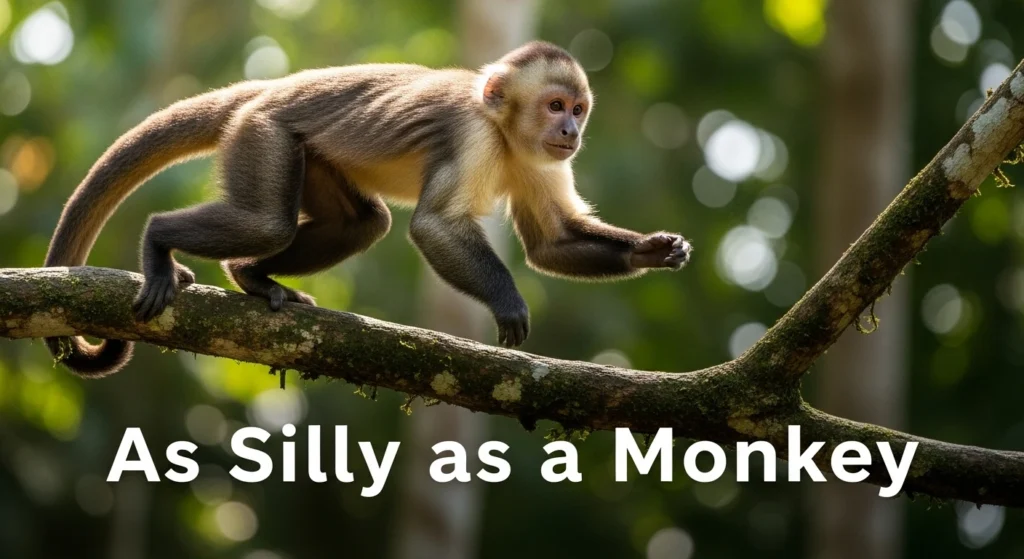
Meaning: Describes playful or funny behavior.
Emotional tone: Fun, cheerful.
Best used in: Kids’ stories, daily talk.
Examples:
- The kids were as silly as monkeys.
- He acted as silly as a monkey.
- They laughed like silly monkeys.
- The puppy was as silly as a monkey.
- She danced as silly as a monkey.
As Tall as a Giraffe
Meaning: Describes someone very tall.
Emotional tone: Light-hearted.
Best used in: Descriptions.
Examples:
- He is as tall as a giraffe.
- The tree stood as tall as a giraffe.
- She felt as tall as a giraffe on stilts.
- The building looked as tall as a giraffe.
- He joked he was as tall as a giraffe.
As Gentle as a Lamb
Meaning: Shows kindness and softness.
Emotional tone: Calm, loving.
Best used in: Stories, moral lessons.
Examples:
- The baby was as gentle as a lamb.
- She spoke as gentle as a lamb.
- The dog is as gentle as a lamb.
- He touched it as gentle as a lamb.
- Her nature is as gentle as a lamb.
Final Thoughts
Learning similes for kids examples opens the door to creative thinking and expressive writing. Similes make language colorful, emotions clearer, and stories more fun to read and write. Whether used in school assignments, bedtime stories, or everyday conversation, similes help kids turn simple ideas into vivid pictures. Keep practicing, stay curious, and enjoy the magic of words—because great writing begins with imagination.