

Depression is often hard to explain because it lives inside the mind and heart, not on the surface. This is where similes become powerful. A simile is a figure of speech that compares two different things using words like “as” or “like.” Writers and speakers use similes to make abstract feelings easier to see, feel, and understand.
In figurative language, similes help readers visualize emotions more vividly. When we describe depression through similes, we turn invisible pain into clear images—dark skies, heavy weights, empty rooms—that others can relate to.
In this article, you’ll explore in-depth similes for depression, their meanings, emotional tones, best usage contexts, and practical examples you can use in poetry, storytelling, daily conversation, or even academic writing.
Depression Is Like a Dark Cloud That Never Lifts
Meaning: This simile compares depression to a cloud that blocks light, symbolizing constant sadness and emotional heaviness.
Emotional Tone: Gloomy, persistent, and draining.
Best Usage Context: Poetry, storytelling, reflective essays.
Examples:
- Depression hung over him like a dark cloud that never lifted.
- Her joy faded as depression settled like a cloud over her thoughts.
- Living with depression felt like walking under a sky with no sun.
- The dark cloud of depression followed him everywhere.
- Some mornings, depression feels like clouds stitched permanently to the sky.
Daily-use text example: “Today feels heavy, like that dark cloud again.”
Depression Is Like Drowning in Slow Motion
Meaning: This simile shows how depression overwhelms gradually, making every breath feel difficult.
Emotional Tone: Suffocating, intense, helpless.
Best Usage Context: Personal narratives, mental health writing.
Examples:
- Depression felt like drowning in slow motion.
- Every task was harder, like she was sinking deeper each day.
- He smiled outside while drowning inside.
- Depression is like water filling the lungs quietly.
- She struggled as if trapped underwater without air.
Depression Is Like Carrying a Weight on the Chest
Meaning: It reflects the physical heaviness many people feel during depression.
Emotional Tone: Oppressive, exhausting.
Best Usage Context: Medical writing, memoirs, daily speech.
Examples:
- Depression pressed on his chest like a heavy weight.
- She woke up feeling crushed before the day even began.
- The sadness sat on her chest, refusing to move.
- Every breath felt heavier than the last.
- Depression weighed him down like iron.
Casual use: “I’m tired for no reason—like there’s a weight on my chest.”
Depression Is Like Being Trapped in a Deep Hole
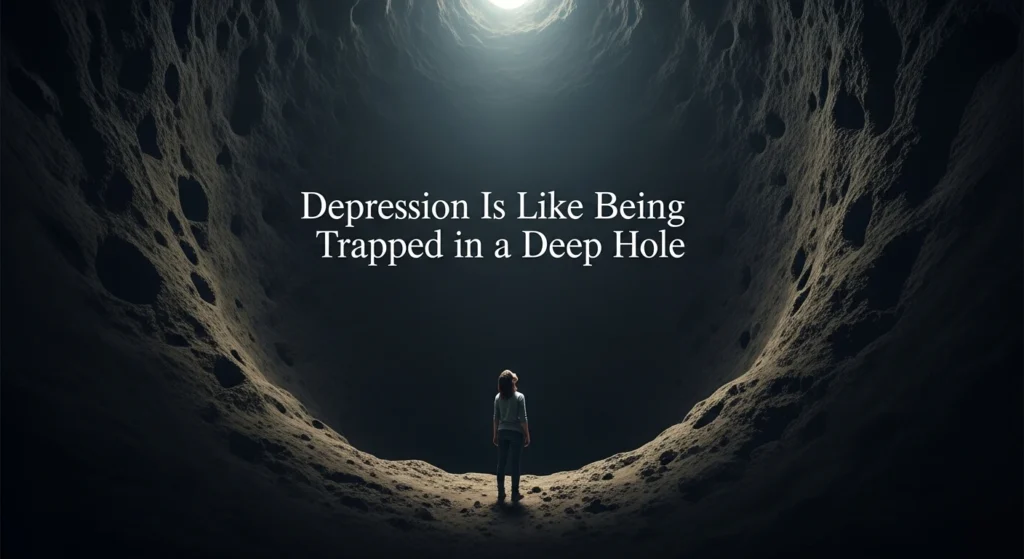
Meaning: This simile represents hopelessness and the struggle to escape negative thoughts.
Emotional Tone: Despairing, isolating.
Best Usage Context: Motivational writing, therapy discussions.
Examples:
- Depression felt like being stuck in a deep hole.
- No matter how hard she tried, she couldn’t climb out.
- The walls of sadness felt too steep.
- He shouted for help, but no one heard.
- Depression keeps pulling you back down.
Depression Is Like Endless Night Without Stars
Meaning: This simile highlights the absence of hope and guidance.
Emotional Tone: Lonely, bleak.
Best Usage Context: Poetry, lyrical prose.
Examples:
- Depression was like an endless night without stars.
- She searched for light but found only darkness.
- The future felt unlit and endless.
- No stars meant no direction.
- Depression erased the sky of hope.
Depression Is Like Walking Through Thick Fog
Meaning: It shows confusion, lack of clarity, and emotional numbness.
Emotional Tone: Detached, uncertain.
Best Usage Context: Storytelling, self-help writing.
Examples:
- Depression felt like walking through thick fog.
- He couldn’t see where life was going.
- Everything felt blurred and distant.
- Decisions disappeared in the mist.
- The fog never cleared.
Depression Is Like a Broken Radio Playing Sad Songs
Meaning: This simile represents repetitive negative thoughts.
Emotional Tone: Draining, obsessive.
Best Usage Context: Modern writing, casual speech.
Examples:
- His mind was like a broken radio stuck on sad songs.
- Depression replayed the same thoughts daily.
- She couldn’t change the station.
- The noise never stopped.
- Sadness echoed endlessly.
Texting example: “My brain won’t shut up today—same sad song again.”
Depression Is Like Being Buried Under Snow

Meaning: It reflects emotional numbness and isolation.
Emotional Tone: Cold, silent.
Best Usage Context: Poetry, descriptive writing.
Examples:
- Depression felt like being buried under snow.
- Sounds of joy couldn’t reach him.
- Everything felt frozen.
- She moved slowly, trapped in cold silence.
- Snow covered every feeling.
Depression Is Like an Empty Room Echoing
Meaning: This simile shows loneliness and emotional emptiness.
Emotional Tone: Hollow, reflective.
Best Usage Context: Literary writing, personal essays.
Examples:
- His heart felt like an empty room echoing.
- No warmth lived inside.
- Her thoughts bounced off silence.
- Depression hollowed everything out.
- Emptiness became loud.
Depression Is Like a Heavy Blanket You Can’t Remove
Meaning: It symbolizes constant fatigue and lack of motivation.
Emotional Tone: Smothering, weary.
Best Usage Context: Daily conversation, blogs.
Examples:
- Depression wrapped around him like a heavy blanket.
- She couldn’t get out of bed.
- The weight stayed all day.
- Even small tasks felt impossible.
- The blanket never slipped off.
Depression Is Like Rain Inside the Mind
Meaning: Represents ongoing sadness and mental exhaustion.
Emotional Tone: Melancholic, soft sorrow.
Best Usage Context: Poetry, reflective journaling.
Examples:
- Depression felt like rain inside her mind.
- Thoughts dripped slowly all day.
- The storm never passed.
- She carried rain everywhere.
- Even smiles felt wet with sadness.
Depression Is Like a Locked Door Without a Key
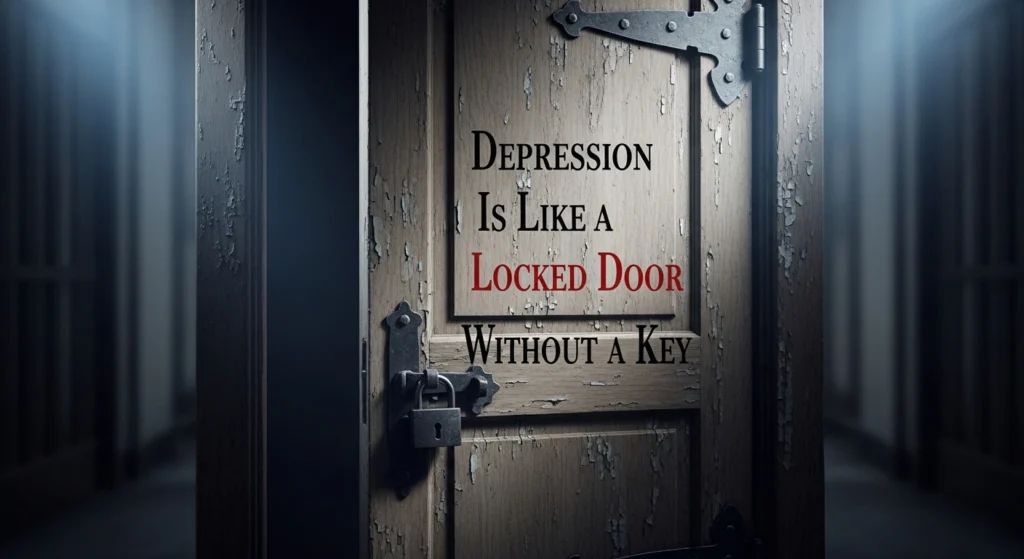
Meaning: It shows emotional shutdown and helplessness.
Emotional Tone: Frustrating, isolating.
Best Usage Context: Therapeutic writing, fiction.
Examples:
- Depression was like a locked door.
- He couldn’t open himself to others.
- Feelings stayed trapped inside.
- No key seemed to exist.
- The door stayed shut.
Depression Is Like Watching Life Through Glass
Meaning: This simile shows emotional disconnection.
Emotional Tone: Detached, numb.
Best Usage Context: Modern literature, psychology articles.
Examples:
- She watched life through glass.
- Joy felt distant and untouchable.
- Sounds were muted.
- Depression separated her from reality.
- Everything felt far away.
Depression Is Like a Fading Color Palette
Meaning: Represents loss of interest and joy.
Emotional Tone: Dull, lifeless.
Best Usage Context: Artistic writing, metaphors in essays.
Examples:
- Depression drained colors from life.
- Days turned gray.
- Passion faded slowly.
- Nothing looked bright anymore.
- The world lost its hues.
Depression Is Like Carrying Invisible Chains
Meaning: Shows restriction without visible cause.
Emotional Tone: Restrained, trapped.
Best Usage Context: Motivational writing, storytelling.
Examples:
- Depression chained his thoughts.
- She felt trapped without reason.
- Movement felt restricted.
- The chains were invisible but strong.
- Freedom felt unreachable.
Depression Is Like a Leaking Battery
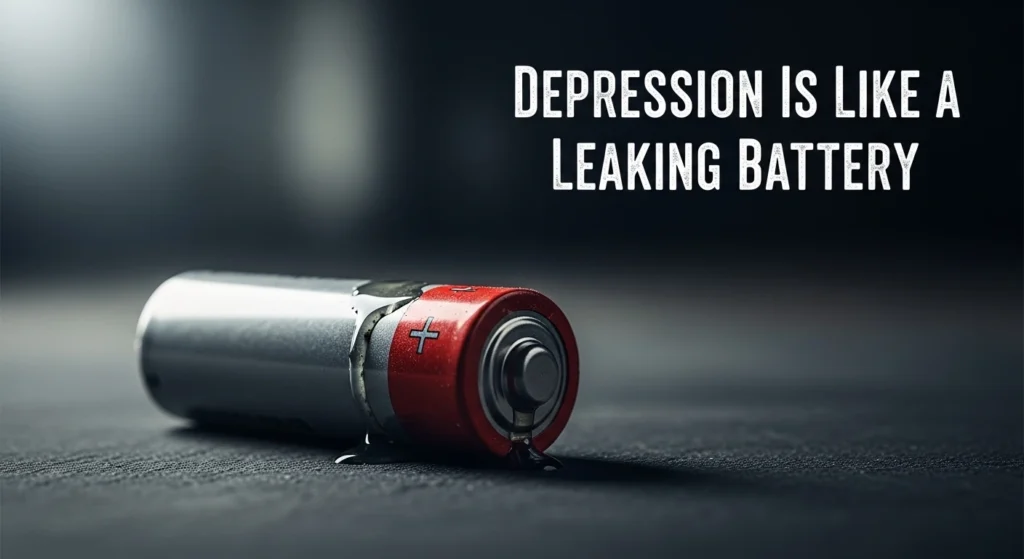
Meaning: Represents low energy and burnout.
Emotional Tone: Drained, tired.
Best Usage Context: Casual speech, blogs.
Examples:
- Depression drained her like a leaking battery.
- Energy disappeared quickly.
- Rest never felt enough.
- She ran on empty.
- Motivation leaked away.
Depression Is Like Standing in Freezing Water
Meaning: Shows shock, discomfort, and emotional pain.
Emotional Tone: Harsh, paralyzing.
Best Usage Context: Descriptive writing, memoirs.
Examples:
- Depression felt like standing in freezing water.
- Pain numbed everything.
- She couldn’t move forward.
- The cold stayed.
- Feeling never warmed.
Depression Is Like a Silent Storm Inside
Meaning: Represents inner chaos hidden from others.
Emotional Tone: Intense, restrained.
Best Usage Context: Poetry, emotional essays.
Examples:
- A silent storm raged inside him.
- No one saw the damage.
- Calm faces hid chaos.
- Depression thundered quietly.
- The storm never rested.
Conclusion
Using similes for depression allows us to transform silent suffering into shared understanding. When emotions feel too heavy for plain words, figurative language steps in to bridge the gap between feeling and expression. Whether you’re writing poetry, sharing a thought with a friend, or crafting meaningful content, similes help give shape to what hurts—and sometimes, that’s the first step toward healing. Keep writing, keep expressing, and remember: even the darkest comparisons prove that creativity still lives within you.