
Language becomes truly alive when it helps us see feelings instead of just naming them. That is exactly where similes shine. A simile is a figure of speech that compares two unlike things using words such as like or as. Writers and speakers use similes to make ideas clearer, emotions stronger, and descriptions more memorable.
Hate similes focus on expressing dislike, anger, resentment, or deep aversion in vivid and imaginative ways. Instead of simply saying “I hate this,” a simile paints a picture that lets the reader feel the emotion. These similes appear in poetry, storytelling, speeches, everyday conversations, and even academic analysis when discussing strong negative emotions.
Hate Like Poison in the Veins
Meaning: This simile compares hate to poison spreading through the body, emphasizing how destructive and consuming it can be.
Emotional Tone: Dark, intense, corrosive
Best Usage Context: Poetry, emotional storytelling, reflective writing
Examples:
- His hate ran through him like poison in the veins.
- She spoke with hatred that felt like poison seeping into every word.
- Old grudges can feel like poison in the veins if left untreated.
- The argument filled him with hate like poison flooding his system.
- Daily use: “Holding onto that anger feels like poison in my veins.”
Hate Like Fire in Dry Grass
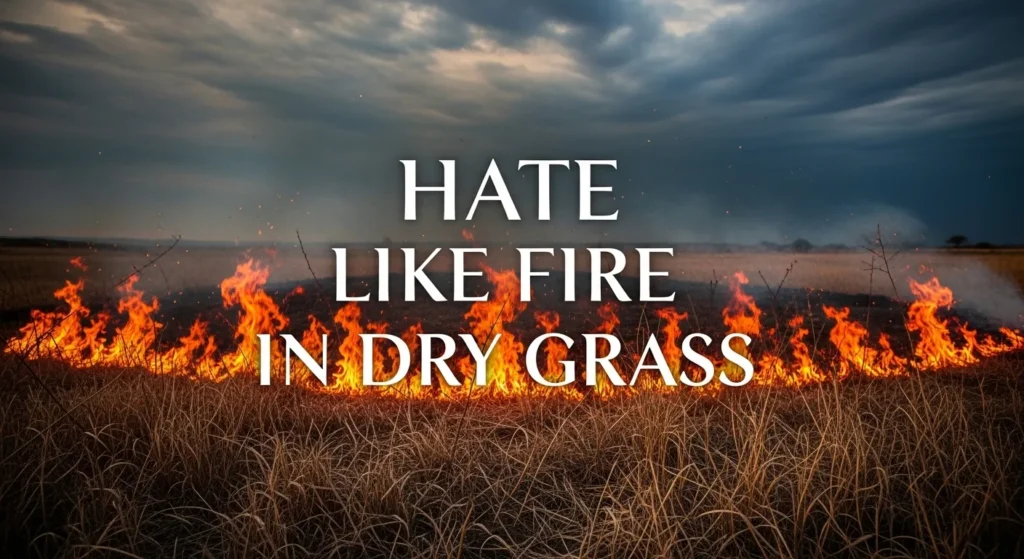
Meaning: This simile shows hate as something that spreads rapidly and uncontrollably.
Emotional Tone: Volatile, explosive
Best Usage Context: Storytelling, speeches, dramatic writing
Examples:
- His hatred spread like fire in dry grass.
- Rumors fueled hate like fire racing through a field.
- One insult ignited her hate like fire in dry grass.
- Fear often turns into hate that spreads like wildfire.
- Texting: “That comment made my anger spread like fire.”
Hate Like a Storm Without Rain
Meaning: A comparison showing hate as loud, violent, and destructive, but offering no relief or resolution.
Emotional Tone: Restless, bitter
Best Usage Context: Poetry, reflective essays
Examples:
- His hate was like a storm without rain.
- She carried anger that thundered but never cleansed.
- The room filled with hate like a dry storm.
- Their silence felt heavy, like a storm that never breaks.
- Daily use: “This tension feels like a storm with no rain.”
Hate Like Rust on Iron

Meaning: This simile shows hate as slow, persistent, and damaging over time.
Emotional Tone: Quiet, destructive
Best Usage Context: Literary analysis, metaphor-rich prose
Examples:
- Hate crept into his heart like rust on iron.
- Resentment corrodes relationships like rust eats metal.
- Years of bitterness rusted their friendship.
- Small insults can rust trust over time.
- Daily use: “That grudge is rusting our bond.”
Hate Like Acid on Skin
Meaning: Hate is compared to acid, emphasizing pain and burning intensity.
Emotional Tone: Harsh, violent
Best Usage Context: Dark fiction, emotional narratives
Examples:
- Her words burned like acid on his skin.
- Hate splashed across the room like corrosive acid.
- His glare felt like acid eating away at peace.
- Their exchange left scars like acid burns.
- Texting: “That comment burned like acid.”
Hate Like Ice in the Chest
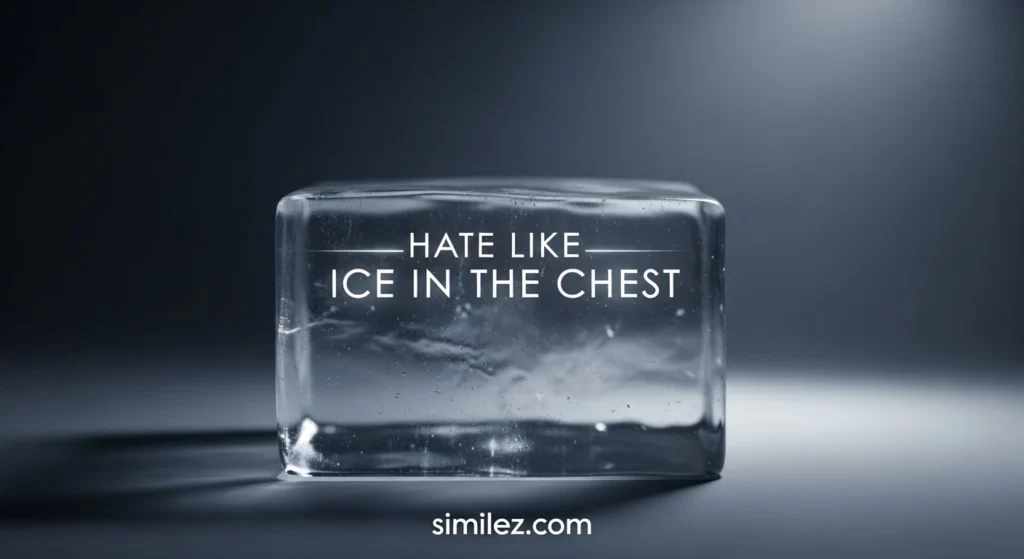
Meaning: This simile portrays hate as cold, numb, and emotionally distant.
Emotional Tone: Cold, detached
Best Usage Context: Character development, psychological writing
Examples:
- His hate settled like ice in his chest.
- She stared with hatred as cold as winter.
- Anger froze into hate like ice in her heart.
- His silence was colder than words.
- Daily use: “I felt ice in my chest hearing that.”
Hate Like a Shadow That Never Leaves
Meaning: This simile emphasizes hate as constant and haunting.
Emotional Tone: Brooding, lingering
Best Usage Context: Poetry, introspective prose
Examples:
- Hate followed him like a shadow that never leaves.
- Her past resentment lingered in every step.
- Bitterness clung to him endlessly.
- The memory cast a hateful shadow.
- Daily use: “That feeling follows me like a shadow.”
Hate Like a Locked Door

Meaning: Hate is shown as emotional blockage or refusal to connect.
Emotional Tone: Closed-off, resistant
Best Usage Context: Relationship writing, personal essays
Examples:
- His heart shut like a locked door filled with hate.
- She faced him with emotions tightly sealed.
- Hate closed doors once open with trust.
- No apology could unlock his anger.
- Daily use: “I’m emotionally locked right now.”
Hate Like a Snarling Animal
Meaning: This simile compares hate to raw, instinctive aggression.
Emotional Tone: Savage, primal
Best Usage Context: Action scenes, dramatic narratives
Examples:
- His hate snapped like a snarling animal.
- Anger growled beneath her calm tone.
- He lashed out like a wounded beast.
- Hate stripped away his restraint.
- Texting: “I’m growling mad right now.”
Hate Like Smoke That Chokes
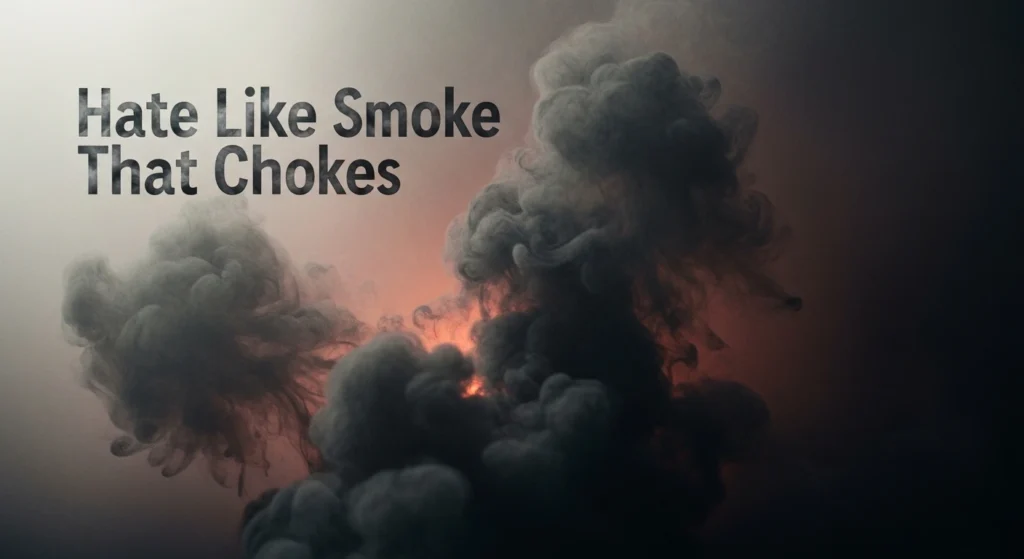
Meaning: Hate is depicted as suffocating and inescapable.
Emotional Tone: Oppressive, heavy
Best Usage Context: Poetry, descriptive prose
Examples:
- Hate filled the room like choking smoke.
- Their silence suffocated everyone.
- Resentment clouded his thoughts.
- The tension was thick and choking.
- Daily use: “This vibe is suffocating.”
Hate Like Nails on Glass
Meaning: This simile shows hate as deeply irritating and painful to experience.
Emotional Tone: Sharp, uncomfortable
Best Usage Context: Casual speech, creative writing
Examples:
- His voice scraped like nails on glass.
- Her sarcasm grated painfully.
- Every word felt unbearable.
- The argument hurt to hear.
- Texting: “That sound was nails on glass.”
Hate Like a Heavy Chain
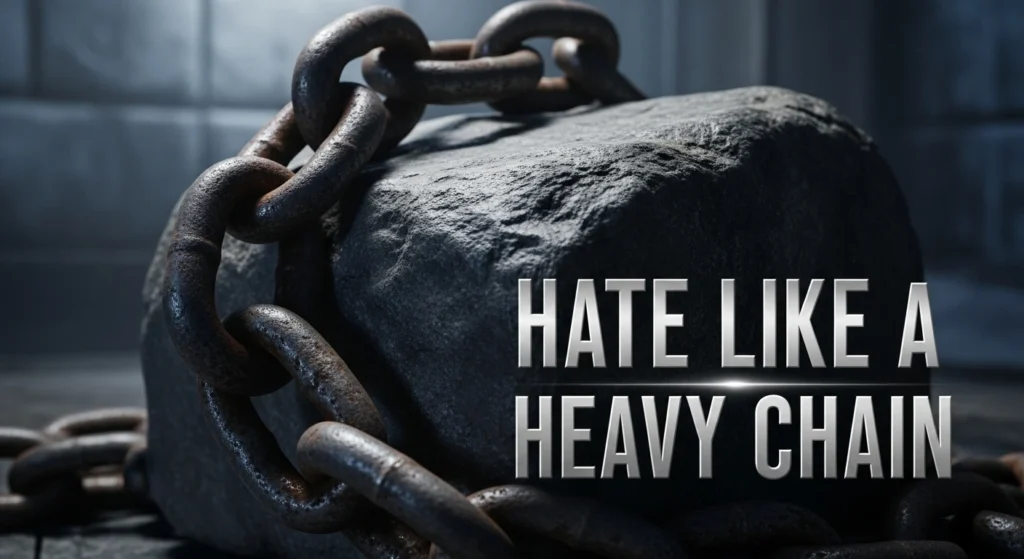
Meaning: Hate is compared to something that restrains and weighs a person down.
Emotional Tone: Burdened, oppressive
Best Usage Context: Motivational writing, reflective essays
Examples:
- Hate wrapped around him like a heavy chain.
- Grudges held her back for years.
- Letting go felt like breaking chains.
- Anger shackled his growth.
- Daily use: “That grudge weighs me down.”
Hate Like a Broken Record
Meaning: This simile shows repetitive, obsessive hatred.
Emotional Tone: Irritated, obsessive
Best Usage Context: Casual conversation, dialogue
Examples:
- He repeated his hate like a broken record.
- She couldn’t stop complaining.
- The argument went in circles.
- His bitterness never changed.
- Texting: “You’re sounding like a broken record.”
Hate Like a Dark Cloud
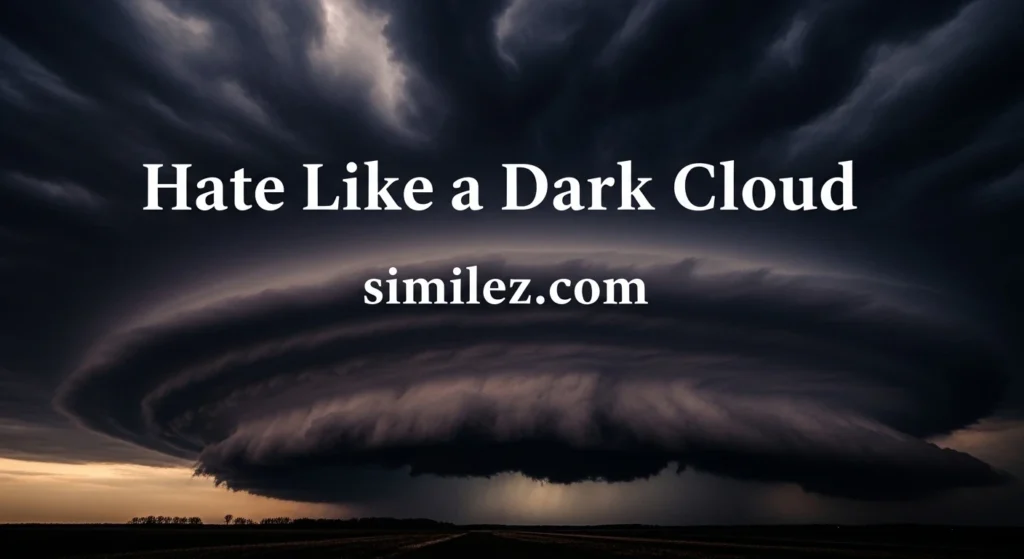
Meaning: Hate is shown as looming and emotionally draining.
Emotional Tone: Gloomy, heavy
Best Usage Context: Poetry, storytelling
Examples:
- Hate hung over him like a dark cloud.
- Her mood darkened the room.
- Resentment blocked all joy.
- The day felt heavy with anger.
- Daily use: “There’s a dark cloud over today.”
Hate Like Glass Underfoot
Meaning: This simile emphasizes danger and emotional pain.
Emotional Tone: Tense, fragile
Best Usage Context: Descriptive narratives
Examples:
- Every word felt like stepping on glass.
- The conversation was painful.
- Hate made everything fragile.
- One wrong move could hurt.
- Texting: “This topic feels like broken glass.”
Hate Like a Boiling Kettle
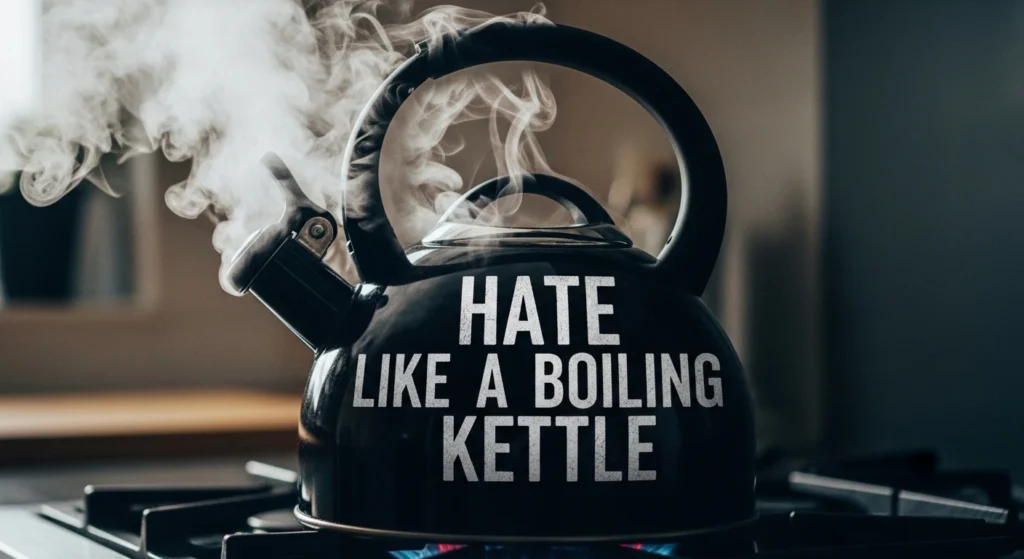
Meaning: Hate is portrayed as building pressure ready to explode.
Emotional Tone: Tense, explosive
Best Usage Context: Dialogue, short stories
Examples:
- His anger boiled like a kettle.
- She simmered with hate.
- Pressure mounted with every insult.
- One spark could cause an outburst.
- Daily use: “I’m about to boil over.”
Hate Like a Bitter Aftertaste
Meaning: Hate lingers even after events end.
Emotional Tone: Lingering, sour
Best Usage Context: Reflective writing, essays
Examples:
- The fight left a bitter aftertaste.
- His words lingered unpleasantly.
- Hate remained long after the moment.
- Apologies didn’t erase the bitterness.
- Daily use: “That left a bad taste.”
Hate Like a Cold Wind
Meaning: This simile shows hate as emotionally chilling and isolating.
Emotional Tone: Harsh, distant
Best Usage Context: Poetry, narrative description
Examples:
- Her hate blew through the room like a cold wind.
- His words left everyone shivering.
- Silence cut like winter air.
- The goodbye felt icy.
- Texting: “That response was cold.”
Conclusion
Hate similes allow writers and speakers to transform raw emotion into vivid imagery. Instead of telling readers how someone feels, similes show it—making language more powerful, memorable, and human. Whether you’re crafting poetry, telling stories, analyzing literature, or simply texting a friend, expressive similes deepen communication and creativity.