
Confusion is a feeling everyone knows—but describing it clearly can be surprisingly hard. That’s where similes come in. A simile is a figure of speech that compares two unlike things using words like “as” or “like.” In figurative language, similes help readers see, feel, and experience an idea rather than just understand it logically.
When you use similes for confusion, you turn a vague mental state into a vivid image: fog, mazes, static, tangled wires. Writers, students, poets, and everyday speakers use similes because they make language more memorable, expressive, and human. Below are 18 carefully explained similes for confusion, each with meaning, emotional tone, best-use context, and plenty of natural examples—including casual, daily-use sentences—to help you use them with confidence.
Confused Like a Deer Caught in Headlights
Meaning: Sudden confusion mixed with shock or fear. Emotional Tone:
Startled, frozen, overwhelmed. Best Used In: Storytelling, dialogue, everyday speech.
Examples:
- He stood there, confused like a deer caught in headlights.
- When the teacher called my name, I froze like a deer in headlights.
- She looked confused, blinking like a deer under bright lights.
- I felt like a deer in headlights when the question came out of nowhere.
- Texting: “Sorry, I’m totally a deer-in-headlights right now 😵💫”
Confusion Like Fog Rolling Over the Mind
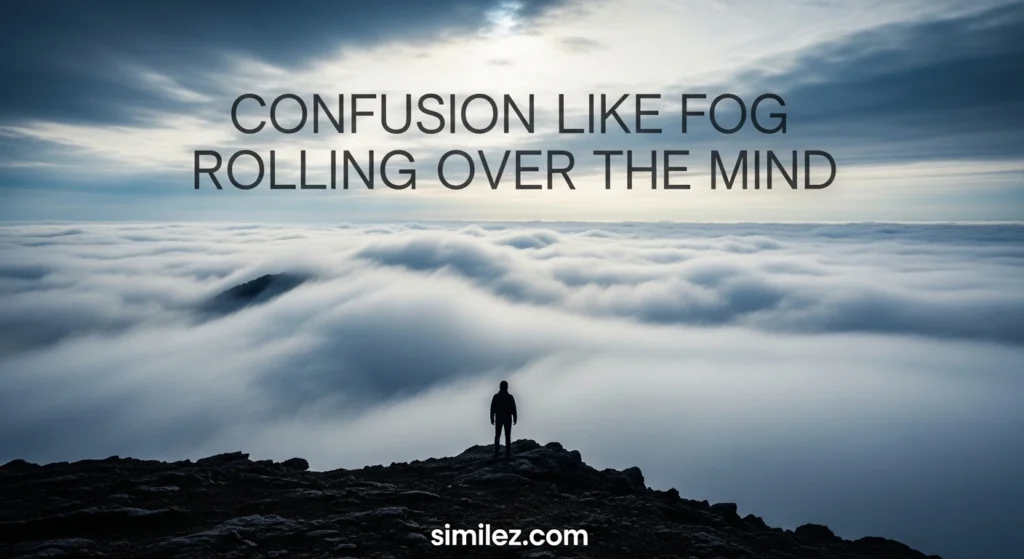
Meaning: Slow, heavy mental confusion that clouds thinking. Emotional Tone:
Dreamy, dull, mentally blocked. Best Used In: Descriptive writing, poetry, reflective essays.
Examples:
- Confusion rolled over his mind like thick morning fog.
- After waking up, my thoughts felt foggy and unclear.
- Stress brought confusion like fog that refused to lift.
- Her explanation only added more mental fog.
- Daily use: “I need coffee—my brain is fog right now.”
Confused Like a Lost Child in a Crowd
Meaning: Feeling overwhelmed and directionless. Emotional Tone:
Vulnerable, anxious, unsure. Best Used In: Emotional storytelling, narrative writing.
Examples:
- He felt confused like a lost child in a crowd.
- Starting a new job left her feeling lost and unsure.
- The rules made me feel like a kid separated from my parents.
- I wandered through the problem, confused and anxious.
- Casual: “New city, new life—lost child energy.”
Confusion Like a Puzzle with Missing Pieces

Meaning: Partial understanding that doesn’t fully connect. Emotional Tone:
Curious, frustrated. Best Used In: Academic writing, explanations, essays.
Examples:
- The theory felt like a puzzle missing key pieces.
- I understand parts, but the whole picture is unclear.
- His story didn’t quite fit together.
- The lesson left gaps in my understanding.
- Daily use: “This explanation feels incomplete.”
Confused Like Walking Through a Maze Blindfolded
Meaning: Complete disorientation with no clear direction. Emotional Tone:
Frustrating, helpless. Best Used In: Dramatic writing, metaphors in essays.
Examples:
- Solving the problem felt like walking blind in a maze.
- I kept hitting dead ends mentally.
- Every option led to more confusion.
- She felt trapped in uncertainty.
- Casual: “This assignment is a maze 😩”
Confusion Like Static on a Radio
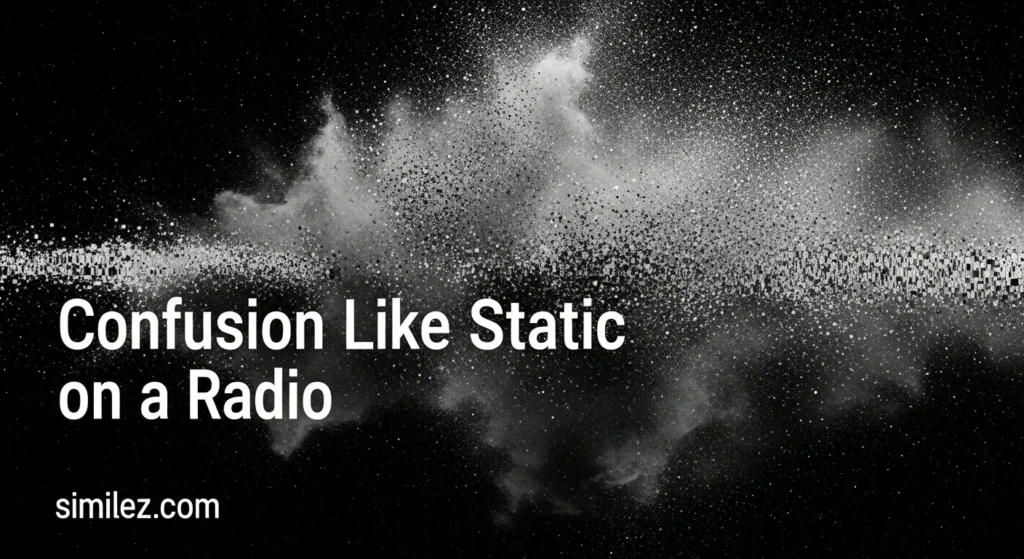
Meaning: Thoughts are interrupted and unclear. Emotional Tone:
Irritating, distracting. Best Used In: Modern writing, relatable metaphors.
Examples:
- His thoughts buzzed like static on a radio.
- I couldn’t focus through the mental noise.
- Anxiety created constant interference.
- Her words came through unclear.
- Text: “Brain = static today.”
Confused Like Trying to Read a Foreign Language
Meaning: Complete lack of understanding. Emotional Tone:
Alienated, puzzled. Best Used In: Educational contexts, humor.
Examples:
- The instructions felt like a foreign language.
- I stared at the chart without comprehension.
- Nothing made sense at first glance.
- The symbols confused me instantly.
- Daily: “Math looks like another language.”
Confusion Like Tangled Headphones

Meaning: Messy, frustrating mental clutter. Emotional Tone:
Light frustration, humor. Best Used In: Casual writing, blogs, youth-focused content.
Examples:
- My thoughts were tangled like old earbuds.
- I couldn’t straighten out the idea.
- One thought looped into another.
- Confusion knotted everything together.
- Texting: “My brain is tangled 🎧”
Confused Like a Compass Without North
Meaning: No sense of direction or clarity. Emotional Tone:
Lost, uncertain. Best Used In: Reflective writing, life essays.
Examples:
- He felt like a compass without north.
- I didn’t know which choice was right.
- Everything lacked direction.
- She questioned her next step.
- Daily use: “I need direction right now.”
Confusion Like Spinning in Circles
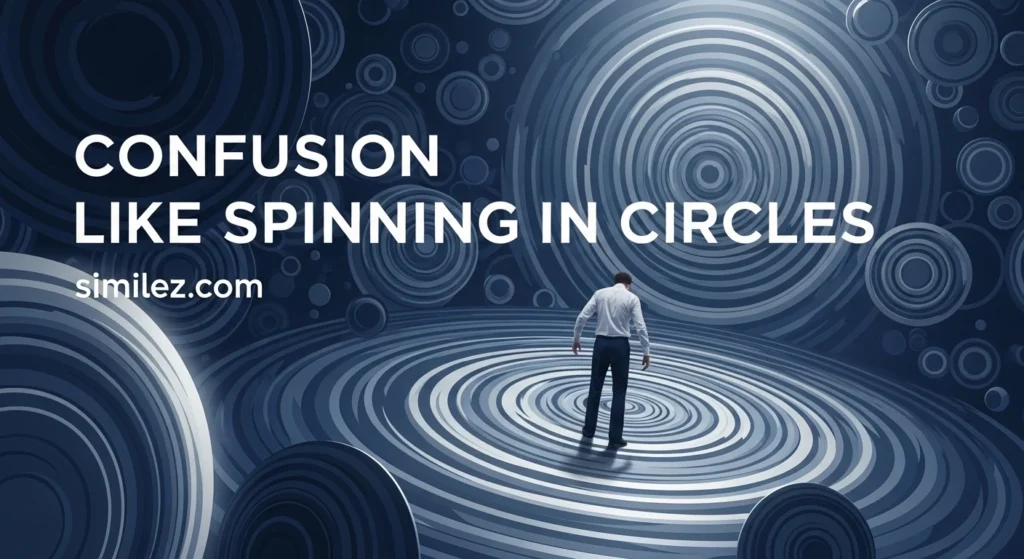
Meaning: Repetitive thinking without progress. Emotional Tone:
Exhausting, frustrating. Best Used In: Mental health discussions, narratives.
Examples:
- My thoughts spun in circles.
- I kept revisiting the same doubts.
- Nothing moved forward mentally.
- The debate went nowhere.
- Casual: “I’m overthinking again.”
Confused Like Looking Through Dirty Glass
Meaning: Partial clarity mixed with distortion. Emotional Tone:
Subtle frustration. Best Used In: Symbolic writing, descriptions.
Examples:
- Truth looked blurred through dirty glass.
- I saw shapes, not details.
- The idea lacked sharpness.
- Everything felt off.
- Daily: “Something’s not clear yet.”
Confusion Like a Storm Inside the Head

Meaning: Intense emotional and mental turmoil. Emotional Tone:
Overwhelming, dramatic. Best Used In: Poetry, emotional prose.
Examples:
- A storm of confusion raged in her mind.
- Thoughts clashed like thunder.
- Calm felt impossible.
- Emotions fueled the chaos.
- Casual: “My head is chaos today.”
Confused Like Pages Out of Order
Meaning: Information exists but lacks structure. Emotional Tone:
Mildly frustrating. Best Used In: Academic and explanatory writing.
Examples:
- The lecture felt like shuffled pages.
- Ideas came without order.
- The story jumped around.
- I struggled to follow.
- Daily: “This explanation jumps everywhere.”
Confusion Like a Broken Map
Meaning: Guidance exists but is unreliable. Emotional Tone:
Distrustful, uncertain. Best Used In: Metaphorical writing.
Examples:
- His advice felt like a broken map.
- I followed directions that led nowhere.
- The plan lacked accuracy.
- I felt misled.
- Casual: “These instructions are useless.”
Confused Like Echoes in a Cave
Meaning: Thoughts repeat without resolution. Emotional Tone:
Isolated, haunting. Best Used In: Poetic or introspective writing.
Examples:
- Questions echoed without answers.
- Doubts repeated endlessly.
- Silence followed confusion.
- The mind felt hollow.
- Daily: “Same thoughts, no answers.”
Confusion Like Jumbled Puzzle Pieces
Meaning: Ideas exist but don’t fit together yet. Emotional Tone:
Curious, unresolved. Best Used In: Learning contexts.
Examples:
- Concepts felt jumbled together.
- I couldn’t connect the pieces.
- Understanding came slowly.
- The picture wasn’t clear.
- Casual: “Still piecing it together.”
Confused Like Trying to Catch Smoke
Meaning: Confusion that is impossible to grasp. Emotional Tone:
Futile, abstract. Best Used In: Philosophical or poetic writing.
Examples:
- Meaning slipped away like smoke.
- Answers vanished instantly.
- Nothing stayed solid.
- I reached but failed.
- Daily: “Hard to explain, honestly.”
Confusion Like Standing at a Crossroads
Meaning: Uncertainty caused by too many choices. Emotional Tone:
Thoughtful, tense. Best Used In: Personal essays, narratives.
Examples:
- She stood confused at life’s crossroads.
- Every option mattered.
- Choosing felt heavy.
- Time pressured her decision.
- Casual: “Big decisions = stress.”
Final Thoughts
Using similes for confusion transforms unclear thoughts into images readers instantly recognize. Whether you’re writing poetry, improving storytelling, crafting essays, or just texting a friend, similes give language emotional depth and vivid clarity. When words feel tangled, a strong simile can guide both writer and reader toward understanding—one powerful comparison at a time.