
Fall is a season rich with color, emotion, and sensory detail—and that’s exactly why writers love using similes for fall. Similes are a form of figurative language that compare two unlike things using words like “like” or “as.” They help readers see, feel, and experience ideas more vividly rather than just understand them logically.
In everyday language, poetry, storytelling, and even academic writing, similes make descriptions more memorable and engaging. When we use similes for fall, we transform ordinary observations—falling leaves, cool air, early sunsets—into images that linger in the reader’s mind. Below are 18 powerful similes for fall, each explained clearly with emotional tone, best usage context, and multiple original examples to help you use them naturally and creatively.
Fall Is Like a Painted Canvas
Meaning: This simile compares autumn to a canvas covered in rich, artistic colors.
Emotional Tone: Wonder, beauty, calm admiration.
Best Usage: Poetry, descriptive storytelling, creative essays.
Examples:
- Fall is like a painted canvas splashed with gold, amber, and crimson.
- The park looked like a painted canvas as fall settled in.
- Walking through town felt like stepping into a painted canvas of fall.
- Her painting tried to capture how fall is like a painted canvas.
- Texting: “This weather 😍 fall is literally a painted canvas today.”
Leaves Fall Like Gentle Rain
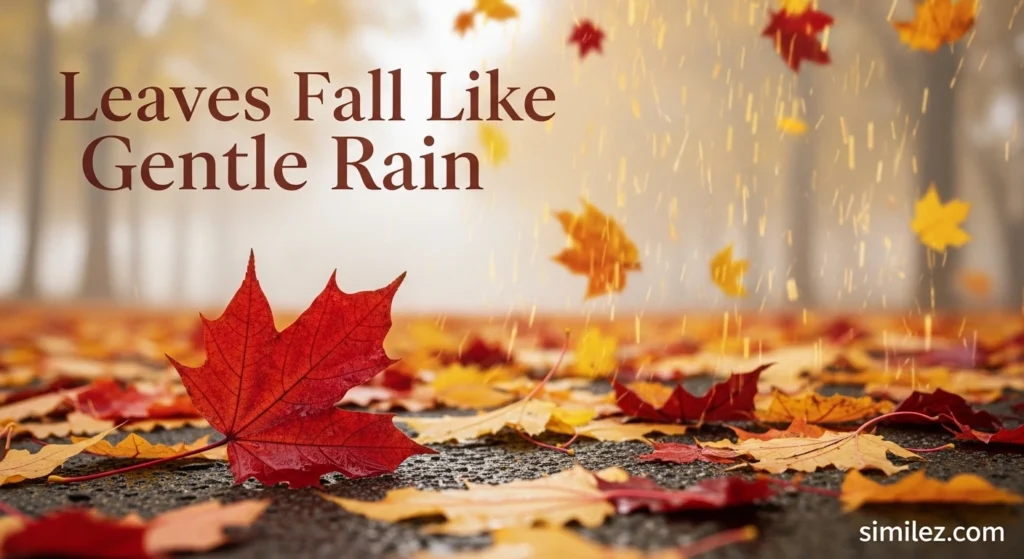
Meaning: Describes the slow, graceful descent of autumn leaves.
Emotional Tone: Peaceful, soothing, reflective.
Best Usage: Poetry, nature writing, reflective prose.
Examples:
- Leaves fell like gentle rain across the empty sidewalk.
- The trees shed their leaves like gentle rain from the sky.
- We watched the leaves fall like gentle rain all afternoon.
- The scene felt calm as leaves fell like gentle rain.
- Daily use: “The leaves are falling like rain outside my window.”
Fall Air Is Like a Cool Whisper
Meaning: Compares the crisp autumn breeze to a soft, quiet whisper.
Emotional Tone: Refreshing, subtle, calming.
Best Usage: Descriptive writing, storytelling, sensory imagery.
Examples:
- The fall air brushed my face like a cool whisper.
- Morning walks feel peaceful when the air is like a cool whisper.
- Autumn arrived with air like a quiet whisper of change.
- The breeze felt like a cool whisper through the trees.
- Casual: “That fall air feels like a whisper—so nice.”
Fall Is Like Nature Taking a Deep Breath
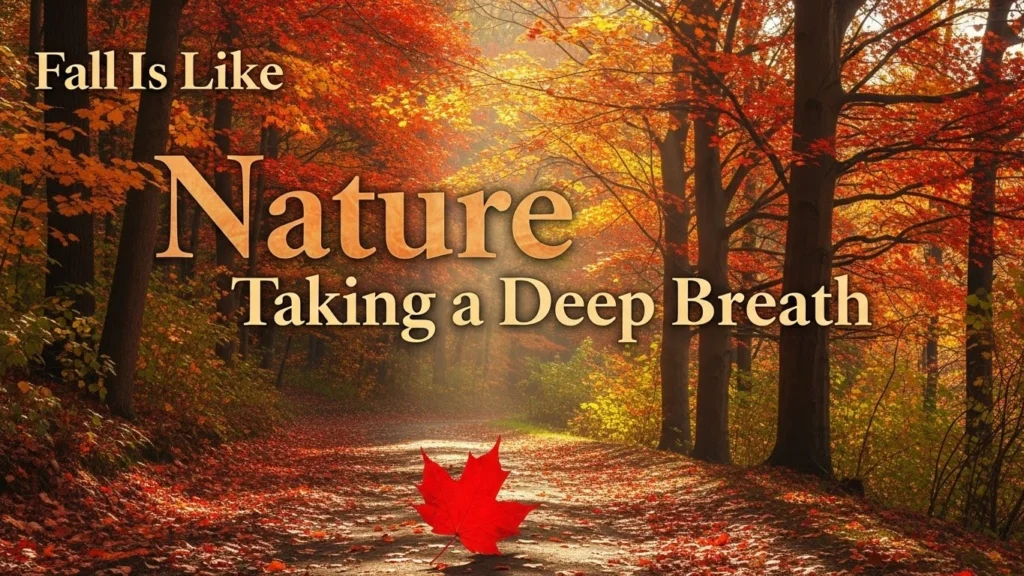
Meaning: Represents transition, rest, and preparation for winter.
Emotional Tone: Thoughtful, calm, introspective.
Best Usage: Essays, reflective writing, academic metaphors.
Examples:
- Fall is like nature taking a deep breath before winter.
- The slower pace of life felt like nature inhaling.
- Autumn days feel like a pause, like a deep breath.
- Fall reminds us that rest is necessary.
- Daily use: “Fall feels like the world slowing down.”
Trees Stand Like Silent Storytellers
Meaning: Suggests that trees hold memories of passing seasons.
Emotional Tone: Nostalgic, reflective, slightly mysterious.
Best Usage: Poetry, storytelling, literary analysis.
Examples:
- The trees stood like silent storytellers of summer past.
- Bare branches looked like storytellers waiting to speak.
- In fall, trees feel wise and quiet.
- The forest felt full of unspoken stories.
- Creative writing: “The trees told stories without words.”
Fall Colors Burn Like Fire

Meaning: Compares bright autumn leaves to flames.
Emotional Tone: Energetic, dramatic, intense.
Best Usage: Poetry, vivid descriptions, visual imagery.
Examples:
- The leaves burned like fire in the afternoon sun.
- Hills glowed as fall colors burned brightly.
- Trees looked like they were on fire.
- The reds and oranges burned like flames.
- Casual: “The leaves look like they’re on fire today!”
Fall Is Like a Farewell Song
Meaning: Represents goodbye, transition, and emotional closure.
Emotional Tone: Bittersweet, emotional, reflective.
Best Usage: Poetry, narrative writing, emotional essays.
Examples:
- Fall feels like a farewell song to summer.
- Each falling leaf was part of autumn’s goodbye.
- The season sang softly as it changed.
- Fall carries the music of endings.
- Daily use: “Fall always feels a little bittersweet.”
Morning Fog Moves Like a Soft Curtain
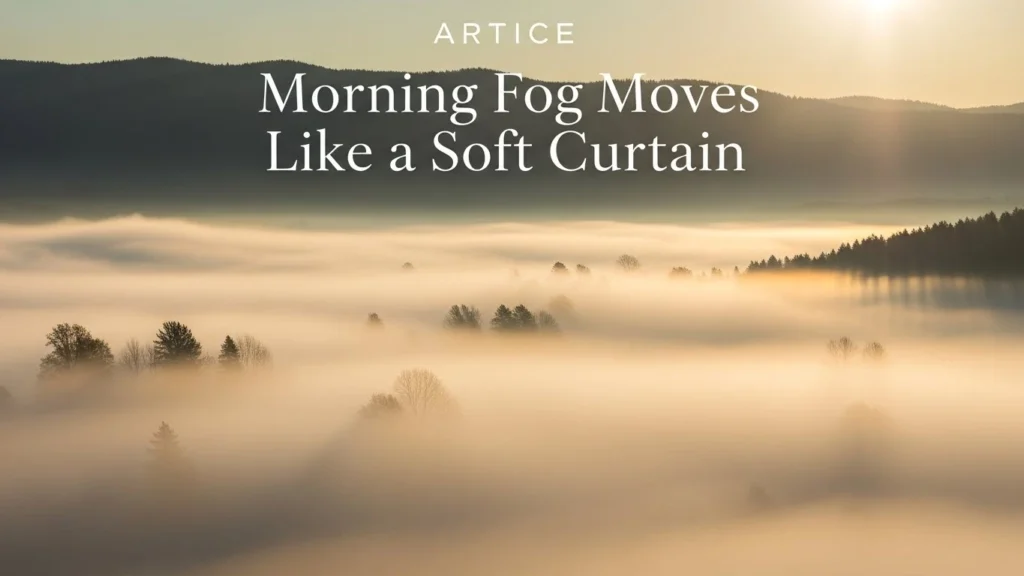
Meaning: Describes fog slowly revealing the landscape.
Emotional Tone: Dreamy, mysterious, calm.
Best Usage: Descriptive prose, storytelling.
Examples:
- Fog moved like a soft curtain across the fields.
- The town appeared as the fog lifted gently.
- Morning fog felt theatrical.
- Fall mornings begin quietly this way.
- Texting: “Fog everywhere—feels so fall 🍂”
Fall Nights Are Like Cozy Blankets
Meaning: Represents warmth, comfort, and relaxation.
Emotional Tone: Comforting, warm, peaceful.
Best Usage: Lifestyle writing, blogs, casual storytelling.
Examples:
- Fall nights feel like cozy blankets wrapped around the world.
- The cool air made me want tea and sweaters.
- Evenings feel safe and snug in fall.
- Darkness settles gently.
- Casual: “This weather = blanket vibes.”
Pumpkins Sit Like Bright Smiles
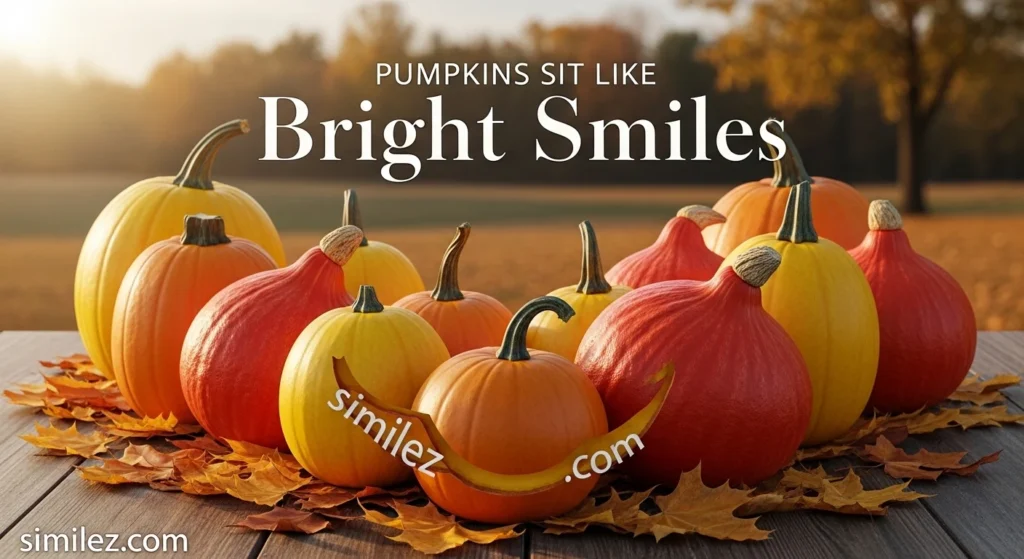
Meaning: Compares pumpkins to cheerful expressions.
Emotional Tone: Playful, happy, festive.
Best Usage: Children’s writing, seasonal blogs.
Examples:
- Pumpkins sat like bright smiles on every porch.
- Orange pumpkins cheered up the street.
- They lined the road like happy faces.
- Fall decorations felt joyful.
- Daily use: “Pumpkins everywhere—so cute!”
Fall Smells Like a Memory
Meaning: Represents nostalgia through scent.
Emotional Tone: Nostalgic, emotional, warm.
Best Usage: Personal essays, reflective writing.
Examples:
- Fall smells like a memory I can’t quite name.
- The air reminded me of childhood.
- Every scent felt familiar.
- Leaves and smoke blended softly.
- Casual: “Fall smells hit different.”
Wind Howls Like a Restless Traveler

Meaning: Describes unpredictable autumn winds.
Emotional Tone: Energetic, slightly wild.
Best Usage: Storytelling, poetry.
Examples:
- The wind howled like a restless traveler.
- Gusts moved through town.
- Fall winds never stay still.
- Trees swayed in response.
- Daily use: “This wind won’t chill!”
Fall Days Fade Like Old Photographs
Meaning: Represents time passing and fading light.
Emotional Tone: Melancholic, nostalgic.
Best Usage: Poetry, reflective prose.
Examples:
- Fall days fade like old photographs.
- Sunlight dims earlier now.
- The season feels fragile.
- Moments pass quietly.
- Casual: “Days are getting shorter already.”
Harvest Fields Lie Like Golden Seas
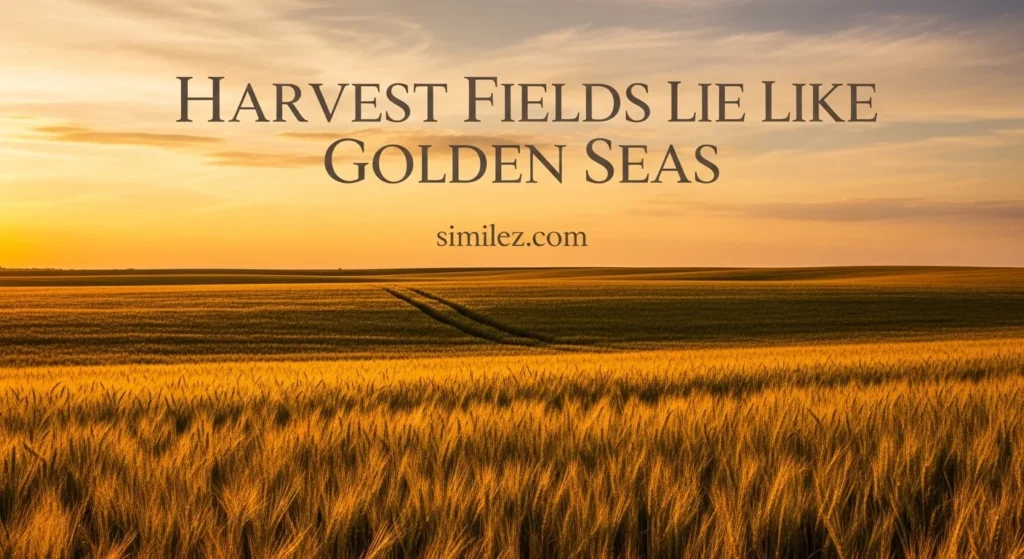
Meaning: Compares fields to waves of gold.
Emotional Tone: Abundant, peaceful.
Best Usage: Descriptive writing, rural imagery.
Examples:
- Fields lay like golden seas under the sun.
- Crops shimmered in fall light.
- The harvest looked endless.
- Nature felt generous.
- Daily use: “Those fields look amazing.”
Fall Is Like a Slow Goodbye
Meaning: Emphasizes gradual transition.
Emotional Tone: Soft, emotional.
Best Usage: Essays, storytelling.
Examples:
- Fall feels like a slow goodbye to warmth.
- Summer doesn’t leave all at once.
- Each day changes slightly.
- The shift feels gentle.
- Casual: “Fall sneaks up slowly.”
Leaves Crunch Like Breaking Glass
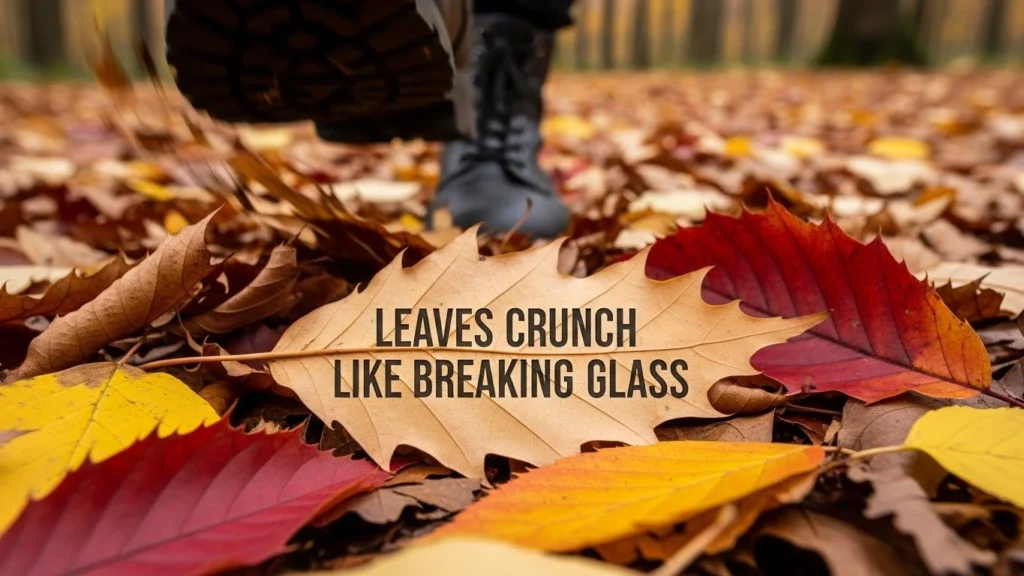
Meaning: Describes the sharp sound underfoot.
Emotional Tone: Sensory, vivid.
Best Usage: Descriptive prose.
Examples:
- Leaves crunched like breaking glass beneath my boots.
- The sound echoed on the path.
- Every step was loud.
- Fall walks are noisy.
- Daily use: “So crunchy outside!”
Fall Sunlight Glows Like Honey
Meaning: Compares warm, golden light to honey.
Emotional Tone: Warm, comforting.
Best Usage: Poetry, lifestyle writing.
Examples:
- Sunlight glowed like honey through the trees.
- The light felt thick and warm.
- Everything looked softer.
- Fall afternoons shine gently.
- Casual: “Golden hour hits harder in fall.”
Fall Is Like a Well-Worn Book
Meaning: Represents familiarity and comfort.
Emotional Tone: Cozy, reflective.
Best Usage: Essays, metaphors in writing.
Examples:
- Fall feels like a well-worn book I return to every year.
- The season feels familiar.
- I know its rhythms.
- It brings comfort.
- Daily use: “Fall just feels right.”
Conclusion
Using similes for fall allows your writing to move beyond simple description and into vivid experience. Whether you’re crafting poetry, enhancing storytelling, improving essays, or just adding creativity to everyday speech, similes help your readers see autumn through fresh, imaginative lenses.